
Supreme Court Judgement On 323 Ipc
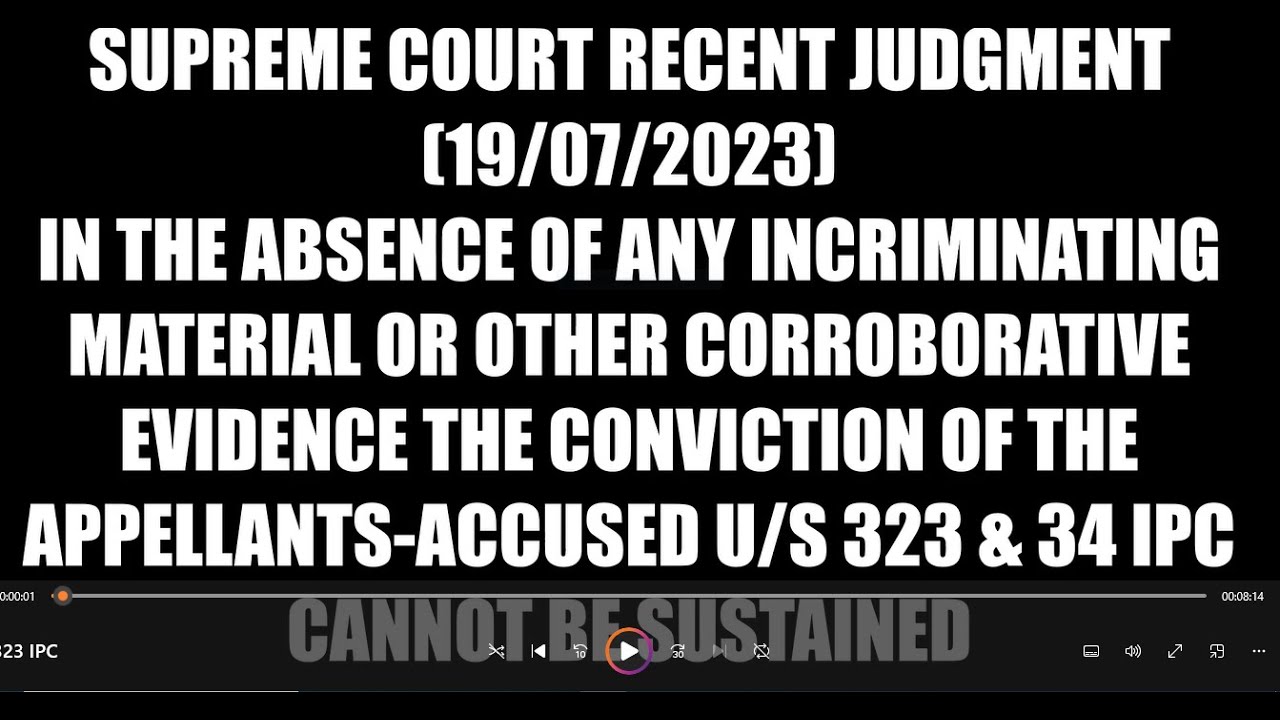
Ever heard of Section 323 of the Indian Penal Code, or IPC for short? It sounds intimidating, doesn’t it? But trust me, it’s not as scary as a Bollywood villain lurking in the shadows.
Basically, Section 323 deals with voluntarily causing hurt. Think of it as the legal definition of a good ol' fashioned, not-so-friendly shove or a playful (but maybe a tad too enthusiastic) noogie.
But here's the thing – the Supreme Court, our nation's ultimate legal superhero team, has recently weighed in on this section. And their judgment? Let's just say it's made things a whole lot clearer, and maybe even a little bit more fun (legally speaking, of course!).
Must Read
What Exactly Is 'Hurt' Under Section 323?
Now, before we dive into the Supreme Court's wisdom, let's break down what “hurt” actually means in the eyes of the law. It's not just stubbing your toe on the coffee table.
We're talking about physical pain, disease, or infirmity. So, a playful tickle fight that accidentally turns into a bruise? Potentially Section 323 territory! Accidentally spilling hot coffee on someone? Brace yourself.
But don't panic! It's not like the police will haul you off to jail for every little mishap. There's a crucial element: intent.
The Supreme Court Steps In: Clarity and Common Sense Prevail!
This is where the Supreme Court comes in, riding in on a white horse of justice (metaphorically speaking, of course – imagine the traffic jam!). They’ve been clarifying what kind of "hurt" truly warrants a Section 323 charge.
They've basically said, "Hey, let's not criminalize every minor scuffle or accidental bump. Let's use some common sense!" Thank goodness, right?

Think of it like this: imagine two friends playfully wrestling, and one accidentally elbows the other in the ribs. It stings, sure. But is it something that needs to be dragged into the courtroom? Probably not!
The Importance of Intent: It's All in the Mind (and the Actions)!
The Supreme Court emphasized the importance of intent. Did you mean to cause harm? Or was it just a clumsy accident? This makes a HUGE difference.
If you deliberately punched someone in the face, well, that's a clear violation of Section 323 (and probably other sections too!). But if you tripped and accidentally bumped into someone, causing them to stumble? That's a different story.
The court is essentially saying, “Don't be a bully, but don't be afraid to be a little clumsy either!” Okay, maybe they didn’t say it exactly like that, but you get the gist.
Practical Implications: What Does This Mean for You?
So, what does all this legal mumbo jumbo actually mean for your everyday life? Here’s the lowdown.
Firstly, it means you don't have to live in constant fear of accidentally bumping into someone and getting arrested. Relax, take a deep breath, and maybe watch where you're going!
Secondly, it reinforces the idea that the legal system is supposed to be about justice, not about punishing every minor mishap. The Supreme Court is saying, "Let's focus on real crimes, not accidental ouchies!"
The Power of Context: It's Not Just What You Did, But Why!
The Supreme Court’s judgement highlights the importance of context. Was there a genuine attempt to cause harm, or was it a misunderstanding?
Imagine two people arguing, and one accidentally knocks the other's phone out of their hand. Was it a deliberate act of aggression, or a frustrated gesture gone wrong? The context matters!
This focus on context allows judges to make more informed decisions, separating genuine criminal acts from unfortunate accidents.

Examples in Action: Scenarios Where Section 323 Might (or Might Not) Apply
Let's play a game of "Section 323: Yay or Nay?" Here are a few scenarios to ponder.
Scenario 1: You're playing cricket, and you accidentally hit a bystander with the ball. Ouch! But, unless you were deliberately aiming for them (which would be very unsportsmanlike!), it's likely just an accident.
Scenario 2: You're in a crowded market, and you accidentally step on someone's foot. Annoying, yes. Criminal? Probably not. Just apologize profusely and move on!
Scenario 3: You're angry at someone and you punch them in the face. Definitely a Section 323 situation (and possibly more serious charges). Don't do that!
The 'Reasonable Person' Standard: What Would a Sensible Person Do?
Often, courts use the "reasonable person" standard. What would a reasonable person have done in that situation?

Would a reasonable person have foreseen the potential for harm? Would a reasonable person have taken steps to prevent that harm? These are the questions judges ask.
So, before you engage in any potentially risky activity, ask yourself: "What would a reasonable person do?" If the answer involves bubble wrap and a padded room, maybe reconsider your plans!
The Big Picture: Justice, Fairness, and a Little Bit of Common Sense
Ultimately, the Supreme Court's judgment on Section 323 is a win for common sense. It reinforces the idea that the law should be used to protect people from genuine harm, not to punish every accidental bump and bruise.
It's a reminder that context matters, intent matters, and that a little bit of understanding can go a long way.
So, go forth and live your life! Just try not to punch anyone in the face, okay?
"Let justice be done, though the heavens fall." - An old legal maxim. (But hopefully, the heavens won't fall. That would be inconvenient.)