
Spacing Of Smoke Detectors As Per Nfpa 72
Ever paused to gaze at that unassuming disc on your ceiling or wall? It’s your smoke detector, a silent sentinel standing guard. But have you ever truly pondered its specific location?
There's a fascinating secret world behind that placement. It's not just stuck up there on a whim. Oh no, there's a whole brilliant science to it.
This hidden realm is meticulously guided by a master plan. It’s known as NFPA 72, the National Fire Alarm and Signaling Code. Think of it as the ultimate playbook for fire safety heroes.
Must Read
Now, the word "code" might conjure images of dusty old rulebooks. But understanding the spacing of smoke detectors as per NFPA 72 is surprisingly captivating. It’s like uncovering a clever puzzle!
The Dance of Smoke and Sensors
Imagine a room, any room in your home. Where is the absolute sweet spot for that little life-saver? NFPA 72 holds all the ingenious answers.
It's not merely about covering a general area. It's about outsmarting smoke itself. Smoke can be a surprisingly tricky character, floating and swirling in unexpected patterns.
It loves to hide, to gather silently in forgotten corners. Smoke can be a real sneaky villain, difficult to pin down. But the experts behind NFPA 72 know all its tricks.
They've devised a brilliant strategy, a precise pattern for placement. This strategy ensures no sneaky smoke plume escapes detection. It's truly a marvel of intelligent design!
Finding the Perfect Perch
Let's talk about the ceiling, for instance. It seems like a simple choice, right? But even there, specific rules apply to ensure maximum effectiveness.
Smoke naturally rises, seeking the highest point. So, placing a detector high up makes perfect sense. But it's not quite that simple.
There are invisible zones, known as "dead air spaces." These are areas where smoke might struggle to reach quickly. They're often found near wall-ceiling junctions.
Imagine the top corner of a room, where the wall meets the ceiling. Smoke can sometimes get trapped or move sluggishly there. This is where clever placement comes in.
"The art of smoke detector placement is about intercepting smoke's natural journey, no matter how subtle."
NFPA 72 guides us away from these potential dead zones. It suggests keeping detectors a certain distance from the walls. This ensures they're in the path of rising smoke.
Usually, you'll find recommendations to place them at least four inches from a wall. This simple rule makes a huge difference. It allows smoke to flow freely into the sensor.
The Unseen Grid of Protection
Then there's the concept of coverage area. Each smoke detector has its own protective bubble, an invisible sphere of vigilance.
You wouldn't want huge gaps between these bubbles, would you? That would leave vulnerable spots where smoke could thrive undetected.
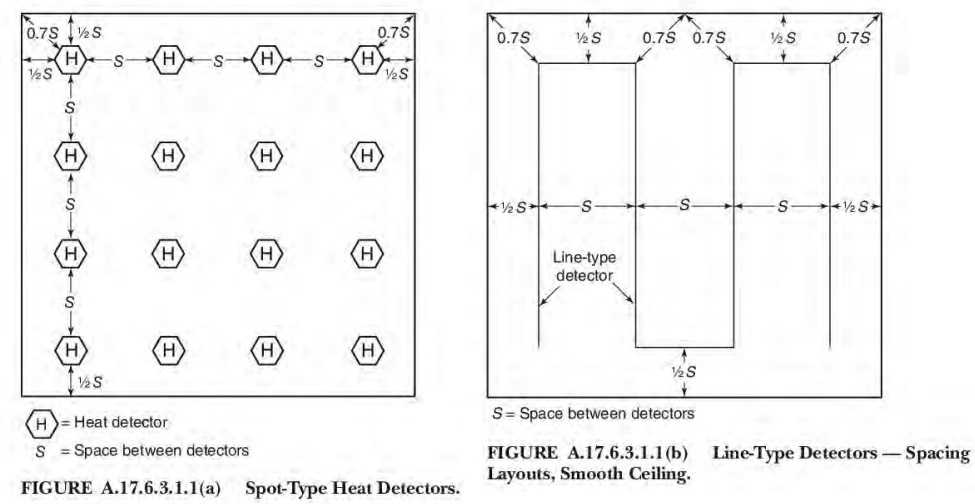
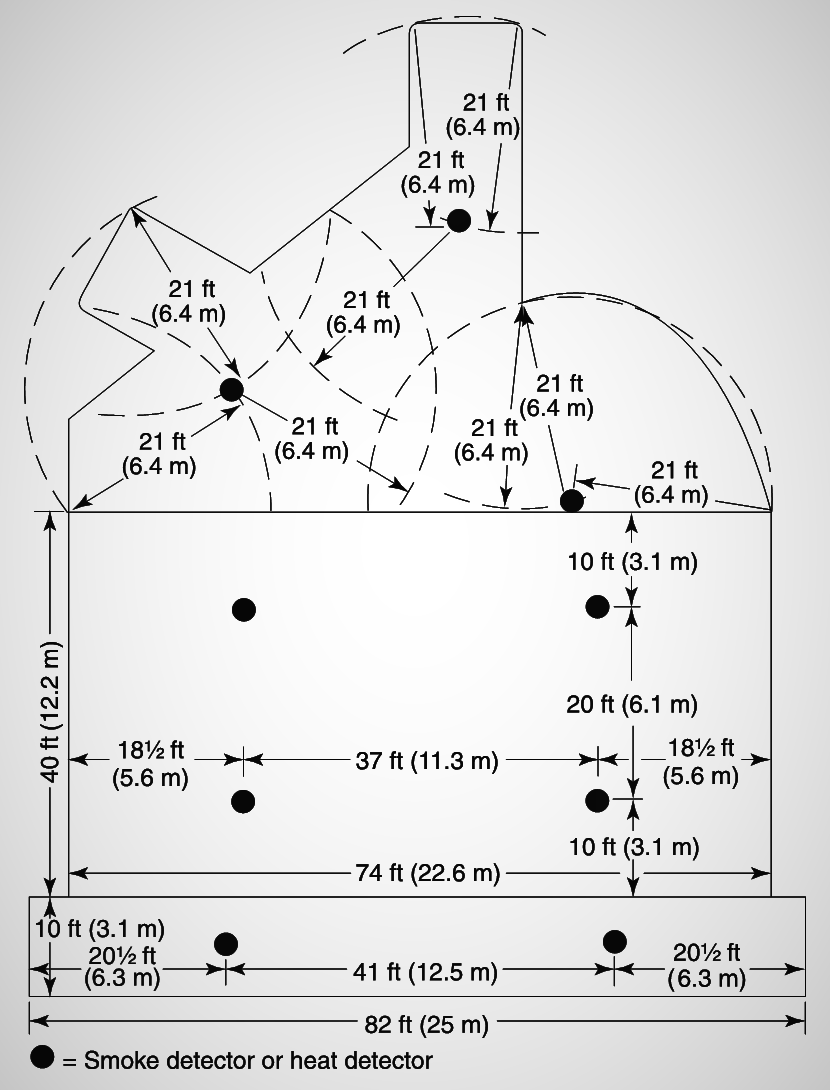
NFPA 72 specifies maximum spacing between detectors. This ensures a continuous, overlapping blanket of safety throughout your home or building.
Think of it like a team of superheroes. Each hero has a special power, and together they cover every inch of the city. No villainous smoke stands a chance!
What About Beams and Sloping Ceilings?
Homes aren't always perfect square boxes with flat ceilings. What about those charming but tricky architectural features?

High cathedral ceilings, exposed beams, or even oddly shaped rooms present unique challenges. But don't worry, NFPA 72 has thought of everything.
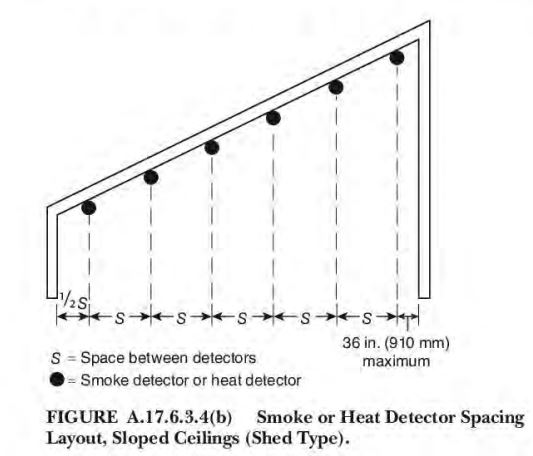
For sloping ceilings, for example, the highest point is often the best spot. Smoke loves to gather there like a lost cloud.
Beams, too, can act like tiny dams, redirecting or trapping smoke. The code gives clever guidance on how to work around these obstacles. It's all about understanding smoke's behavior.
Sometimes, you might need an extra detector or two to account for these features. It's a small price for comprehensive protection.
"Every architectural detail, from a cozy nook to a grand archway, plays a part in the smoke's journey, and thus, the detector's destination."
The Art of the Hallway Detector
Hallways are often long and narrow. They act like smoke superhighways, channeling it rapidly through a home.
Placing detectors in hallways is crucial. But again, there's a specific spacing recommendation. You can't just throw one up and hope for the best.
NFPA 72 advises placing detectors at regular intervals down a long corridor. This ensures early warning, no matter where the smoke originates.
It's like setting up a series of tripwires. The moment smoke crosses one, the alarm sounds, giving everyone precious time.
Bedrooms and Sleeping Areas
The bedroom is where we're most vulnerable. We're asleep, unable to detect smoke on our own.
That's why NFPA 72 insists on a smoke detector in every sleeping room. This isn't just a good idea; it's a vital safeguard.
The spacing within these rooms follows the same ingenious principles. It considers the flow of air and the natural path of rising smoke.
Imagine waking up to that alert, knowing that a tiny disc, perfectly positioned, just saved your family. It’s a powerful thought.
The Unsung Heroes of Safety
Who are the masterminds behind all these clever rules? A team of dedicated experts, engineers, and fire safety professionals.
They spend countless hours researching, testing, and refining these guidelines. They simulate fires, study smoke patterns, and analyze data.
Their goal is simple: to create the most effective system possible. They are the unsung heroes of public safety.
And their work, distilled into NFPA 72, ensures that your smoke detectors are not just installed, but installed smartly.
So, the next time you glance at your smoke detector, remember the intricate thought behind its placement. It's a testament to human ingenuity.

"Every millimeter of spacing, every consideration of airflow, is a silent promise of protection, born from expert dedication."
It’s a tiny piece of technology with a huge, life-saving job. And its effectiveness truly hinges on following these brilliant spacing guidelines.
You don't need to memorize every line of NFPA 72. But appreciating the depth of its wisdom is truly special.
It’s about knowing there’s a robust, well-researched system at play. A system designed to give you the earliest possible warning.
Perhaps this peek into the world of smoke detector spacing has sparked a little curiosity in you. Maybe even a newfound respect for those little discs!
It turns something seemingly mundane into a subject of genuine fascination. It shows that even in the simplest objects, there's profound engineering.
So next time you're walking through your home, take a moment. Look up at your smoke detectors.
Are they positioned with this ingenious wisdom in mind? You just might be surprised by what you discover about your own home's protective grid!
The spacing of smoke detectors, as guided by NFPA 72, isn't just a technical detail. It's a fascinating narrative of safety, science, and smart design.
It’s a story waiting for you to look up and appreciate. And isn't that pretty entertaining?