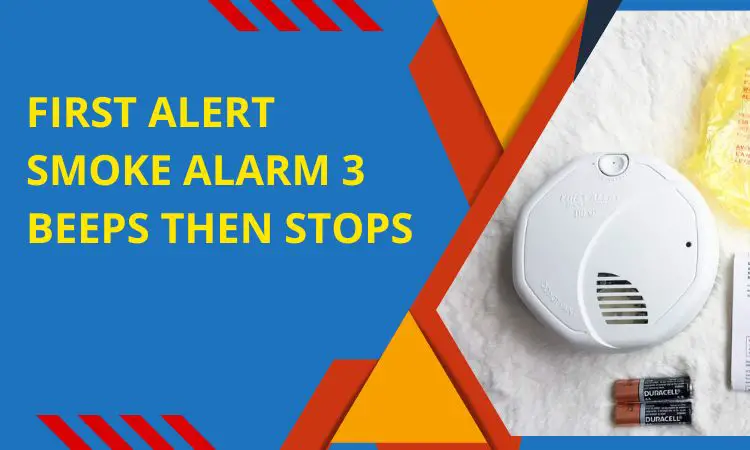
Smoke Detector Beeps Three Times Then Stops

Ever been startled by that sudden, piercing sound only to have it abruptly silence itself, leaving you wondering, "What was that all about?" We're talking, of course, about your smoke detector letting out a quick burst of three beeps and then going quiet. It’s a common, slightly unsettling household mystery that many of us have experienced. Instead of shrugging it off, let's turn this little enigma into a fun opportunity to learn something new about the unsung heroes of our homes!
Understanding these little chirps and beeps isn't just for emergency responders; it’s for all of us. It's about empowering ourselves with knowledge that can prevent panic, save time, and even save lives. Think of your smoke detector as a silent guardian, diligently watching over you. When it beeps three times and then stops, it's usually trying to tell you one of a few things, and knowing the message can make all the difference.
So, what's the purpose behind this specific three-beep serenade? In most standard smoke detectors, three consecutive beeps are the universal sign of a fire alarm. This means the detector has sensed smoke particles in the air. The reason it stops? Well, often, the smoke event was transient. Maybe you burnt the toast a little too much, or there was a brief puff of smoke from a fireplace, and the air cleared quickly. The detector did its job – it sensed a potential threat – and then, seeing that the threat subsided, it went quiet. It’s an incredibly important function, serving as your home's early warning system. Without it, even minor smoke events could escalate into dangerous situations unnoticed. Its benefit is clear: it’s your first line of defense, giving you crucial seconds to react.
Must Read
In our daily lives, understanding this specific signal can prevent unnecessary worry. Instead of just thinking "oh, it's just being noisy," you now know it means "I sensed smoke, even if briefly!" This knowledge can prompt a quick visual check of the area. Did someone leave the stove on? Is there a forgotten candle? In educational settings, teaching children about these different alarm patterns is vital for fire safety. Imagine a child knowing that three beeps mean "check for smoke" versus a single chirp every minute, which typically signifies a low battery. It helps them react appropriately and not dismiss critical warnings.
Ready to explore this a bit more practically? The next time your detector performs its three-beep-and-stop routine, instead of just hitting the silence button, try these simple tips:
- First, always prioritize safety. Quickly scan the area for any actual signs of smoke or fire.
- If there's no visible smoke, consider what might have triggered it. Was dinner cooking a little too enthusiastically?
- Give your detector a gentle wipe with a dry cloth. Dust or small insects can sometimes interfere with the sensor, leading to false alarms.
- Press the test button on your detector. It should emit a loud, continuous alarm. This confirms it’s still functioning.
- If these three-beep-and-stop incidents become frequent without any clear cause, it might be a sign that your detector is getting old or malfunctioning. Most smoke detectors have a lifespan of about 10 years, so checking the manufacturing date on the back is always a good idea.