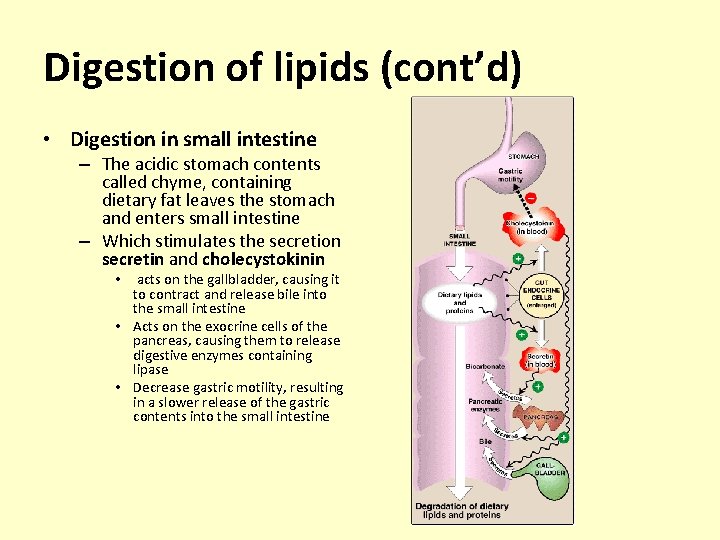
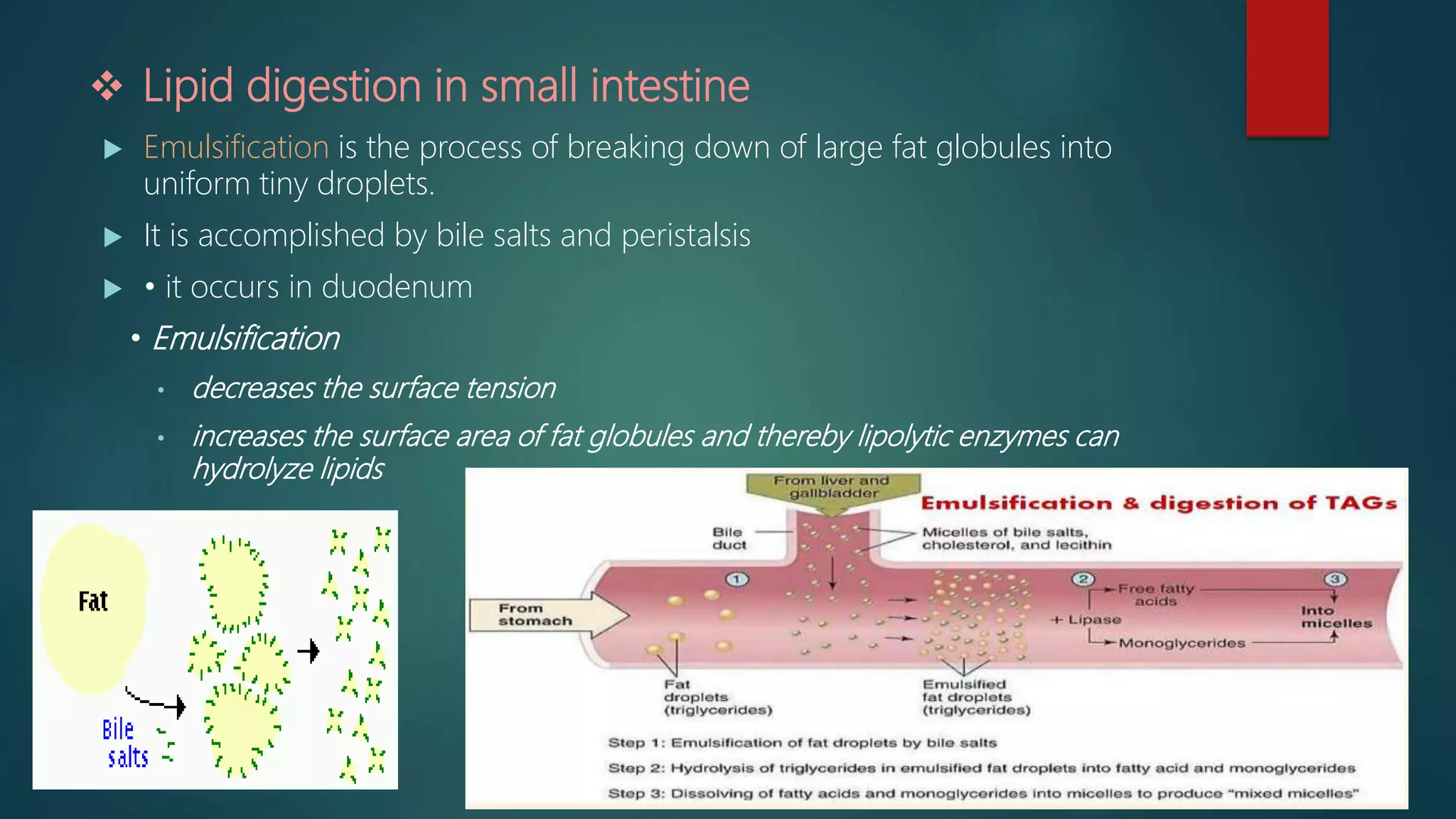
Most Lipid Digestion Occurs In The
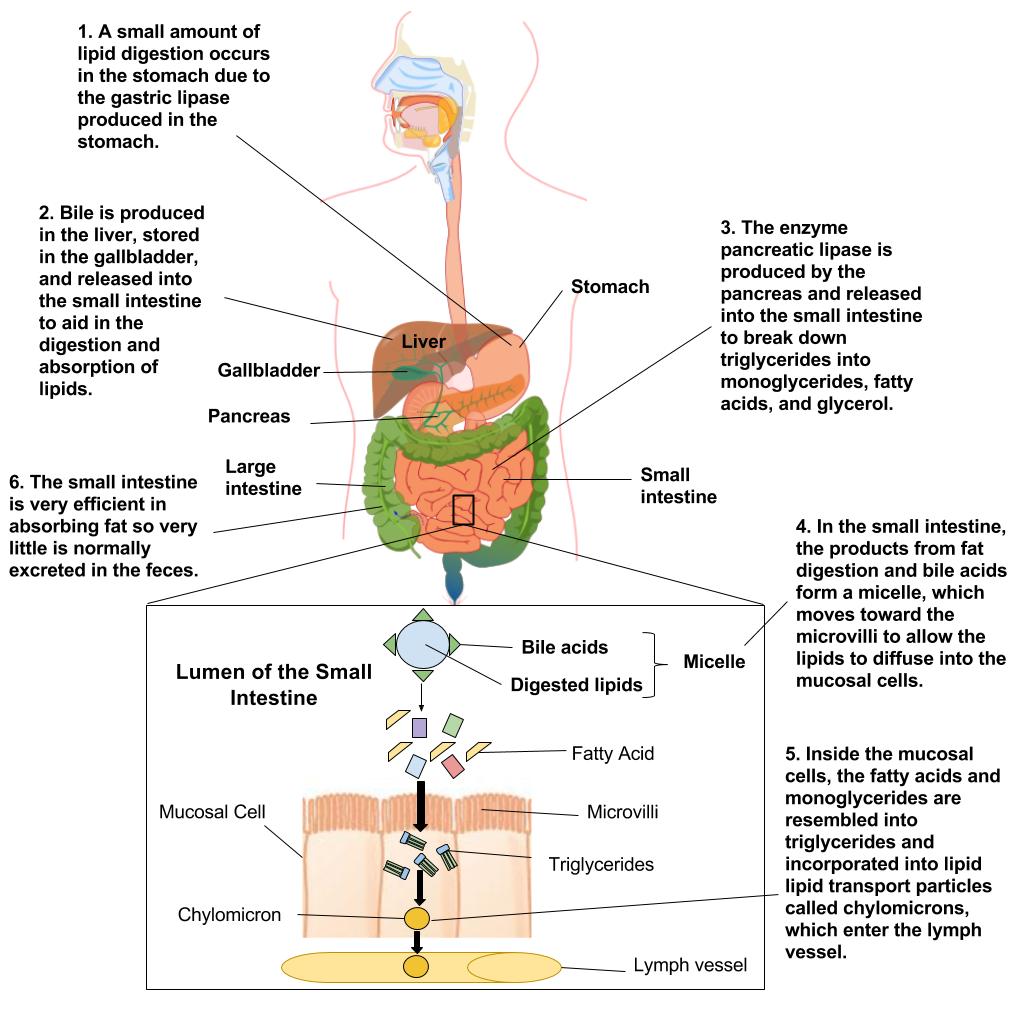
Let's face it, talking about digestion isn't exactly a dinner party conversation starter. But stick with me for a moment, because understanding where the magic (or rather, the breakdown) of fats happens in our bodies is surprisingly important. Think of it like understanding where your car gets its fuel – crucial for a smooth ride, right? And while we might not consciously think about it, the efficient digestion of fats is what keeps us energized, supports our brain function, and helps us absorb vital nutrients. So, buckle up, because we're diving into the fascinating world of lipid digestion!
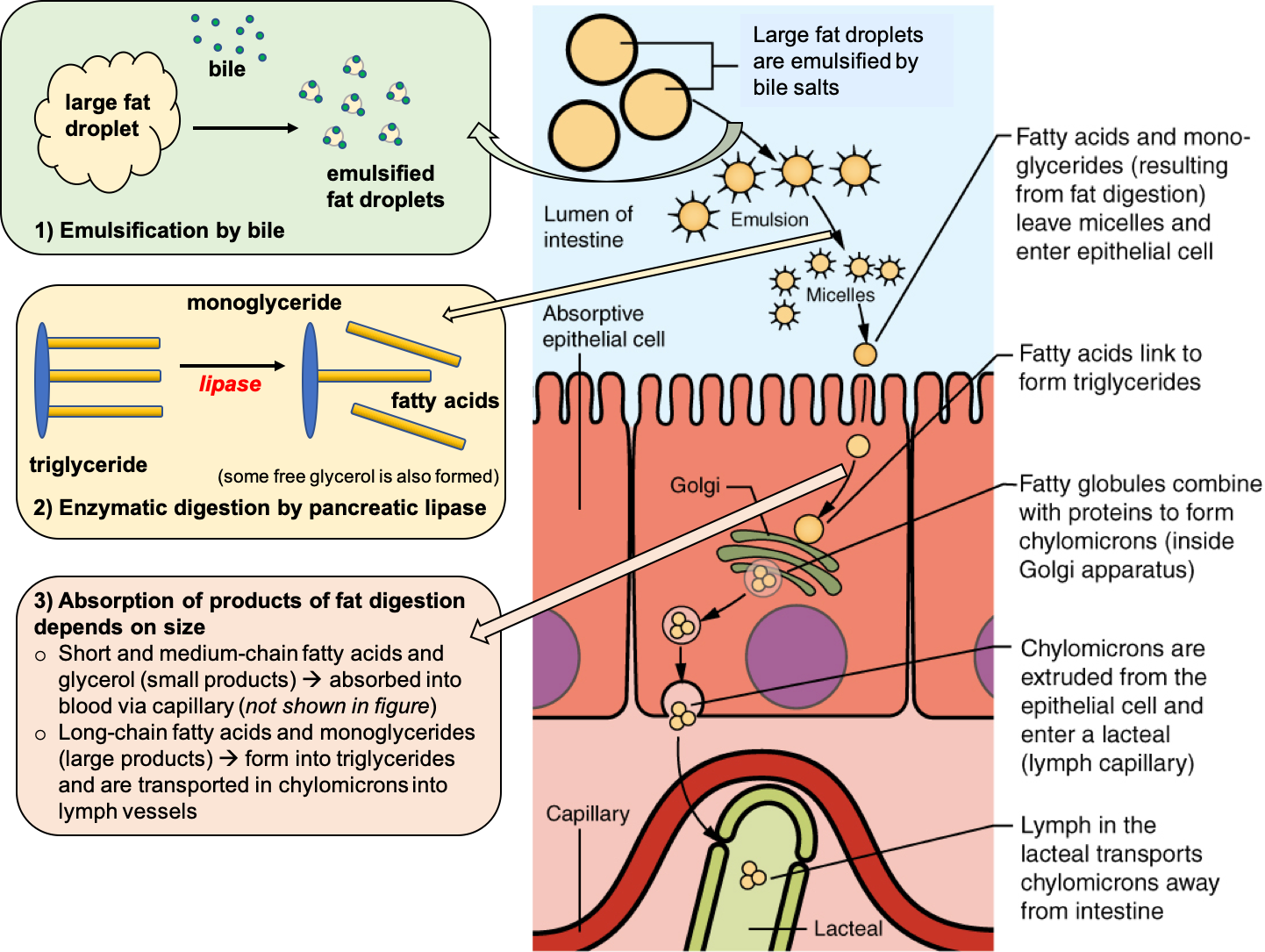
The star of our show? The small intestine. You might think the stomach, with its churning action and acid bath, is the main player in breaking down everything we eat. And while it definitely plays a role, the vast majority of lipid digestion takes place in the small intestine. This is where the real action happens, thanks to a well-coordinated team effort involving enzymes, bile, and specialized cells.
So, why is fat digestion so important? Well, fats, or lipids, are much more than just calorie bombs. They're essential for numerous bodily functions. They provide us with a concentrated source of energy, helping us power through our day. They’re also crucial for absorbing fat-soluble vitamins like A, D, E, and K, which are vital for everything from healthy vision to strong bones. Furthermore, fats are key building blocks for cell membranes and hormones, playing a significant role in cell communication and overall health.
Must Read
You see this in action every day. Think about adding olive oil to your salad – the fats in the oil help you absorb the nutrients from the vegetables. Or consider the creamy texture of avocado on your toast – that's fat providing satiety and essential nutrients. Even the seemingly simple act of enjoying a piece of salmon is an example; the omega-3 fatty acids in the fish support brain health and reduce inflammation. These are all examples of how lipid digestion contributes to our well-being.
Now, how can we make sure our small intestine is a happy and efficient fat-digesting machine? Here are a few practical tips:
- Eat a balanced diet: A diet rich in diverse nutrients supports the overall health of your digestive system. Don't overload on unhealthy fats, and incorporate plenty of fiber-rich foods.
- Chew your food thoroughly: This gives your body a head start on breaking down food, making it easier for your small intestine to do its job.
- Stay hydrated: Water is crucial for digestion and helps transport nutrients throughout the body.
- Consider digestive enzymes: If you experience digestive issues, talk to your doctor about whether digestive enzyme supplements might be beneficial. These can help break down fats and other nutrients.
- Manage stress: Stress can negatively impact digestion. Find healthy ways to manage stress, such as exercise, meditation, or spending time in nature.
Understanding that most lipid digestion occurs in the small intestine empowers you to make informed choices about your diet and lifestyle. By supporting the health of your digestive system, you can ensure that you're getting the most out of the fats you consume, contributing to better overall health and well-being. So, next time you're enjoying a delicious meal, remember the hardworking small intestine diligently breaking down those fats and fueling your body!