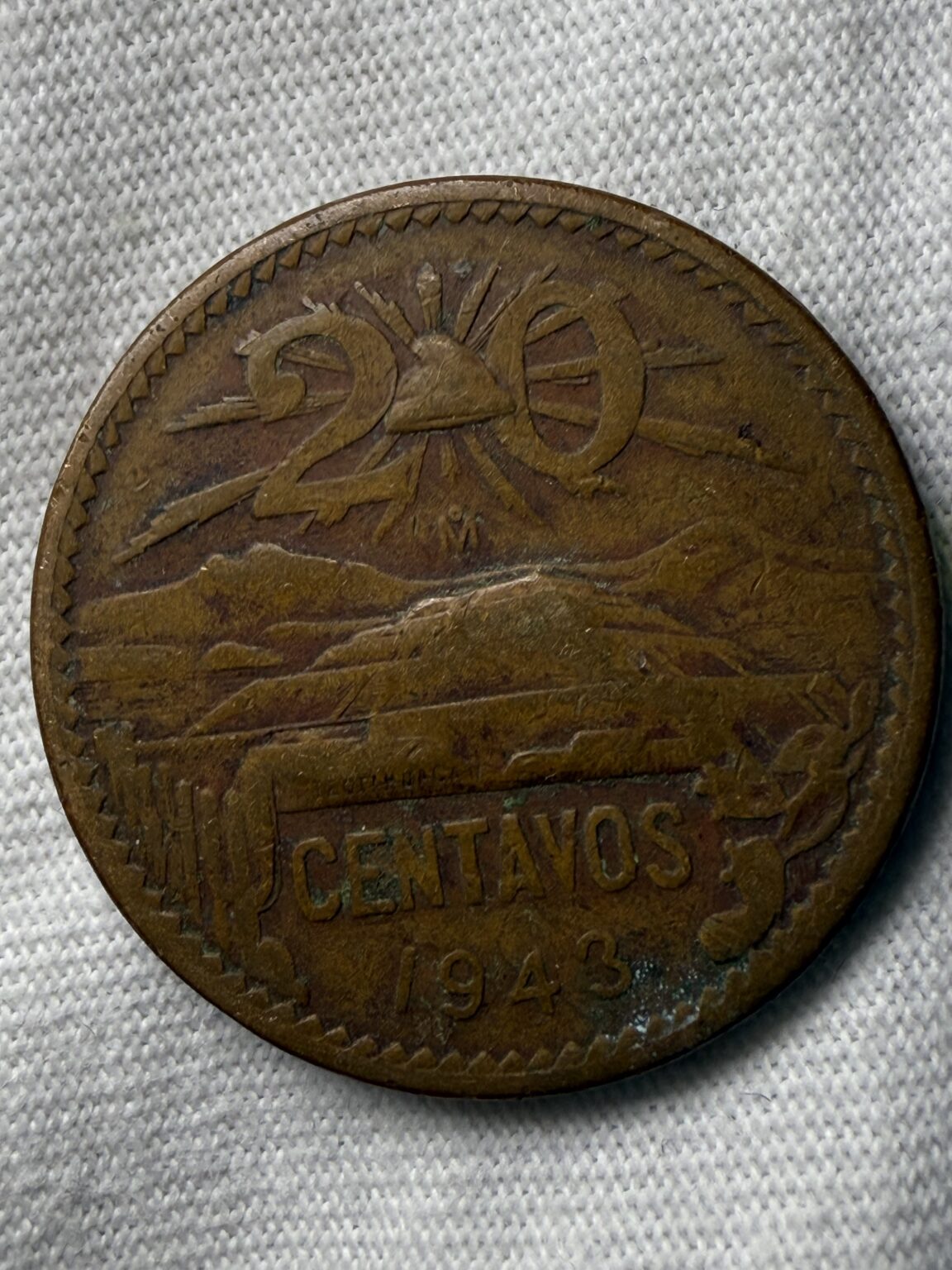
Moneda De 20 Centavos De 1943 Valor Actual

Ever rummage through your grandma's old coin collection and stumble upon a curious little piece of history? Maybe it's a dark, almost forgotten 20-centavo coin. If that coin whispers the year 1943, you might just be holding something a little more interesting than pocket change. Let's dive into the world of the 1943 Philippine 20-centavo coin and see what secrets it holds... and what it's actually worth.
Before we get bogged down in numbers, let's take a quick trip back in time. 1943. The Philippines was under Japanese occupation during World War II. This period dramatically impacted daily life, including the coins people used. So, these 20-centavo pieces weren't just money; they were a symbol of a nation struggling through a pivotal moment.
The Deets on the Peso: What Makes It, It?
So, what are we looking for? The 1943 20-centavo coin is primarily made of a less valuable metal due to wartime scarcity. It isn't silver; it's usually a base metal like brass or bronze.
Must Read
The design is pretty standard for the time: you'll typically see a portrait of a figure (usually a national hero or symbol) and the denomination (20 centavos) along with "Filipinas" or "Philippines." The exact design elements can vary slightly depending on the mint.
Here's a crucial tip: examine the coin carefully for any mint marks. These small identifiers, often located near the rim, can sometimes indicate rarity and impact value. It's like finding a hidden Easter egg!

Okay, Okay, Tell Me the Money Story!
Now for the burning question: what's it worth? Here's the thing: most 1943 20-centavo coins aren't going to make you rich. The actual market value depends on a few key factors:
- Condition: This is HUGE. A coin in pristine, uncirculated condition (basically, it looks like it just came off the press) will fetch a much higher price than a worn, scratched, or corroded coin. Think of it like a vintage car: a perfectly restored Mustang is worth way more than one sitting in a junkyard.
- Rarity: As mentioned earlier, mint marks and any unusual errors can significantly impact value. Keep an eye out for anything that seems "off."
- Demand: The coin market, like any market, is driven by supply and demand. If there's a lot of interest in Philippine coins from this era, and relatively few coins available, prices go up.
General Range: In very circulated condition, a common 1943 20-centavo coin might be worth only a few dollars. However, a rare variety in excellent condition could potentially fetch hundreds, or even thousands, of dollars. Consult a professional coin appraiser or numismatist for an accurate assessment.
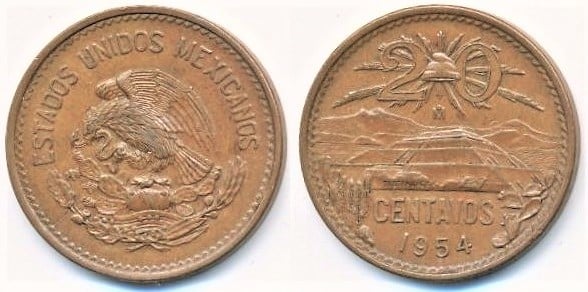
Pro Tip: Don't clean the coin yourself! Cleaning can actually damage the coin's surface and reduce its value. Leave it to the experts.
Beyond the Numbers: A Piece of History
Even if your 1943 20-centavo coin isn't a goldmine, it's still a tangible link to a fascinating period in Philippine history. Holding it in your hand is like holding a tiny piece of the past – a reminder of resilience and adaptation during wartime. It's a conversation starter, a history lesson, and a unique heirloom all rolled into one small coin.
Bringing It All Home
The story of the 1943 20-centavo coin reminds us that value isn't always about money. Sometimes, the real treasure lies in the story behind the object, the history it represents, and the connection it offers to the past. It encourages us to look beyond the surface and appreciate the stories hidden in the everyday objects we encounter. So, the next time you see an old coin, take a moment to consider its journey – you might be surprised by what you discover.