
Is There A Device That Detects Hidden Cameras
Ever had that slightly spooky, super-spy movie feeling? You know, the one where our hero scans a room for hidden laser grids or tiny, almost invisible cameras? It’s a classic trope, right? But it always makes you wonder: is that real? Could there actually be a device, in our everyday world, that lets you peek behind the curtain and discover if someone’s trying to catch you on camera without you knowing? Well, grab a comfy seat and let’s dive into this intriguing question with a healthy dose of curiosity and zero paranoia!
The short answer is: yes, these devices absolutely exist! And they’re not just props from a sci-fi flick. They’re real, they’re accessible, and they’re pretty darn interesting. But before you imagine yourself as James Bond with an array of flashing lights and beeping gizmos, let’s unpack what they are, how they work, and why you might even want one in your tech toolkit.
Why Even Bother Looking For Hidden Cameras?
Okay, so why is this even a thing? For most of us, our daily lives aren’t exactly riddled with international espionage. We’re just trying to get through the day! But think about it: we live in an age where technology is everywhere, and unfortunately, not everyone uses it for good. The idea of someone placing a tiny camera where it shouldn't be, infringing on your privacy, is a bit unsettling, isn't it?
Must Read
Whether you’re staying in an Airbnb, trying out a new changing room, or just want to feel a little more secure in your own space, the thought of being unknowingly watched can make anyone feel a bit… vulnerable. So, these devices aren’t just for spies; they’re for anyone who values their personal space and wants a little extra peace of mind. It’s less about being paranoid and more about being aware and empowered. Like having an extra pair of eyes, but for invisible things!
So, How Do These Magical Gadgets Work?
This is where it gets really cool! There are generally two main types of technology these detectors employ, and they tackle the problem from different angles, like a dynamic duo.

The Radio Frequency (RF) Detector: The Invisible Signal Hunter
Imagine your radio, but instead of tuning into music stations, it’s searching for tiny, secret broadcasts. That’s essentially what an RF detector does. Most hidden cameras that transmit their footage wirelessly do so using radio frequencies – Wi-Fi, Bluetooth, cellular signals, or even unique frequencies. These signals are invisible to the naked eye, but an RF detector can pick them up.
Think of it like this: if a hidden camera is sending out a live video feed, it’s essentially shouting across the room in a specific frequency. Your RF detector is listening for those shouts. When it hears one, it usually beeps or lights up, getting stronger as you get closer to the source. It’s like playing a high-tech game of hot-or-cold! It won’t tell you where the camera is exactly, but it will tell you there’s a wireless transmission happening nearby that shouldn’t be there.
The Lens Detector: Catching the Glimmer
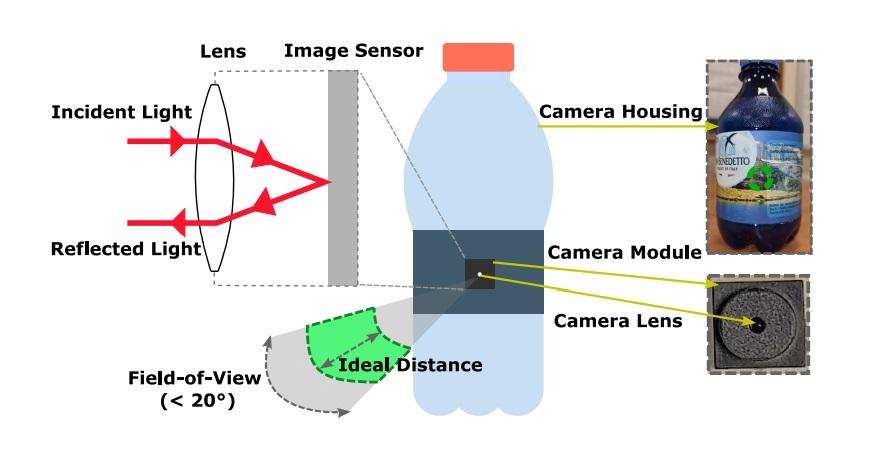
This one is perhaps the most fun and visually intuitive. All cameras, no matter how small, have one essential component: a lens. And lenses, by their very nature, are designed to reflect light. A lens detector exploits this simple principle.
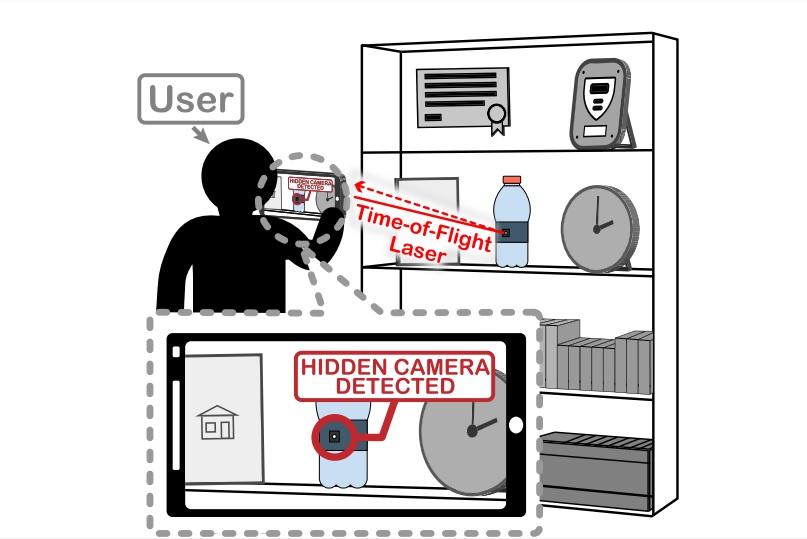
These devices typically have a ring of super-bright red (or sometimes green) LEDs. When you look through the device’s special viewfinder and scan a room, these LEDs flash outwards. If there’s a camera lens, even a tiny pinhole one, in your line of sight, it will catch that LED light and reflect it directly back to you. What you see through the viewfinder is a bright, distinct pinpoint of red light glowing back at you – like a cat’s eyes in the dark, but in miniature! It’s a very visual, almost Sherlock Holmes-esque way to find a lens, whether it's wirelessly transmitting or not.

This method is surprisingly effective because it relies on physics, not just radio waves. It doesn't matter if the camera is off, broken, or not transmitting; if it has a lens, this method has a good chance of finding it. It's truly a neat trick!
Are They Really That Good?
So, do these things actually work, or are they just expensive toys? The good news is, yes, they do work! But like any tool, their effectiveness depends on the quality of the device and how diligently you use them. A cheap, basic RF detector might only pick up strong signals, while a more advanced one can be quite sensitive.
Many commercially available detectors combine both RF and lens detection into one handy gadget. This gives you a double-whammy approach, tackling both wireless signals and dormant lenses. Some even have an additional feature to detect infrared (IR) light, which many night-vision cameras use to "see" in the dark without visible light. Pretty clever, right?
Beyond the Gadgets: Good Old-Fashioned Observation
While these detectors are super cool and definitely helpful, remember that they're just tools. The best defense is often a healthy dose of curiosity and observation. Look for things that seem out of place: a smoke detector pointed at your bed, a random phone charger plugged into an odd spot, a tiny hole in an alarm clock, or wires where they shouldn’t be.
Combine your tech savvy with your common sense, and you’ll be a veritable super-sleuth in no time! So, next time you hear that familiar movie trope, you’ll know that the idea of detecting hidden cameras isn’t just Hollywood magic. It’s a clever application of technology designed to give us all a little more control over our personal privacy. And that, my friends, is pretty neat.