
Is 17 A Prime Number Or A Composite Number
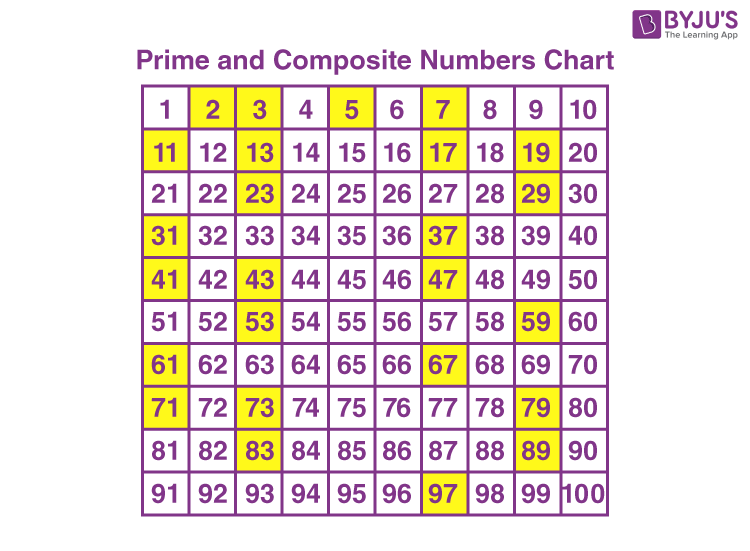
Imagine you're baking cookies. You've got 17 delicious, chocolate-chipped wonders cooling on the rack. Now, you want to share them fairly with your friends.
Can you split those 17 cookies evenly between two people? Nope! How about three? Still a no-go. Four? Five? You'll always end up with someone feeling shortchanged, or perhaps battling over the crumbs.
The Mysterious Case of Number 17
This brings us to the heart of our story: Is 17 a prime number, or a composite number? Think of numbers as little social butterflies, always wanting to mingle and divide themselves amongst others.
Must Read
Some numbers are more sociable than others. Like a shy wallflower at a party, 17 doesn’t easily mingle, and certainly doesn’t easily divide.
Prime Suspects: A Lineup of Lonely Numbers
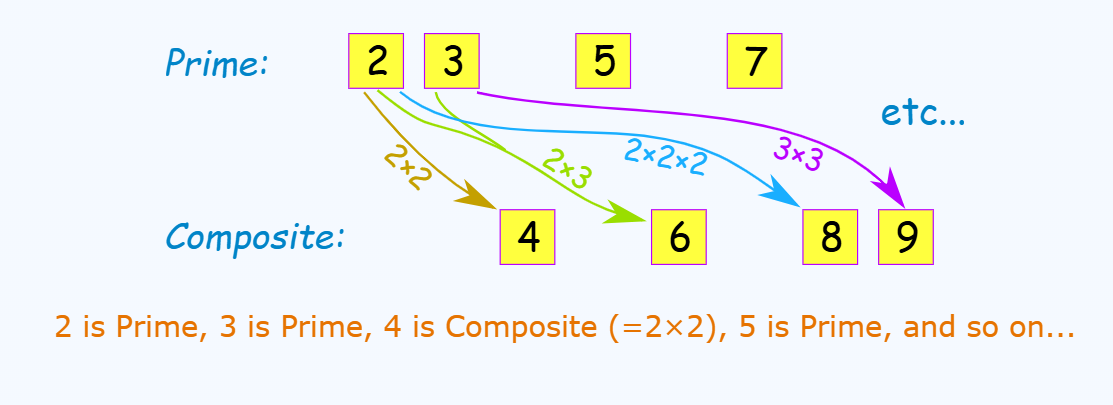
A prime number, like our cookie conundrum 17, is a number that’s only divisible by two things: itself and 1. It's like that fiercely independent friend who only relies on themself and maybe their very, very close twin.
So, 17 can only be perfectly divided by 1 and 17. No other number goes in cleanly. This makes 17 a card-carrying member of the Prime Number Club. Think of primes as the rebels of the number world, refusing to conform and be easily divided.
Composite Companions: The Sociable Numbers
On the other hand, a composite number is a social butterfly. It loves being divided! It’s got lots of friends (factors) that go into it perfectly. Take the number 12. You can divide it by 1, 2, 3, 4, 6, and 12. Look at all those friends!
Composite numbers are like the generous hosts of the number party, always willing to share and be divided amongst their many acquaintances. They are divisible by 1 and itself.
Seventeen: A Numerical Hermit
Back to our cookies. If you had 12 cookies, you could easily divide them among 2, 3, 4, or 6 people. Everyone gets a fair share, and smiles abound. But with 17 cookies? You're stuck with unfair divisions, or maybe just eating them all yourself (which, let's be honest, isn't the worst outcome).
This “indivisibility” is what makes 17 a prime number. It’s a loner, a numerical hermit, fiercely independent and resistant to being split up.
Why Does This Matter? (And Does It, Really?)
You might be thinking, "Okay, so 17 is prime. Big deal! Why should I care?" Well, prime numbers are surprisingly important. They're the building blocks of all other numbers.
Every number can be expressed as a product of prime numbers. It's like saying every Lego creation is made from individual Lego bricks. Prime numbers are the fundamental "bricks" of the number world.
Also, they're crucial for keeping your online information safe. Prime numbers are the backbone of modern cryptography. Without them, online shopping, banking, and even sending secure emails would be incredibly vulnerable.

The Prime Number Theorem: A Sprinkle of Wonder
The distribution of prime numbers is also quite fascinating. As you go higher and higher in numbers, primes become rarer and rarer.
The Prime Number Theorem describes how these primes are scattered. It’s a complex piece of math, but the underlying idea is that predicting where the next prime number will appear is a bit like predicting the next raindrop in a thunderstorm.
Is 17 Special? A Numerical Personality
Does being prime make 17 special? Well, in a way, yes. It has a unique numerical personality. It's a number that stands on its own two feet (or, rather, digits).
Think of it like this: all numbers have personalities. Some are friendly and outgoing (composite), while others are reserved and independent (prime). 17 is definitely the independent type. It doesn’t easily fit into molds and refuses to be easily categorized.
Of course, all numbers are special in their own way. But the prime numbers, with their unique indivisibility, hold a certain mystique. They’re the rebels, the lone wolves, the numbers that march to the beat of their own drum.
Prime Numbers in Everyday Life
While you might not consciously think about prime numbers every day, they are silently working behind the scenes to make our lives easier and safer. From secure online transactions to efficient data compression, primes are the unsung heroes of the digital world.
Next time you order something online, or send a secure email, take a moment to appreciate the prime numbers that are keeping your information safe from prying eyes. They are the silent guardians of our digital privacy.
A Prime Number Party Trick
Want to impress your friends at your next get-together? Casually drop the fact that 17 is a prime number. Explain that it can only be divided by 1 and itself. Watch their jaws drop in amazement (or, at least, polite interest!).
Bonus points if you can explain why prime numbers are important for cryptography. You’ll instantly become the most interesting person in the room. Or, at least, the most mathematically inclined.
Beyond Seventeen: A Journey into Primes
So, is 17 a prime number? Absolutely! It's a proud member of the Prime Number Club, a group of unique and indivisible numbers that play a crucial role in mathematics and beyond.
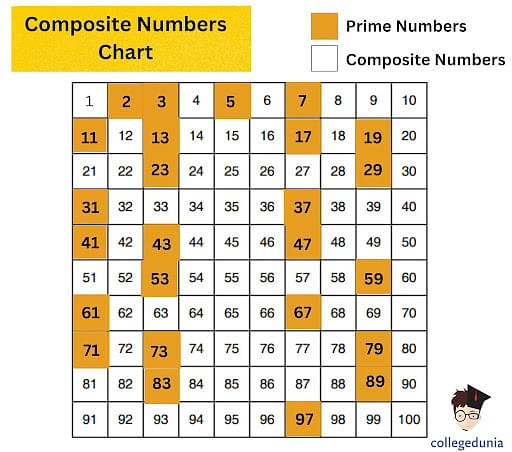
But the story doesn't end with 17. There are infinitely many prime numbers waiting to be discovered. Mathematicians are still searching for larger and larger primes, pushing the boundaries of our understanding of these fascinating numbers.
Next time you see a number, take a moment to consider its "personality." Is it a sociable composite number, happy to be divided and shared? Or is it a solitary prime number, fiercely independent and resistant to division? You might be surprised at what you discover.
The End (Or Is It Just the Beginning?)
Hopefully, you now have a newfound appreciation for prime numbers, and especially for our friend, number 17. They're more than just numbers; they're the building blocks of the number world, the guardians of our digital privacy, and the inspiration for mathematicians around the globe.
So, the next time you're baking cookies, remember the story of number 17 and its prime personality. And maybe, just maybe, consider baking a prime number of cookies... just for fun!
And who knows, maybe you will be the one to discover the next largest prime number! The possibilities are endless.