
How To Test A Raw Diamond At Home
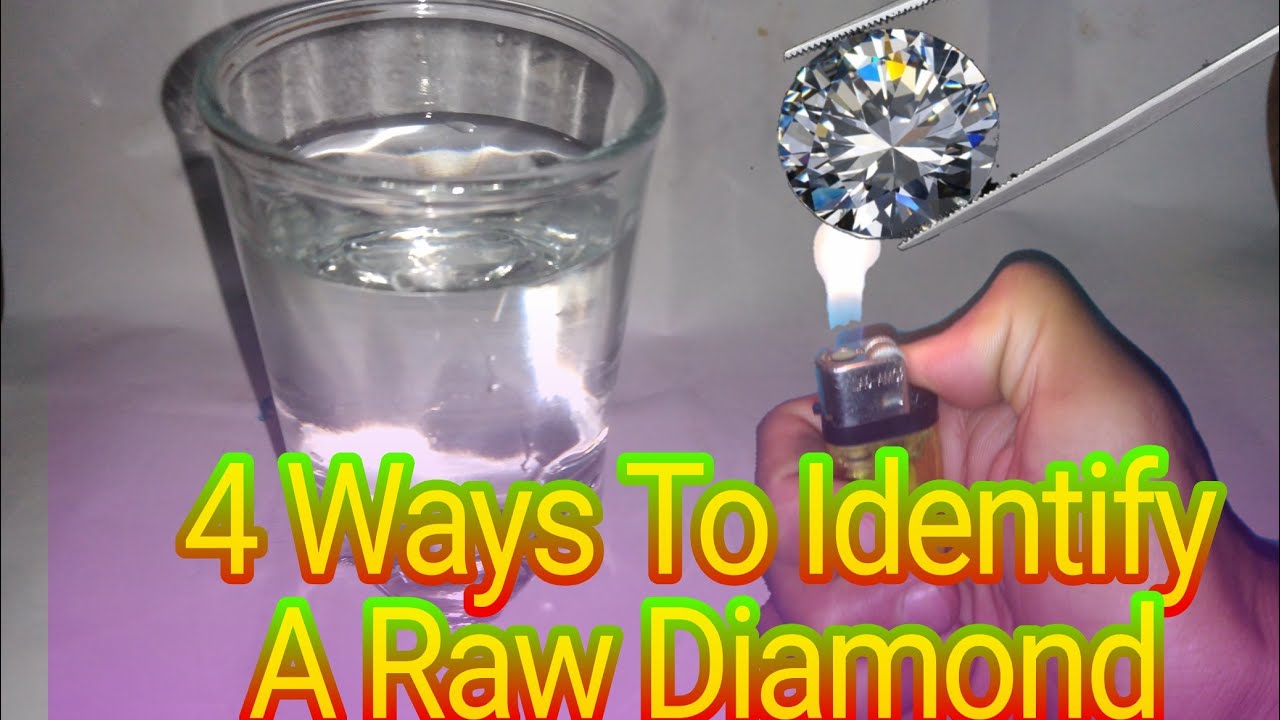
Ever stumbled upon a sparkly rock and wondered if it’s the real deal? Could it be a diamond in the rough, just waiting to be discovered? Well, grab your magnifying glass and get ready for some fun! Testing a raw diamond at home can be surprisingly entertaining.
Let's Get Started: The Sparkle Test
First, let's talk about sparkle! Diamonds are known for their brilliance. Hold your gem under a bright light.
Does it sparkle like a tiny disco ball? Or does it look a bit dull? Real diamonds have a unique way of bending and reflecting light.
Must Read
You're looking for intense brightness and fire – those colorful flashes. This is where things start to get exciting!
The Newspaper Test: Can You See Through It?
Next up: the newspaper test. Find a newspaper or any printed material with clear words. Place your stone flat on the letters.
Can you read the words through the stone? If you can, it's probably not a diamond. Diamonds bend light so much that you shouldn't be able to see clearly through them.
This is one of the simplest tests, but it's surprisingly effective. It's like a magic trick!
The Water Test: Sink or Swim?
Time for a little splash! Grab a glass of water and gently drop your stone inside. Watch carefully.

Does it sink straight to the bottom? Good sign! Diamonds are dense and should sink.
If it floats or hovers, it's likely not a diamond. This is another easy way to rule out fakes.
The Scratch Test: A Tough Cookie
Now for a tougher test. Diamonds are incredibly hard – the hardest natural substance, in fact! You’ll need a piece of glass.
Try to scratch the glass with your stone. Be careful not to hurt yourself!
If your stone scratches the glass, that's a good indication it could be a diamond. If not, well, better luck next time.

The Fog Test: Breathtaking Results
Okay, let's fog things up! Hold your stone close to your mouth and breathe on it, like you're trying to fog up a mirror.
Did it fog up? Now watch closely. How quickly does the fog disappear?
A real diamond disperses heat quickly, so the fog should disappear almost instantly. If it stays foggy for a few seconds, it's probably not a diamond.
Magnifying Glass: Inspecting Imperfections
Grab that magnifying glass again! Now it's time to look for imperfections.
While flawless diamonds exist, they are extremely rare. Most diamonds have some tiny imperfections, called inclusions.

If your stone looks absolutely perfect under magnification, it might be a fake. Real diamonds often have tiny flaws that make them unique.
Black Light Test: Does it Glow?
Shine a black light on your possible diamond. Some diamonds will fluoresce under ultraviolet light. They might glow blue!
If it glows, that's interesting! But, it doesn't guarantee it's a real diamond. Some fakes also glow.
If it doesn't glow, that also doesn't guarantee it's fake. But it is another clue, and another step in testing your gem.
The Importance of Professional Appraisal
These tests are fun, but they aren’t foolproof. They can give you a good indication, but they aren’t a substitute for a professional appraisal.

A trained gemologist has the tools and expertise to accurately identify a diamond and assess its quality. Don’t rely solely on home tests for valuable stones.
So have fun, play detective, and enjoy the thrill of the hunt! It’s an engaging way to learn about these fascinating gems! But if you think you have something truly special, seeking a professional appraisal is always the smartest move.
Why is this entertaining?
Let's be honest, playing amateur gemologist is just plain fun. It's like a mini-science experiment, but with the potential for a sparkly reward!
There's a certain thrill in trying to decipher the secrets of a stone. Could this be the one? The excitement is real!
Who knows, you might just discover a hidden talent for gem identification. Or, at the very least, you'll have a great story to tell!