
How To Set Time On Old Honeywell Thermostat

Hey there, fellow thermostat whisperer! Ever stand in front of that ancient Honeywell on your wall, just staring? Like it's a cryptic message from the past? You know, the one that probably saw bell bottoms come and go twice? Yeah, that one. It's cool, we've all been there. Trying to figure out how to simply, you know, set the time on a device that looks like it predates the internet.
But fear not, my friend! You're not alone in this delightful, retro tech challenge. Setting the time on these vintage beauties isn't nearly as intimidating as it looks. It's more like a friendly puzzle, really. And we're going to solve it together, right now, over a virtual cup of coffee.
Your Old Friend: The Honeywell Time Machine
First things first, let's make sure we're talking about the same kind of old. Is it beige? Kinda chunky? Does it have a little slide switch for 'Heat Off Cool'? Or maybe a small, almost hidden door that flips down? If it looks like it belongs in a museum, or at least a really retro diner, then bingo! You've got yourself a classic Honeywell, my friend. Welcome to the club!
Must Read
It’s important to remember that these aren't your smart home, app-controlled gadgets. Nope! These are the sturdy, reliable workhorses that just needed a little human intervention. And honestly, isn't there something charming about that?
Why Does the Time Even Matter?
Now, you might be thinking, "Who cares about the time on this old relic?" And fair enough, if it's just a manual 'set and forget' model. But if yours has any hint of programmability – even just 'morning, day, evening, night' settings – then the clock really matters. It's the brains behind the operation.
Without the correct time, your furnace might kick on at 3 AM instead of 7 AM. Or worse, turn off just as you're settling in for movie night. We don't want an ice age in your living room, do we? Or a sauna during your morning coffee. So, let’s get this little clock straightened out!

The Great Button Hunt
Alright, grab your detective hat. And maybe a magnifying glass, no judgment here! We're looking for buttons, dials, or even tiny levers. Don't expect touchscreens or fancy animations. We're talking good old-fashioned physicality here.
Sometimes they're hiding behind a small, flip-down panel at the bottom or side of the thermostat. Like a secret compartment in a spy movie, but for HVAC! Give it a gentle tug or press. Often, the important stuff is tucked away, protecting it from accidental nudges.
Find That "Time" Button (Your Holy Grail!)
Your mission, should you choose to accept it, is to find something labeled 'Time', 'Set Time', or occasionally, 'Clock'. It might be a dedicated button, or sometimes, you have to slide a switch to a 'Set Time' position. Keep an eye out for a little clock icon too. They loved their icons, even back then, bless their hearts!
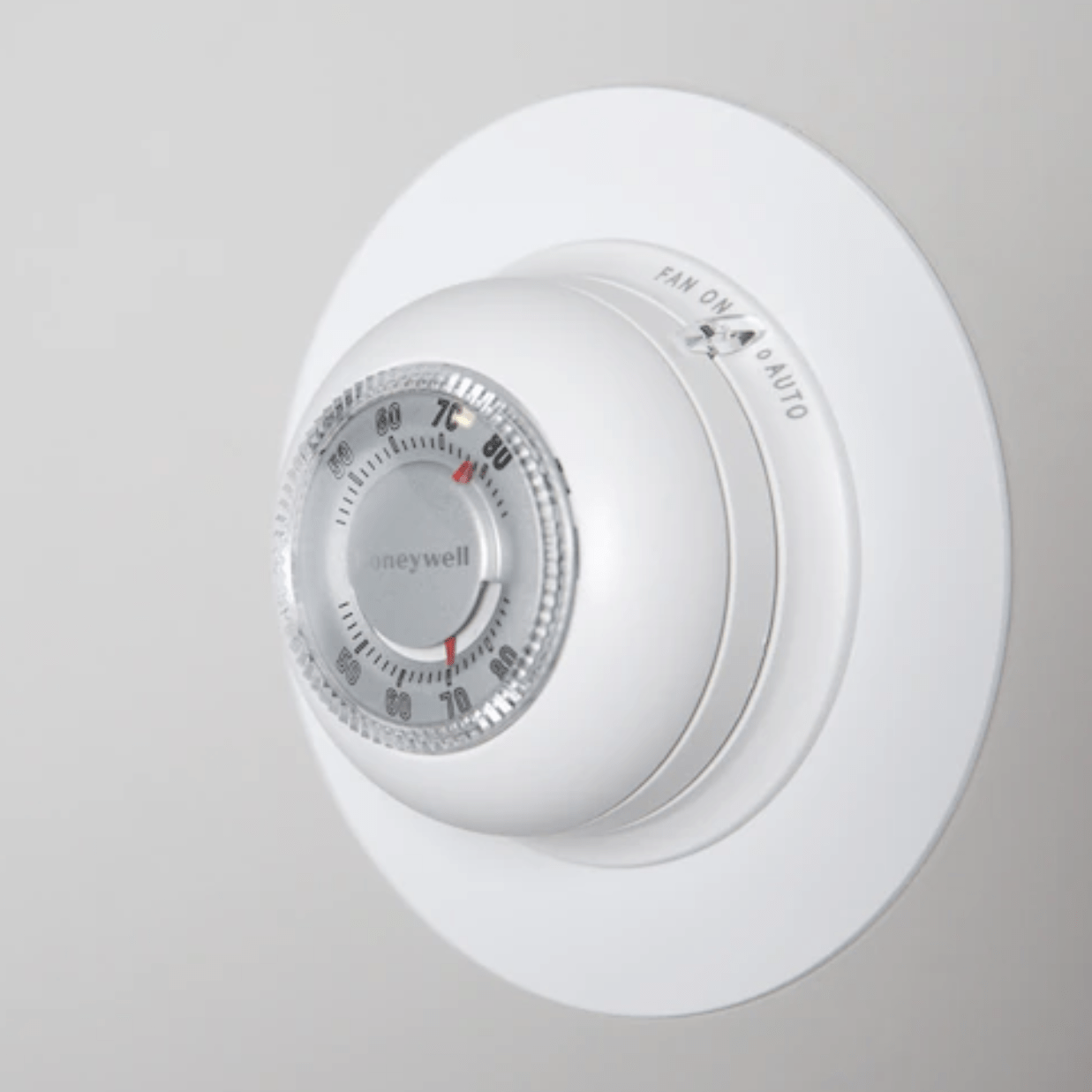
If you've found a switch, great! If it's a button, press it once. You should see the time start blinking on the display. This is your thermostat saying, "Okay, human, I'm ready for your instructions!"
Adjusting the Time: Up, Down, and Don't Forget AM/PM!
Found it? Awesome! Now, how do we actually change the time? Most often, you'll see a pair of arrows – 'up' and 'down', or 'left' and 'right' – maybe labeled 'Hour' and 'Minute'. Just press those bad boys.
You might have to press them repeatedly, or hold them down to scroll faster. Patience, young Jedi! And please, for the love of warmth, pay attention to AM and PM. Nothing worse than thinking you've set it for 7 AM and realizing it's going to blast heat at 7 PM instead! We've all been there, trust me. Double-check that little 'AM' or 'PM' indicator!

Making It Stick: Saving Your Changes
Once you've perfectly aligned the digital (or often, segment-based) hands of time, what then? Sometimes it just saves automatically after a few seconds of no activity. It’s like it just says, "Got it!" and moves on.
Other times, you might need to press a 'Run', 'Done', or 'Program' button to confirm. Or, if you slid a switch to 'Set Time', you slide it back to 'Run' or 'Auto'. It's like confirming your order at a really old, analog drive-thru. Just a little final push to lock it in.
What If It's Giving You the Cold Shoulder?
(Pun intended, obviously!) What if nothing is happening? First, check for batteries. Seriously. Many older programmable thermostats run on AA or AAA batteries, even if they're also wired into your system. A blank screen or a really dim display is a huge clue that your thermostat is running on fumes.

Pop 'em out, wait 30 seconds (it's like a mini-reboot!), pop new ones in. It's the old 'turn it off and on again' for thermostats! If that doesn't work, perhaps it's just really old and tired. Or perhaps it needs a professional hug from an HVAC technician. But let's hope it's just the batteries, right?
Victory Is Yours!
See? Not so scary, was it? You've wrestled with a relic and emerged victorious! Your old Honeywell is now ticking along perfectly, keeping your home cozy and your energy bill (hopefully) in check. Go ahead, give yourself a pat on the back. You're practically an HVAC historian now.
And next time that little clock icon starts flashing, you'll know exactly what to do. No more guessing games, no more frustration. Just a quick, confident adjustment. High five!