
How To Connect 9v Battery
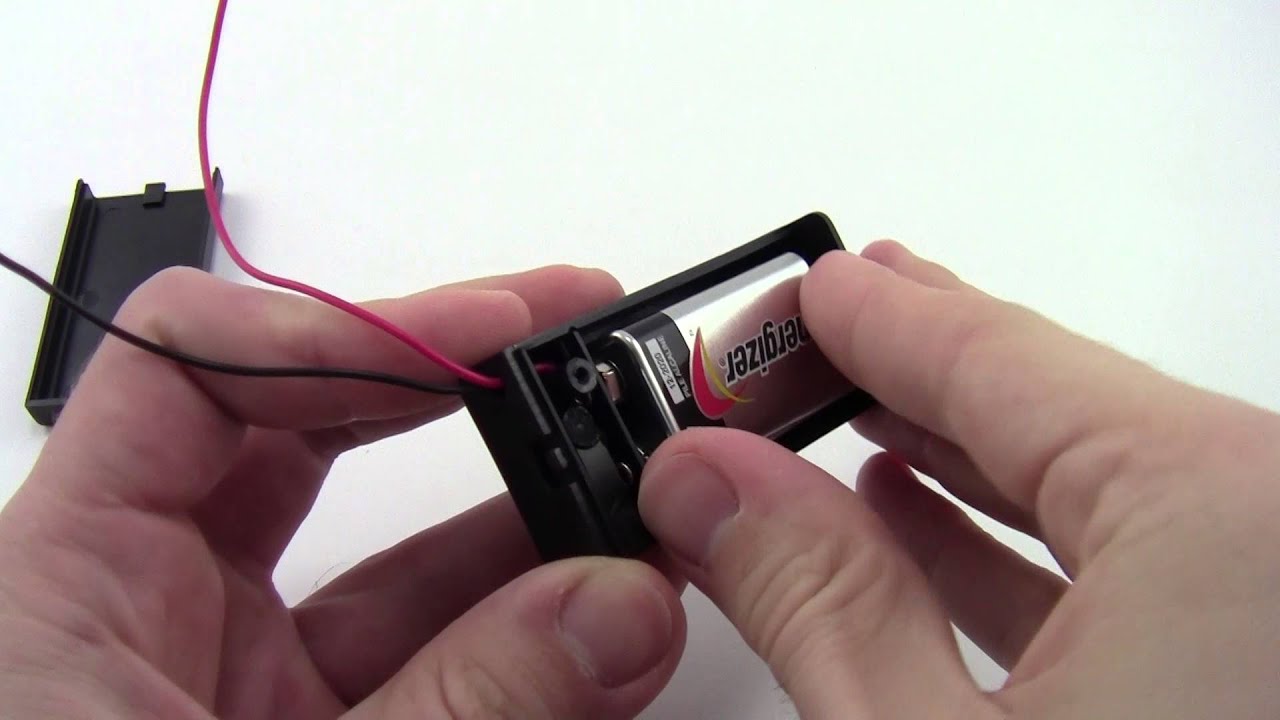
Okay, picture this: It's late, you're chilling, maybe binging your favourite show, when suddenly – BEEP-BEEP-BEEP! The smoke detector. The low-battery warning. That tiny, insistent chirp that will haunt your dreams until you deal with it. You scramble, find the offending device, pry it open, and there it is: the iconic 9V battery, looking all rectangular and important. But then you stare at the new one, and then at the old one, and maybe, just maybe, you pause for a second, wondering, "Which way does this thing actually go?"
You're not alone, my friend. We’ve all been there. Whether it’s that dreaded smoke detector, a guitar pedal suddenly gone silent, or a retro toy you just unearthed from the attic, knowing how to properly connect a 9V battery is one of those surprisingly useful, adulting-101 skills. And trust me, it’s far less intimidating than it seems. In fact, it's kinda foolproof, if you know the one golden rule.
The Star of Our Show: The 9V Battery
Before we dive into the "how-to," let’s appreciate our little powerhouse. The 9V battery is that distinctive rectangular prism with two terminals on top, one smaller and circular, the other larger and hexagonal. These aren't just for show; they're the delivery points for all that sweet, sweet electrical juice.
Must Read
It's designed to be pretty idiot-proof (bless its heart), but there's a trick to it, and that trick, my curious comrade, is called polarity.
Connecting Like a Pro (Or at Least Not Blowing Things Up)
There are generally two main ways you'll be connecting a 9V battery, depending on what you're trying to power:

Method 1: The Glorious Snap Connector
This is by far the most common and easiest method, used in most consumer devices like smoke detectors, walkie-talkies, and many guitar pedals. You know, the ones that make it super simple.
- What it is: It’s a small plastic connector with two metal snaps that perfectly match the terminals on the 9V battery. One snap is smaller (female), and the other is larger (male).
- How to do it: You simply align the smaller snap on the connector with the smaller, circular terminal on the battery (that's the positive, by the way) and the larger snap with the larger, hexagonal terminal (the negative). Then, you just… snap it on! It’s incredibly satisfying.
- Why it’s great: It’s secure, it’s fast, and it virtually eliminates the risk of incorrect connection because the snaps are designed to fit only one way. Genius, right?
Seriously, if your device has one of these, you're golden. You just saved yourself 30 seconds of potential head-scratching.

Method 2: Going Rogue (with Wires)
Sometimes, though, you might be working on a hobby project, a custom circuit, or maybe you're in a pinch and don't have a snap connector handy. This is where things get a little more… hands-on. And this is where that golden rule really shines.
- Identify the terminals: On the battery itself, the smaller, circular terminal is the positive (+). The larger, hexagonal terminal is the negative (-). Some batteries even have these marked, but it's not always super clear.
- Identify your wires: Most DC power inputs will have a red wire for positive and a black wire for negative. If you're lucky, your device will follow this colour code. If not, check the device's schematic or instructions carefully!
- Make the connection (carefully!):
- Temporary (not ideal): You can carefully twist the positive wire from your device onto the positive terminal of the battery, and the negative wire onto the negative terminal. Then, for goodness sake, insulate those connections with electrical tape so they don't touch each other and cause a short circuit! This is really just for testing or super temporary fixes.
- Permanent (much better): For anything lasting, you'd want to solder the wires directly to the battery terminals (or better yet, to a dedicated 9V battery clip that then connects to your circuit). This creates a robust, reliable connection. But that's a whole other article, isn't it?

How To Make 9v Battery Connector | Easy and Simple Steps | - YouTube
The Golden Rule of All Wiring: Polarity!
I mentioned it, I hinted at it, now let's shout it from the rooftops: Polarity matters! Electricity flows in a specific direction, from positive to negative. If you connect it backward, one of two things will likely happen:
- Your device simply won't work. (Best-case scenario, honestly.)
- Your device will get damaged, potentially permanently. (Worst-case, and we don't want that for you!)
Always, always, always make sure you're connecting the positive (+) terminal of the battery to the positive input of your device, and the negative (-) terminal to the negative input. Think of it like plugging in a USB-C vs. an old USB-A – one way works, the other doesn't (or worse, breaks something!). Okay, maybe not the best analogy, but you get the idea: direction is key!

Why Bother? Real-World Magic!
Knowing this simple trick opens up a world of possibilities. You can confidently replace that smoke detector battery without feeling like you're performing delicate surgery. You can get that vintage effects pedal humming again. Or, if you're a budding electronics enthusiast, you can power your own little inventions, knowing you've got the basics down. It’s empowering, honestly!
A Little Word on Safety (Because We Like You)
While 9V batteries aren't going to give you a shocking experience (unless you lick them, which, please don't), a few common-sense safety tips are in order:
- Avoid short circuits: Don't let the positive and negative terminals (or their wires) touch each other directly, especially for extended periods. This drains the battery quickly, generates heat, and isn't good for the battery.
- Don't try to recharge non-rechargeable batteries: Some 9V batteries are rechargeable (usually clearly marked as "NiMH" or "Li-ion"), but most are disposable. Trying to recharge a disposable one is a bad, potentially dangerous, idea.
- Dispose of them properly: Once it's dead, recycle it! Don't just toss it in the regular trash; batteries contain chemicals that aren't great for the environment.
So there you have it! The humble 9V battery, no longer a mystery. You're now equipped to face those midnight beeps and power up your projects with confidence. Go forth, connect, and may your devices always have juice!