How Much Wattage Does A Deep Freezer Use

Ah, the deep freezer. That unsung hero of the kitchen (or garage, or basement!). It's where dreams of bulk buys, perfectly prepped meals, and emergency ice cream stashes live. But sometimes, a little thought creeps in: "Is this silent workhorse secretly guzzling electricity like a college student on a pizza run?" It's a fair question, especially with energy costs fluctuating more wildly than your Aunt Mildred's opinions on modern art. Let's peel back the frosty curtain and uncover the truth about how much wattage a deep freezer really uses.
The Big Chill: What Exactly Are We Talking About?
When we talk about a deep freezer's power consumption, we're usually looking at two numbers: running wattage and starting (or surge) wattage. Don't worry, this isn't going to turn into a physics lecture, but understanding these two is key to demystifying your freezer's electricity habits.
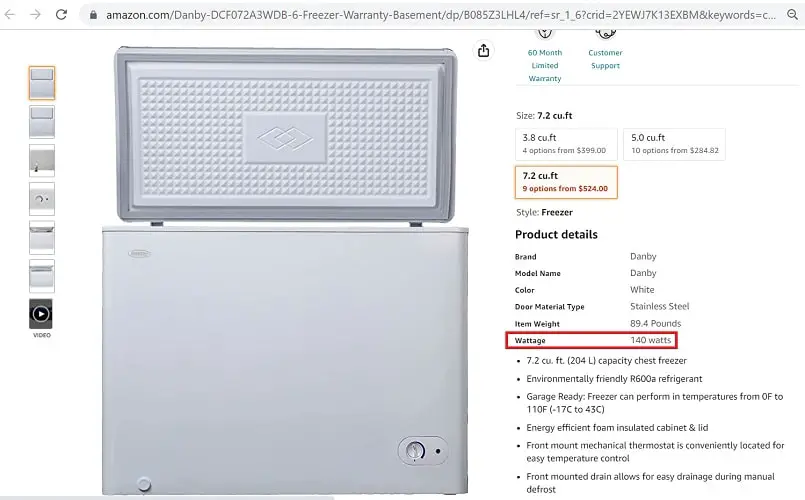
Most of the time, your deep freezer is just humming along, maintaining that frosty wonderland. This is its running wattage. It's surprisingly modest for a machine doing such heavy lifting. For a typical household deep freezer, you're usually looking at something in the range of 70 to 300 watts while it's actively running. Think of it like a leisurely stroll – consistent, but not power-intensive.
Must Read
However, when the compressor kicks in to drop the temperature after you've opened the door or if it just needs a little boost, there's a quick burst of power. This is the starting wattage, and it can be significantly higher, sometimes 1000 to 2000 watts for a fleeting moment. It's like a sprinter off the blocks – a lot of energy upfront, then back to a steady pace.
Factors That Frost Your Bill (or Keep it Cool!)
So, why the range? Just like people, not all deep freezers are created equal! Several factors play a starring role in how much juice your appliance consumes:
- Age and Model: An ancient relic from the 70s might be charming, but it's likely far less efficient than a sleek, modern Energy Star certified model. Newer freezers boast better insulation and more efficient compressors.
- Size Matters: A compact chest freezer for a studio apartment will naturally use less power than a massive upright model designed to store half a cow for a family reunion.
- Placement, Placement, Placement: Stashing your freezer in a sweltering garage during a heatwave forces it to work much harder (and use more power) than one nestled in a cool, climate-controlled basement. Think of it: it has to fight the ambient heat!
- How Full Is It?: Surprisingly, a full deep freezer is more efficient than an empty one! Frozen items act as their own insulation, helping to maintain the cold. An empty freezer has more air space to cool down repeatedly.
- Door Openings: Every time you open the door, a rush of warmer air invades your frosty sanctuary. Your freezer then has to work harder to bring the temperature back down. Try to grab what you need quickly!
Chill Out: Tips for an Energy-Efficient Freezer
Want to be a wattage wizard and keep your energy bill in check? Here are some pro tips:
- Fill 'Er Up (Sensibly!): If your freezer isn't always brimming with goodies, fill empty spaces with gallon jugs of water or crumpled newspaper. This helps maintain internal temperatures more efficiently. Just don't overstuff to block airflow.
- Defrost Regularly: A thick layer of ice build-up acts like an insulator, making your freezer work harder to keep things cold. Aim for a defrost a couple of times a year, or when ice buildup is over a quarter-inch thick. It’s like giving your freezer a spa day!
- Clean Those Coils: Dust and grime on the condenser coils (usually at the back or bottom) make your freezer less efficient. A quick vacuuming once or twice a year can make a noticeable difference.
- Check the Seals: A leaky door seal lets cold air escape and warm air creep in. Test yours by closing the door on a dollar bill. If you can pull it out easily, it might be time for a new seal.
- Location, Location, Location: If possible, keep your freezer in a cool, dry area away from direct sunlight or heat sources like ovens or water heaters.
- Inventory is Your Friend: Ever rummaged for 10 minutes only to find what you needed wasn't there? Keep a simple inventory list on the outside. It saves energy and prevents "freezer burn" surprises!
The Freezer Effect: More Than Just Food
Beyond the watts, your deep freezer is a silent partner in modern life. It empowers you to snag those amazing deals at the farmer's market or Costco, embrace meal prepping like a culinary champion, and even reduce food waste (a true win for the planet and your wallet!). Think of the convenience: last-minute dinners are a breeze when you've got homemade chili or pre-portioned chicken breasts waiting patiently.
Ultimately, a deep freezer uses a relatively small amount of electricity compared to its immense utility. By understanding its wattage habits and implementing a few simple best practices, you can ensure it keeps chilling efficiently for years to come. So, go ahead, stock up on those frozen berries for your morning smoothie, or that extra batch of your grandma's famous lasagna. Your deep freezer's got your back, quietly working its magic, saving you time, money, and a whole lot of culinary stress. Now, isn't that a truly cool thought?