
How Many Atoms Are In Pcl3

Have you ever stopped to think about what things are really made of? I mean, beyond the surface stuff, down to the tiniest, almost unimaginable level? Get ready, because we're diving headfirst into the wonderfully weird world of atoms!
Unveiling PCl3: Not a Robot, But Close!
Today’s star is a seemingly innocent molecule called PCl3. It’s not some cute robot name, although it kind of sounds like one, doesn't it? It's actually a chemical compound called phosphorus trichloride.
Phosphorus trichloride doesn't exactly roll off the tongue, does it? So, PCl3 it is! Think of it as its cool, secretive agent code name.
Must Read
So, what exactly is this mysterious PCl3 made of? Let's break it down, atom by atom.
The Atomic Ingredients: A Simple Recipe
PCl3 is like a mini-recipe. It tells us exactly what elements are involved and how many of each there are. It’s shockingly straightforward.
The "P" stands for phosphorus, a fascinating element. Phosphorus is known for its, shall we say, explosive personality (sometimes literally!).
The "Cl" stands for chlorine. Chlorine is that greenish gas we know and love from swimming pools, although it’s way more intense in its pure form.
That little "3" hanging next to the Cl is super important. It tells us there are three chlorine atoms in each molecule of PCl3.
Counting the Crew: The Grand Total
Ready for the big reveal? How many atoms are in one molecule of PCl3? Prepare for a suspense that rivals a Hollywood blockbuster!
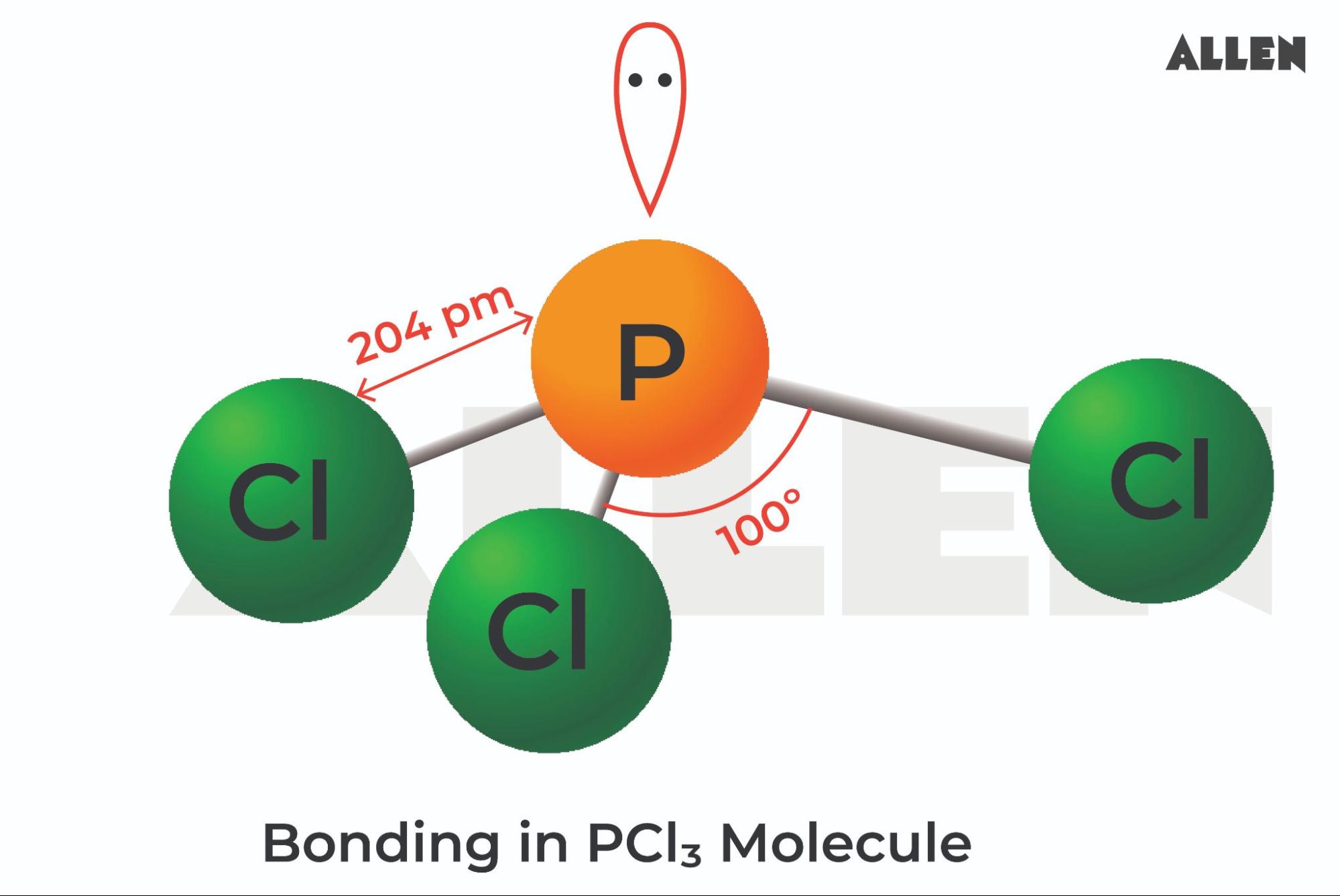
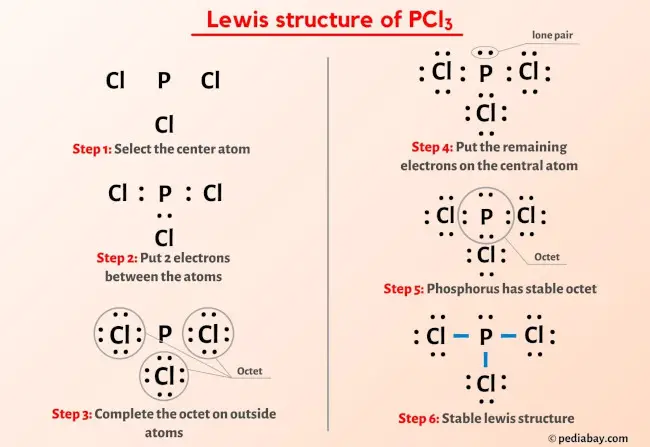
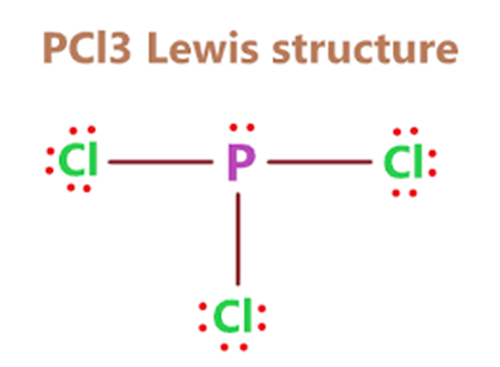
We have one phosphorus atom (P) and three chlorine atoms (Cl3). Add them together: 1 + 3 = 4.

Ta-da! There are a total of four atoms in one single molecule of PCl3. Bet you didn't expect it to be that simple, did you?
Why Should We Care About Tiny Atoms?
Okay, so PCl3 has four atoms. Big deal, right? Wrong! Understanding the atomic makeup of substances unlocks a whole world of possibilities.
The properties of PCl3, like how it reacts with other chemicals, are directly related to its atomic structure. Knowing this allows scientists to use it in various applications.
Think about it: medicines, plastics, fertilizers... Many of the things we rely on every day are created or improved by understanding the behavior of molecules like PCl3.
From Fireworks to Flame Retardants: PCl3's Double Life
Phosphorus, the "P" in PCl3, is a bit of a show-off. It’s responsible for the vibrant colors in fireworks. Quite the party animal, that phosphorus!
But it also plays a crucial role in flame retardants. These are used to make materials less likely to catch fire. So, it's a firebug that also fights fire! Talk about irony.
PCl3 itself is used to make other phosphorus-containing compounds. These find their way into everything from pesticides to plasticizers. It’s a building block for a surprising number of products.
The Amazing Abundance of Atoms
We've figured out that there are four atoms in one molecule of PCl3, but what does that even mean in the grand scheme of things?
The answer is mind-boggling. Even a tiny speck of PCl3 contains trillions upon trillions of molecules. Each of those molecules has four atoms. Do you see where I'm going with this?
The number of atoms in even a small amount of matter is practically incomprehensible. It's larger than the number of stars in the observable universe!
Imagine This: A Sea of Atoms
Picture a single grain of sand. Now imagine that grain of sand is filled with countless tiny LEGO bricks, each one representing an atom.
That's not even close to how many atoms are actually in a grain of sand! It's far, far more than that.
It’s humbling to realize that everything around us, from the air we breathe to the ground we walk on, is composed of these unimaginably small and incredibly numerous atoms.
Atoms: The Tiny Building Blocks of Everything
So, next time you see the chemical formula PCl3, don't just glaze over it. Remember that it represents a specific arrangement of atoms.
Those atoms, in turn, are the fundamental building blocks of matter. They are the basis for everything we see and experience.
Understanding the language of atoms is like learning the secret code of the universe. And it all starts with counting to four!
A New Appreciation for the Microscopic World
Hopefully, this little journey into the world of PCl3 has given you a new appreciation for the microscopic world. It's a world that's both incredibly complex and surprisingly simple.
Even seemingly complex substances can be broken down into their atomic components. And those components follow specific rules and patterns.
It’s a testament to the power of science that we can understand and manipulate these tiny particles to create the things we need and improve our lives.
Beyond PCl3: The Atomic Adventure Continues!
Our exploration of PCl3 is just the beginning. There are countless other molecules out there, each with its own unique atomic composition and properties.
From the simple water molecule (H2O) to the complex DNA molecule that carries our genetic code, everything is made of atoms.
So, keep exploring, keep questioning, and keep marveling at the amazing world of atoms. It’s a journey that will never cease to surprise and inspire you!
Embrace Your Inner Atomic Explorer
Don't be intimidated by science. It’s not just for lab coats and textbooks. It's a way of understanding the world around us.
Every time you look at something, think about the atoms that make it up. Imagine them buzzing and vibrating, interacting with each other.
Who knows, maybe you’ll even discover something new and contribute to our understanding of the atomic world. The possibilities are endless!
The End... Or Is It?
We've reached the end of our exploration of PCl3 and its four atoms. But the journey of discovery never truly ends.
There's always more to learn, more to explore, and more to understand. So, keep your curiosity alive and never stop asking questions.
The universe is waiting to be explored, one atom at a time!
“The important thing is to never stop questioning.” – Albert Einstein