
How Do You Know When Your Battery Is Dead
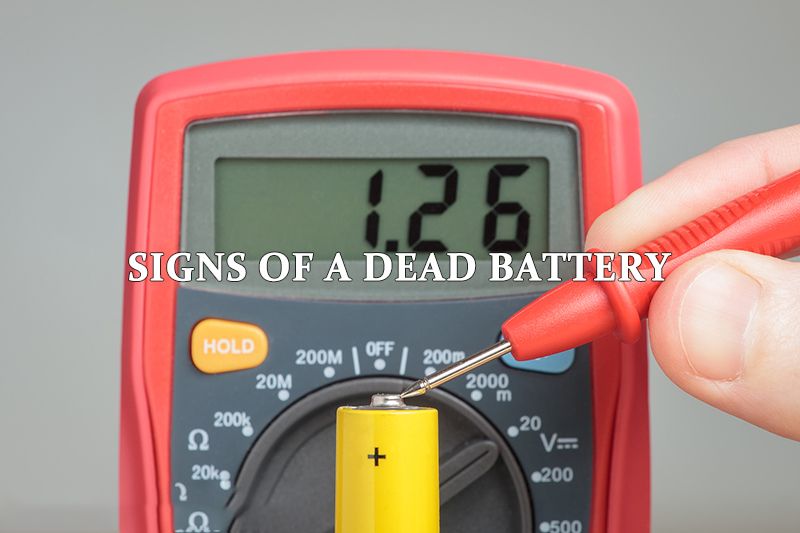
Ah, the eternal struggle! We live in a world brimming with gadgets, all humming with life thanks to their trusty batteries. But every superhero has a weakness, and every battery has its inevitable demise.
The true question isn't if your battery will die. Oh no, that's a certainty as universal as gravity. The real mystery is how you, the user, truly know it's time to wave a fond, exasperated goodbye.
Forget the fancy percentage indicators. Dismiss the helpful low-power warnings. My humble, perhaps unpopular, opinion is this: we know a battery is dead long before any screen confirms it.
Must Read
It's an unspoken understanding. A deep, primal connection with our devices. A shared journey into the land of no power.
The Unofficial Stages of Battery Doom
There's a subtle art to sensing battery death. It's less about data and more about intuition. More about frantic hope turning into resigned despair.
We've all been there. Squinting at a unresponsive screen, wondering if it's us, or if the tiny power source has finally given up the ghost.
The Remote Control Rumba
Our journey often begins with the humble remote control. This unsung hero of countless couch potato sessions is often the first to betray us.
You press the volume button. Nothing. You try again, a little harder this time, as if sheer willpower can transmit a signal.
"Just a sticky button," you tell yourself, ever the optimist.
Then comes the series of rapid-fire presses. Channel up, channel down, mute, input. A desperate dance of buttons, hoping one will respond.
When the screen remains stubbornly unchanged, a new ritual begins. The sacred remote shake. A vigorous, almost shamanistic rattle designed to coax out a few more precious electrons.
You shake it like a maraca. You tap it against your palm. You even remove the back cover, gaze at the batteries, and gently rub them, as if generating warmth will revive them.
You pop them back in. For a brief, glorious second, it works! A single channel change. A triumphant volume adjustment.
This is the false dawn. The battery's last, dying burst of energy. Its final, mocking gesture of defiance.
Then, once more, silence. Total, utter, unresponsive silence. The blinking light has gone dark. The power is truly, unequivocally gone.
No percentage meter needed here. Just the raw, undeniable experience of a remote control that has chosen to transcend its earthly duties.

The Smartphone's Silent Seppuku
Our smartphones are more dramatic. They love to warn us. "Low power mode," "10% battery," "Connect charger now!"
But we, the brave, the foolish, often ignore these gentle pleas. "I can make it home," we declare, still an hour's drive away from any charger.
"It's just being dramatic," you think, scrolling through social media like there's no tomorrow.
Then the screen dims, not by your command, but by the phone's last-ditch effort. Apps start to lag. Typing becomes a frustrating, sluggish affair.
Your beloved device transforms into a digital sloth. It's struggling, visibly suffering. A tiny, glowing rectangle of impending doom.
The ultimate sign? The sudden, abrupt shutdown. No warning chime. No polite farewell message. Just a blank, lifeless screen.
You press the power button. Nothing. You hold it down, convinced it's just asleep. Still, a profound, unyielding blackness.
The moment of truth: you find a charger. You plug it in. And you wait. And wait. And wait.
For what feels like an eternity, nothing happens. No charging icon. No flicker of life. Just a stubborn, inert brick.
Then, a tiny, faint battery icon appears. It's barely there, a ghost of its former self. It's a sign of resurrection, but a very, very slow one.
That's how you know. When your pocket-sized supercomputer becomes utterly useless, a mere paperweight until its digital soul is recharged.
The Car's Grumpy Gurgle
This battery death is less subtle, more confrontational. It often happens at the least convenient moment. Naturally.
You turn the key, expecting the familiar roar. Instead, you hear a slow, tortured groan. "Wuh-wuh-wuh-wuh-clunk..." it barely whispers.
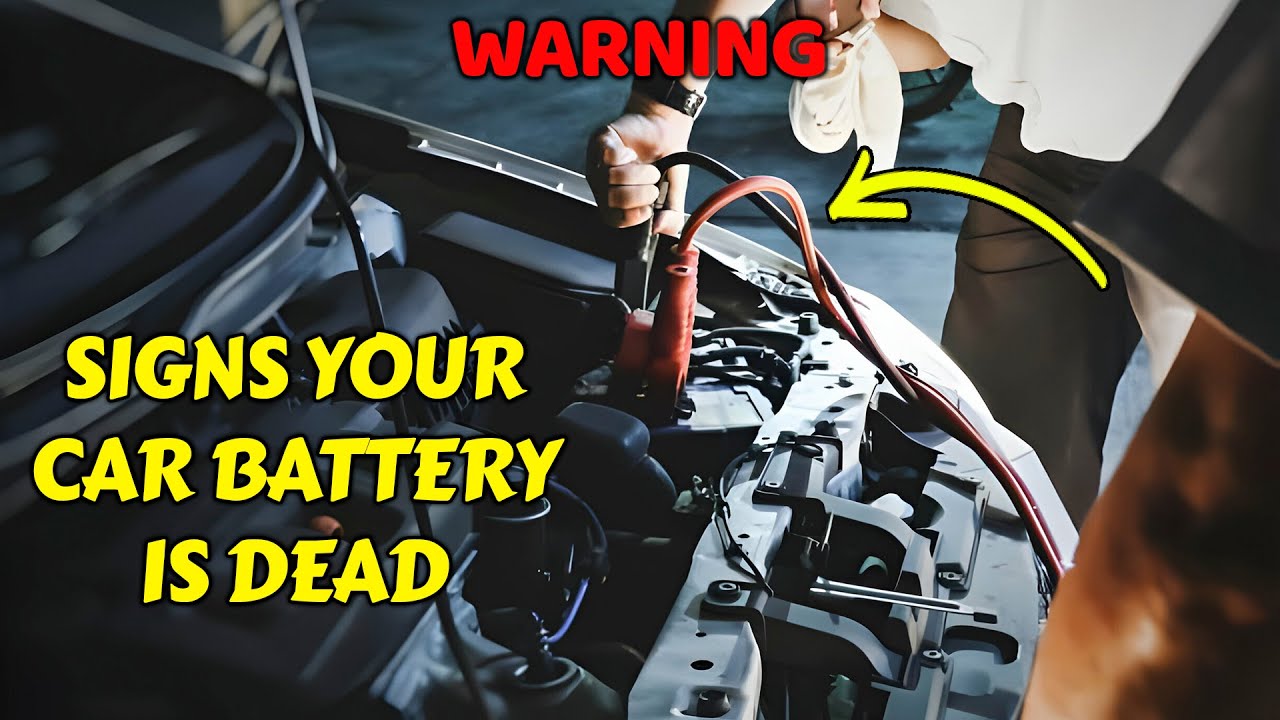
This is your car battery clearing its throat. It's telling you it's tired. Very, very tired. On the verge of retirement.
"Just a bit cold," you rationalize, trying again, with renewed, desperate hope.
The second attempt yields even less. Maybe a single, pathetic click. A tiny, lonely sound in the vast silence of your engine bay.
You try one more time, holding the key with grim determination. Begging the metal beast to obey. To just start.
Then, the final, crushing blow: utter, profound silence. No click. No groan. Nothing but the sound of your own accelerating heartbeat.
The dashboard lights, if they even turn on, are dim and flickering. The radio refuses to acknowledge your existence. Your car is now a very heavy, very immovable ornament.
This is the ultimate, undeniable sign of a dead car battery. No dashboard percentage needed. Just the raw, helpless silence.
It's followed by the immediate, frantic search for jumper cables. Or the dread of calling roadside assistance. A universal experience of automotive despair.
The Laptop's Lingering Languish
Laptops lead a dual life. Sometimes they're free, floating on battery power. Often, they're tethered, clinging to a wall socket for dear life.
When you dare to unplug, you bask in portable freedom. For a while, the battery icon shows a healthy green. You feel invincible.
Then, the inevitable warnings: "Battery low." "Plug in your charger." Polite suggestions that you, a seasoned procrastinator, will ignore.
"Just five more minutes," you promise yourself, deep into an important (or entertaining) task.
Suddenly, without pomp or circumstance, the screen goes black. No fading. No gentle dimming. Just an abrupt, digital blackout.
You frantically press the power button. Nothing. You hold it down. Still nothing. The machine, once a hub of productivity, is now inert plastic and metal.

The immediate, panicked thought: "Did I save that document?" A cold wave of dread washes over you. The true cost of ignoring the warnings.
The definitive sign of a completely dead laptop battery? When you finally plug it in, and it refuses to boot up instantly. It needs a moment.
A long, drawn-out moment of resuscitation. Like a patient slowly coming out of a coma. It's not just low; it's utterly drained, bone dry.
You know it's dead when your mobile workstation becomes a stubbornly stationary, powerless brick. The joy of portability, utterly extinguished.
The Wireless Mouse's Wobbly Wail
This battery death is often insidious. It starts subtly, a glitch in the digital matrix. Your cursor begins to stutter across the screen.
It skips. It jumps. It moves with a strange, jerky hesitation, as if afraid to commit to a path. Like a toddler on roller skates.
You try to click. Nothing happens. You try again, harder, wondering if your finger has lost its magic touch. Still, no response.
"Is my computer frozen?" you ponder, restarting applications, before realizing the problem is solely with the pointer.
You lift the mouse, examining its underbelly. You shake it gently. You even blow into the optical sensor, convinced a speck of dust is causing the chaos.
Then, the classic move: open the battery compartment. The batteries look perfectly innocent. No visible signs of decay. Yet, you know.
The erratic movement, the unresponsive clicks, the frustrating inability to control your digital world. These are the distress signals of a battery running on fumes.
A fresh battery, and suddenly, the cursor glides. Smooth as silk. Precise. The world snaps back into focus. The old batteries were undeniably, definitively dead.
The Flashlight's Faltering Flickers
You grab the flashlight. Perhaps the power is out, or you're just looking for that elusive sock under the bed. You flick the switch, expecting illumination.

Instead of a strong, confident beam, you're greeted with a feeble, sickly yellow glow. It struggles, like a dying ember in a vast, dark cave.
It flickers. It dims. It barely manages to cast a weak halo, illuminating nothing useful. A pathetic attempt at light. A true light-dimmer.
"Come on, just a little brighter," you plead, shaking it vigorously, hoping to awaken dormant photons.
The beam eventually shrinks to nothing. A small, sad point of light, then total, profound darkness. Just when you needed it most.
This is the unmistakable truth. When the device utterly fails at its one, single purpose. When the light simply refuses to shine.
No battery meter on a flashlight. Just the stark reality of dwindling photons. Dark, quiet, dead. And usually, a sigh of resignation from you.
The Unspoken, Universal Truth
So, how do you really know when your battery is dead? It's almost never a precise digital readout. It's rarely a convenient, polite notification.
It's the feeling of helplessness. The growing frustration. The sudden, inconvenient silence. The device's refusal to perform its one job.
It's the jiggle. The pound. The desperate restart. The pleading with inanimate objects. The fleeting moments of false hope.
"We don't need fancy readouts to know when our power source has given up the ghost," is my humble, perhaps unpopular, opinion. "Our experience tells us all we need to know."
We know it in our bones. In our exasperated sighs. In the way we mutter curses under our breath. In the shared nods of recognition with fellow humans.
The battery doesn't just die; it usually puts on a little show first. A dramatic, often annoying, farewell tour before its final curtain call.
And we, the users, are its captive, often frustrated, audience. Forced to witness its final, faltering acts of defiance.
So next time a device stops working, don't wait for a digital sign. Trust your gut. Trust your annoyance. Trust the sudden, crushing silence.
Because you already know. You've always known. That battery? Yeah, it's definitely, undeniably dead.