
Honeywell Electronic Door Lock Troubleshooting

Ever gazed at your electronic door lock and thought, "Wow, this little gadget is basically my tiny, silent bodyguard"? It’s true! These Honeywell locks are pretty neat, aren't they? They whisk us into our homes with a simple tap or a secret code, no fumbling for keys in the rain. They’re like our personal doormen, always on duty. But even the best bodyguards, or the most reliable tech, can have an off day. And when that happens, instead of getting flustered, isn’t it more fun to put on our detective hats and figure out what’s going on?
Think of it this way: your lock isn't failing you; it's just trying to tell you something in its own electronic language. And we, the curious users, are here to interpret! It’s less "troubleshooting" and more "having a friendly chat with your high-tech home security."
The Case of the Silent Keypad: Battery Blues?
Okay, let’s be honest. How many times has your phone suddenly gone quiet, and your first thought is, "Oh no, it's out of battery!"? Well, your electronic door lock often works on the same principle. If your keypad isn't lighting up, or the lock isn't responding with its usual chipper click, the number one suspect in our friendly investigation is usually the batteries.
Must Read
These locks are constantly drawing a little bit of power, even when they seem dormant. And those batteries? They have a shelf life, like a carton of milk or your favorite bag of chips. So, if your lock is acting a bit sluggish, or not responding at all, grab some fresh AAAs (or whatever your specific model requires) and give it a power boost. It’s like giving your little robot friend a much-needed nap and a juice box. Often, a simple battery swap is all it takes to bring it back to life, humming happily.
Pro tip: Always use alkaline batteries. They tend to last longer and perform better in these kinds of devices than rechargeable ones, which can sometimes have lower voltage and confuse your lock.

The Lock That Won't Unlock (or Lock!): Is Something Stuck?
Imagine trying to close a door, but your backpack strap is caught in the hinge. Annoying, right? Your electronic lock can experience similar frustrations. If your lock is trying to do its job – you hear the motor whirring – but the deadbolt isn't extending or retracting properly, it might be a mechanical obstruction.
Take a peek at the door frame. Is the strike plate aligned? Sometimes, houses settle, or humidity causes doors to swell slightly, leading to a tiny misalignment. A quick visual check might reveal a small piece of debris, or even just paint buildup, preventing the deadbolt from sliding smoothly into place. It’s like clearing a tiny path for your lock to do its important work.
Another angle to consider is the deadbolt itself. Is it moving freely when you operate it manually from the inside? If it feels stiff, a little graphite lubricant (not oil!) can sometimes work wonders. Think of it as giving the moving parts a nice, smooth slide down a waterslide.
My Code Isn't Working! A Case of Mistaken Identity?
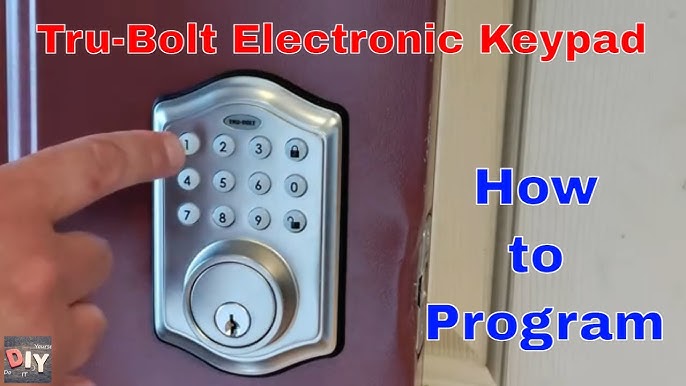
You punch in your super-secret code, the one you use every day, and… nothing. Or maybe you get an angry red light and a few beeps. Don’t panic! This isn’t usually a sign that your lock has forgotten who you are. More often than not, it comes down to a few possibilities:
- Are you sure you’re entering the correct code? A typo is surprisingly easy to make, especially if you’re rushing.
- Has someone changed the code without telling you? (A classic family mystery!)
- Or, less dramatically, has the lock itself had a minor "brain burp" and needs a gentle reset?
If you've ruled out human error (and sneaky code changers), sometimes the simplest tech solution is the best: the "reboot" method. Just like you'd restart your computer when it acts funky, you can often "reboot" your lock by temporarily removing the batteries, waiting about 30 seconds, and then putting them back in. This often clears any minor software glitches, letting your lock start fresh, remembering all its codes and settings.
When All Else Fails: The Manual and the Reset Button
Alright, so you’ve checked the batteries, cleared the path, and tried a gentle reboot. Still no luck? This is where your owner’s manual, often tucked away in a drawer or easily found online with a quick search for your Honeywell model number, becomes your best friend. It's not admitting defeat; it's being a savvy investigator using all available resources!
The manual will have specific instructions for a factory reset. This is like hitting the "undo" button on your lock’s memory, returning it to its original, fresh-from-the-box state. You’ll have to reprogram your codes, but it often solves stubborn software issues that regular reboots can't touch. It’s a powerful tool, a bit like waving a magic wand that says, "Let's start over, shall we?"
Honeywell locks are designed to be reliable and secure. And the cool thing is, understanding how they work, even when they're having a little moment, makes you feel more in control of your home tech. It’s a testament to the clever engineering inside these devices that most "troubles" are often simple fixes, requiring just a little bit of curiosity and a willingness to understand our digital doormen. So, next time your lock acts up, lean into that curious spirit. You might just discover you’re a natural tech detective!
