
Hair Is Anchored To Skin Cells By The

Ever wonder how your hair sticks to your head? It’s not magic, although sometimes it feels like you need a magician to control it! The secret lies in a tiny, but incredibly strong connection, anchored to your skin cells by... well, by a bunch of complicated stuff!
The Amazing Anchorage: Your Hair's Best Friend
Imagine your hair as a magnificent ship. That ship needs an anchor to stay put, right? The biological anchor in this story is the hair follicle and the cells that surround it.
This follicle isn't just a simple hole in your head. It's a dynamic, living structure, constantly working to produce and secure your precious strands.
Must Read
The Dermal Papilla: The Hair's Life Support
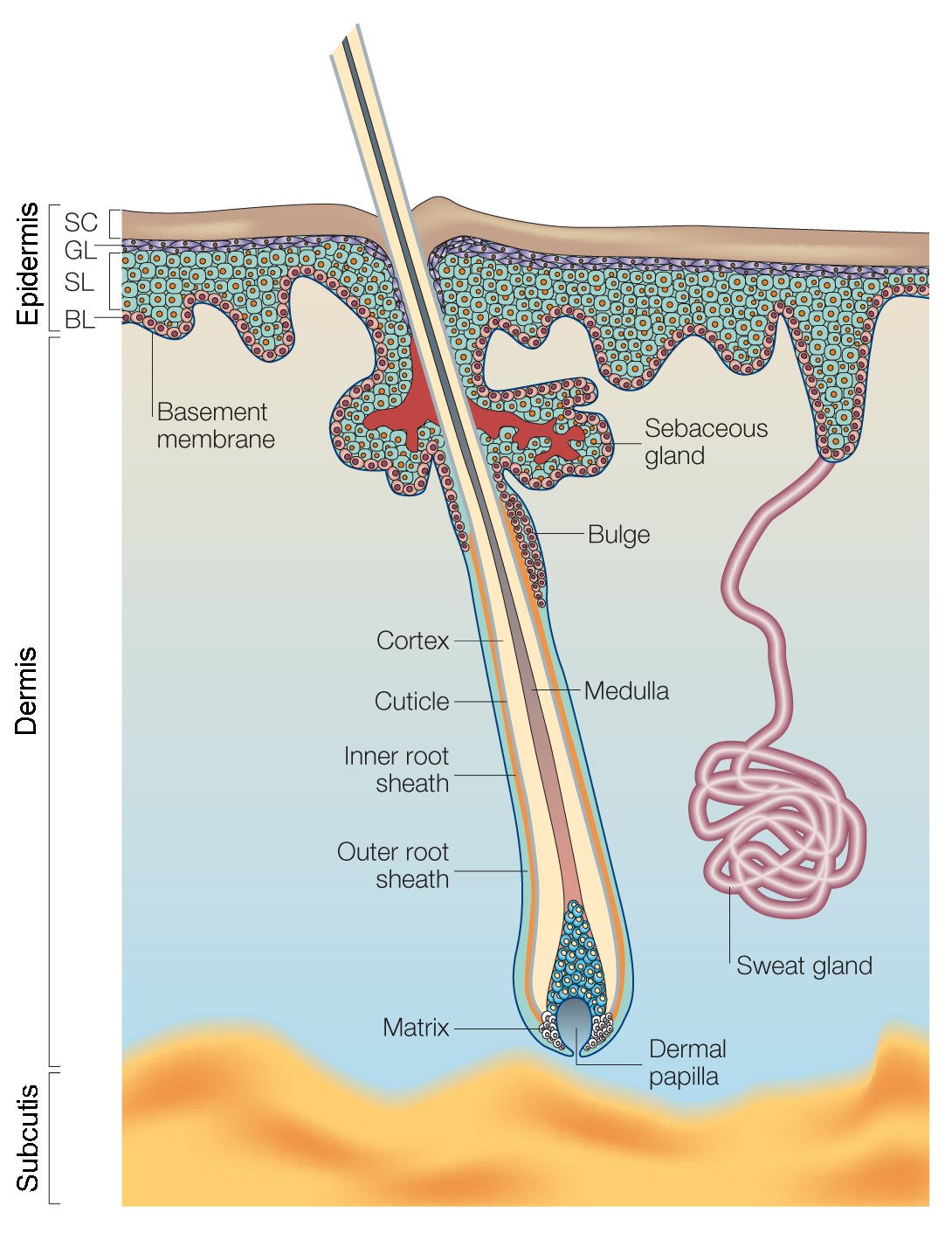
Deep down in the follicle resides the dermal papilla. Think of it as a tiny, nourishing ball of cells. It provides the essential nutrients and signals for hair growth.
Without the dermal papilla, your hair wouldn't get the messages it needs to thrive. It’s like a tiny garden, constantly being watered and tended to.
This is where the magic (or rather, the biology) truly begins. It is connected to skin cells by a complex network of proteins and structural components.
The Mighty Keratinocytes: Building and Binding
Surrounding the dermal papilla are keratinocytes. These are the workhorses of hair production.
They churn out keratin, a tough, fibrous protein that makes up the bulk of your hair. Think of keratin as the bricks and mortar of your hair shaft.
As the keratinocytes produce keratin, they move upwards, becoming part of the growing hair shaft. This process is similar to how nails grow too!
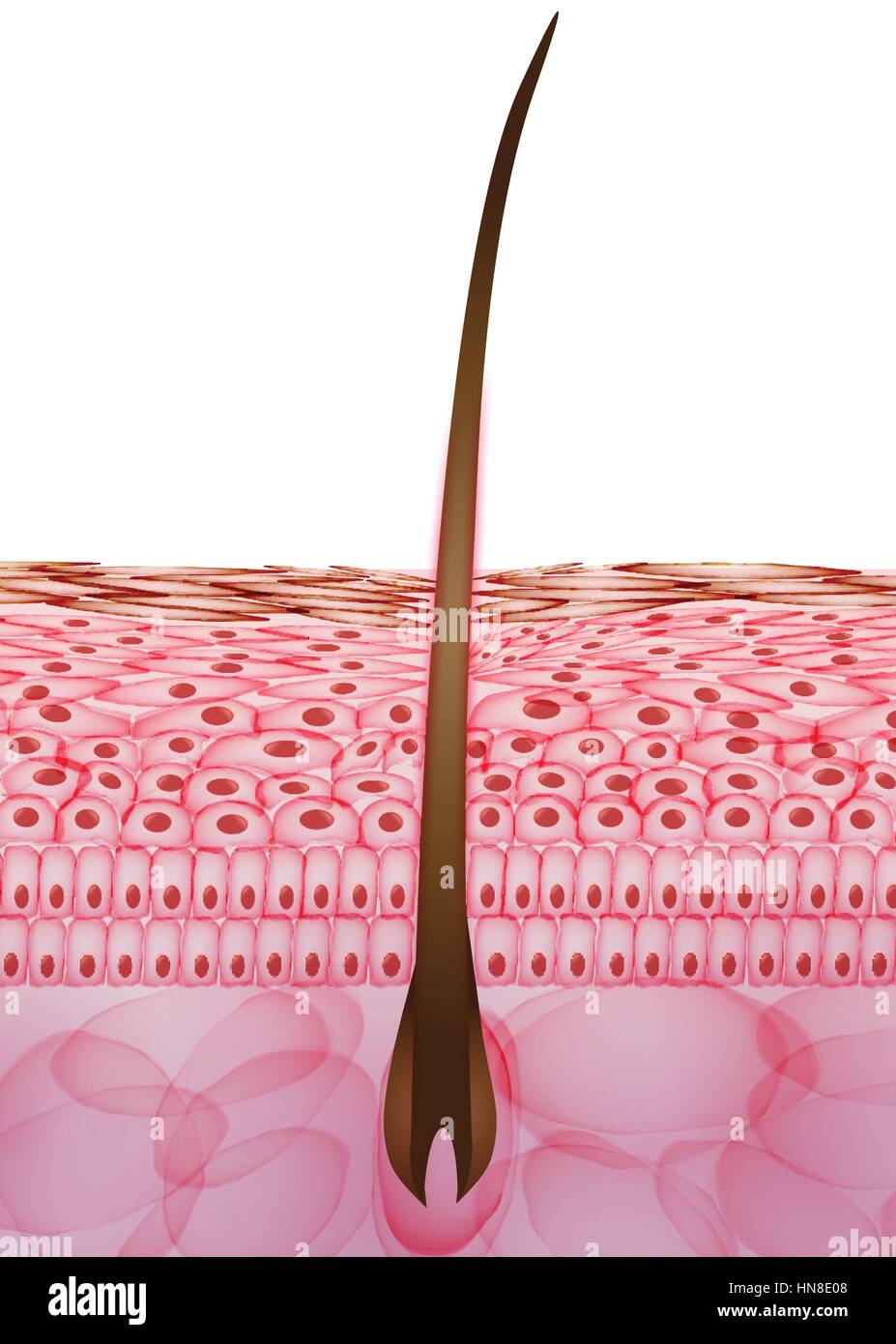
The Basement Membrane: The Glue That Holds It All Together
Now, here's where the anchoring comes in. The connection between the hair follicle and the surrounding skin cells is facilitated by a special structure called the basement membrane.
It's like a super-strong glue that binds the follicle to the dermis, the deeper layer of your skin. Without this crucial layer, our hair strands would pop right out!
The basement membrane is like the foundation of a house, providing the stability the whole structure needs.
Desmosomes and Hemidesmosomes: The Tiny But Tough Connectors
But wait, there's more! Within the follicle, there are even smaller, more specialized structures called desmosomes and hemidesmosomes.
These are like tiny rivets that hold the keratinocytes together and anchor them to the basement membrane. They act as interlocking connectors ensuring the hair stays firmly rooted.
Desmosomes and hemidesmosomes are the unsung heroes of hair retention, working tirelessly to keep your hair exactly where it needs to be.
Why Does This Matter? (Besides Just Having Hair)
Understanding how hair is anchored has surprisingly important implications. It impacts everything from hair loss treatments to cosmetic procedures.
For example, many hair loss treatments aim to stimulate the dermal papilla and strengthen the connection between the follicle and the surrounding skin.
It's about creating a healthier, stronger "anchor" for each hair strand.
Hair Loss and the Anchorage Breakdown
Sometimes, the connection between the hair follicle and skin cells can weaken, leading to hair loss. This can happen due to genetics, hormones, stress, or even certain medical conditions.
When the "anchor" weakens, hair can fall out more easily. Understanding this process helps scientists develop targeted treatments.
Think of it like a plant losing its grip on the soil. Understanding the root system is crucial for helping it thrive again.
The Impact on Cosmetic Procedures
Even cosmetic procedures like hair transplantation rely on understanding this anchorage mechanism. Surgeons carefully extract hair follicles and transplant them to areas where hair is thinning.

The success of these procedures depends on preserving the integrity of the follicle and its connection to the dermal papilla.
The goal is to give the transplanted follicle a new, healthy anchor in its new location.
Fun Facts About Hair Anchorage
Did you know that hair follicles are formed during fetal development? That means you were already growing your hair before you were even born!
Also, the number of hair follicles you have is largely determined at birth. This means that you have all the hair follicles you will ever have at birth.
And get this: a single hair follicle can produce multiple hairs throughout your lifetime! This continuous cycle of growth, rest, and shedding is what keeps our hair looking full (most of the time).
Hair Pulling and the Power of the Anchor
Ever accidentally yanked a strand of hair? Ouch! That pain is a testament to the strength of the hair follicle's anchorage to the skin.
It takes a considerable amount of force to dislodge a healthy hair follicle. This is a good thing, otherwise, we'd be losing hair constantly!

The next time you brush your hair, remember the impressive strength of those tiny connections holding each strand in place.
A Little Appreciation for Your Hair's Anchor
So, the next time you look in the mirror, take a moment to appreciate the complex biology that keeps your hair firmly rooted. It's not just a matter of aesthetics; it's a testament to the amazing engineering of the human body.
The seemingly simple act of having hair on your head is the result of a intricate interplay of cells, proteins, and structures.
And who knows, maybe understanding this process will inspire you to take even better care of your locks. After all, happy follicles equal happy hair!
Ultimately, it's a reminder that even the smallest details in our bodies are incredibly important. They work together, in perfect harmony, to keep us functioning and looking our best.
So go ahead, give your hair a little extra love today. It deserves it! And now, you know exactly who – or rather, what – to thank for keeping it all in place.
Remember those tiny keratinocytes, the amazing dermal papilla, and the strong basement membrane next time you see your hair.