Fluid And Electrolyte Imbalance Nursing Diagnosis

Okay, so picture this: Grandma's enjoying her afternoon tea, meticulously stirring in her usual two sugars. Then, BAM! Dizzy spell city. Turns out, she's been feeling nauseous for a couple of days and just "didn't want to bother anyone." Dehydration, low potassium…the whole shebang. That, my friends, is where the wonderful world of fluid and electrolyte imbalances crashes into reality. It's not just a textbook term; it’s a real thing with real consequences. (And yes, I did yell at her gently to tell us next time. Gotta love Grandma.)
But why do we, as nurses, care so much about these imbalances? Because they mess with everything. Seriously. Think of your body as a finely tuned engine. Fluids and electrolytes are the oil and coolant. Without the right balance, the engine sputters, overheats, and maybe even seizes up. Not ideal, right?
What's the Big Deal with Fluid and Electrolyte Imbalances?
Simply put, our bodies are mostly water. That water isn't just sitting there, twiddling its thumbs. It's carrying nutrients, flushing out waste, and keeping everything running smoothly. Electrolytes – think sodium, potassium, calcium, magnesium, chloride – are like tiny electrical conductors that power nerve impulses, muscle contractions, and basically every other bodily function.
Must Read
When these fluids or electrolytes are too high or too low, things go haywire. We’re talking everything from muscle cramps and fatigue to seizures and cardiac arrest. Yeah, pretty serious stuff. That's why spotting these imbalances early and correcting them is crucial for patient well-being. (Side note: always trust your gut feeling. If something feels off, investigate!)
The Nursing Diagnosis: A Detective's Toolkit
So, how do we, as nurses, identify these imbalances? This is where the nursing diagnosis comes in handy. It's essentially a problem statement that guides our interventions. For fluid and electrolyte imbalances, you might see diagnoses like:

- Deficient Fluid Volume: This means the patient doesn't have enough fluid in their body. Think dehydration, excessive vomiting/diarrhea, or inadequate fluid intake. (Are they refusing to drink? Any underlying medical conditions causing this? We need the whole picture!)
- Excess Fluid Volume: The opposite problem! Too much fluid in the body. This can be caused by heart failure, kidney disease, or even excessive IV fluids. Look for edema, shortness of breath, and weight gain.
- Risk for Imbalanced Fluid Volume: This is a preventative diagnosis. The patient doesn't currently have an imbalance, but they're at risk for developing one due to factors like age, medications, or medical conditions. (Proactive nursing is the BEST nursing!)
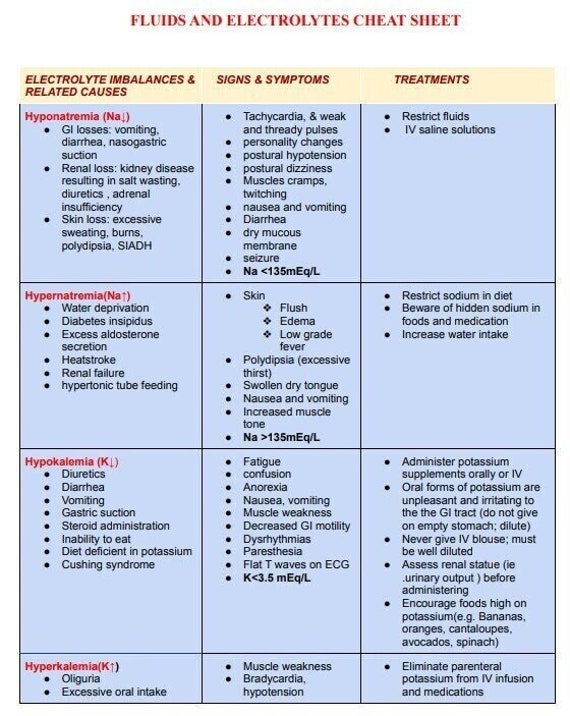
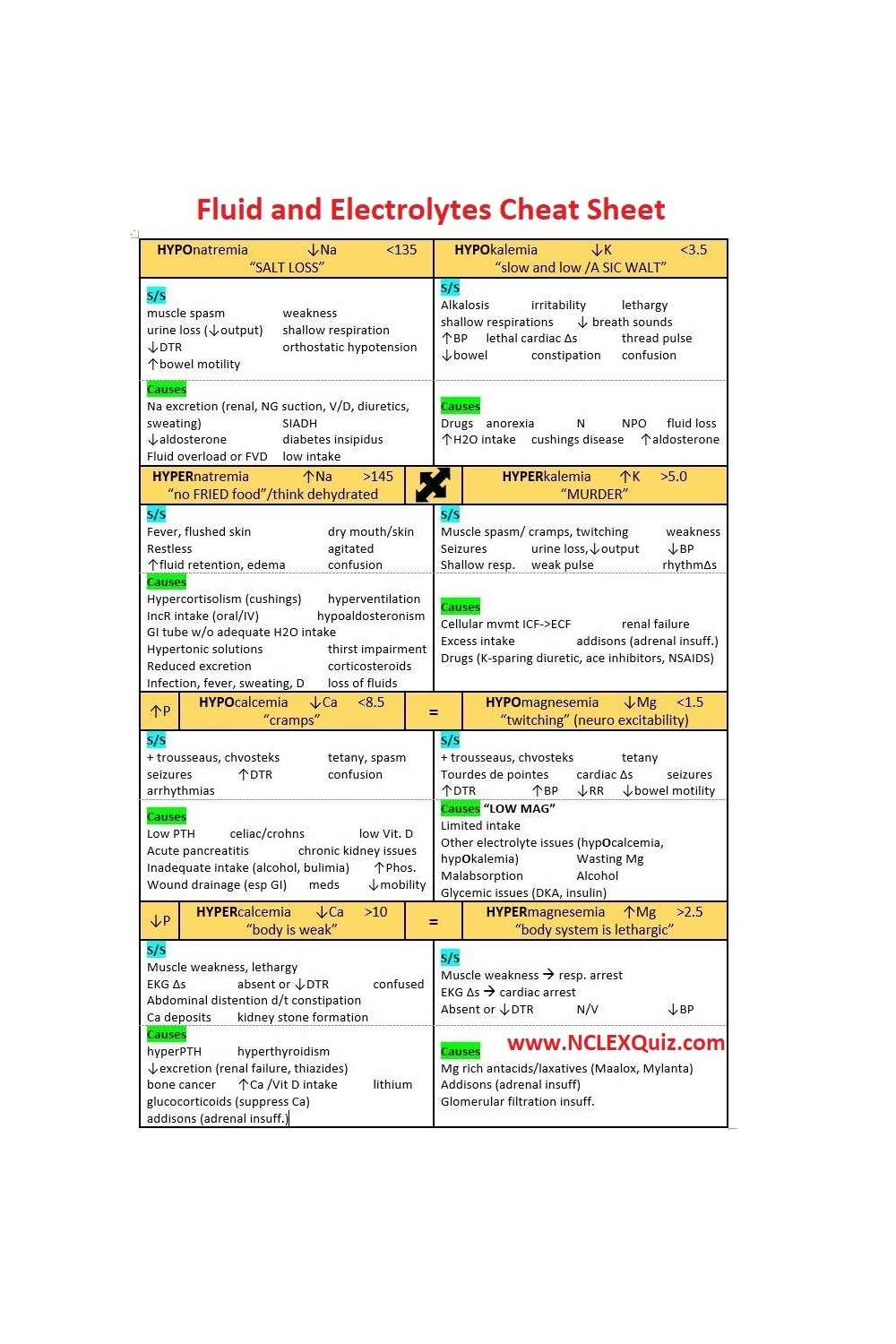
- Impaired Electrolyte Balance: Now we're getting specific! This indicates an actual electrolyte imbalance, such as hypokalemia (low potassium), hypernatremia (high sodium), etc. Remember your labs!
Gathering the Clues: Assessment is Key
To accurately diagnose a fluid or electrolyte imbalance, you need to be a super sleuth! This means a thorough assessment:
Patient History: What are their medical conditions? What medications are they taking? Are they experiencing any symptoms like nausea, vomiting, diarrhea, or muscle weakness?
Physical Examination: Check their vital signs (especially heart rate and blood pressure), assess their skin turgor (pinch test!), look for edema, listen to their lung sounds, and assess their mental status.
Laboratory Results: This is where the rubber meets the road! Check their serum electrolytes (sodium, potassium, chloride, magnesium, calcium), BUN, creatinine, and hematocrit. These labs give you the hard data to back up your suspicions. (Always, always correlate the labs with the clinical picture! Don't treat a number in isolation.)

Interventions: Fixing the Imbalance
Once you've identified the imbalance and its cause, you can start planning your interventions. These will vary depending on the specific imbalance, but might include:
- Fluid replacement: Oral or IV fluids, depending on the severity of the dehydration. (Remember to consider the patient's underlying medical conditions when choosing the type of fluid!)
- Electrolyte replacement: Oral or IV electrolytes, depending on the deficiency. (Potassium is a tricky one! Always administer it slowly and monitor the patient closely.)
- Fluid restriction: Limiting fluid intake in patients with excess fluid volume.
- Medications: Diuretics to help the body eliminate excess fluid, or medications to correct electrolyte imbalances.
- Monitoring: Frequent monitoring of vital signs, fluid intake and output, and laboratory results.
The Bottom Line: Fluid and electrolyte imbalances are common and can be dangerous, but with careful assessment and appropriate interventions, we can help our patients get back on track. So, stay sharp, trust your instincts, and never underestimate the power of a good hydration plan! Oh, and tell your grandma to tell you if she feels sick. 😉