
Does Heat Tape Use A Lot Of Electricity

Alright, let's talk about something a lot of us only think about when the mercury dips and we start hearing ominous creaking sounds from our pipes: heat tape! It's that unassuming hero, often wrapped snugly around our exposed water lines, quietly doing its job to prevent a watery, expensive disaster.
But here’s the burning (pun intended!) question that often pops into our heads:
Does Heat Tape Use A Lot Of Electricity?
It's a really valid question, isn't it? We all want warm pipes, but nobody wants an eye-watering electricity bill that makes us regret inviting winter over. The good news? For the most part, heat tape is a pretty modest power user. It's not the hidden energy vampire you might fear.
Must Read
Think of it less like a super-thirsty gaming PC running 24/7 and more like... well, let's get into the comparisons!
What Exactly Is This Magical Tape Anyway?
Before we dive into watts and bills, let’s quickly recap what heat tape does. Essentially, it’s an electrical heating element designed to keep the temperature of pipes (or sometimes roofs and gutters) just above freezing. It prevents water from turning into ice, expanding, and ultimately bursting your pipes – a scenario that can ruin your day, your floor, and your bank account.
It’s an absolute lifesaver for outdoor faucets, crawl space pipes, or any water line in an unheated area that’s vulnerable to frosty temperatures. Pretty neat, right?

The Short Answer: It Depends, But Usually Not That Much!
Okay, the classic "it depends" answer, but bear with me! The amount of electricity heat tape uses isn't a single fixed number. It’s influenced by a few key players:
- The length of the heat tape.
- The type of heat tape (this is a big one!).
- How well insulated your pipes (and the tape itself) are.
- The ambient temperature – how cold it actually gets.
- How long it needs to run.
Let's Talk Watts: How Much Juice Are We Talking?
Most standard heat tapes consume power in the range of about 5 to 10 watts per foot. To put that into perspective, let's play the comparison game:
Imagine a 20-foot stretch of heat tape. If it's on the higher end at 10 watts per foot, that's a total of 200 watts. What else uses 200 watts?
- A couple of old-school incandescent light bulbs (remember those?).
- A decent-sized desktop computer, maybe.
- A small, basic slow cooker on a low setting.
It's certainly not nothing, but it's also not like running a clothes dryer or a large space heater continuously!
The Smarty Pants of Heat Tape: Self-Regulating vs. Constant Wattage
This is where things get really interesting and where the biggest difference in electricity usage can occur:
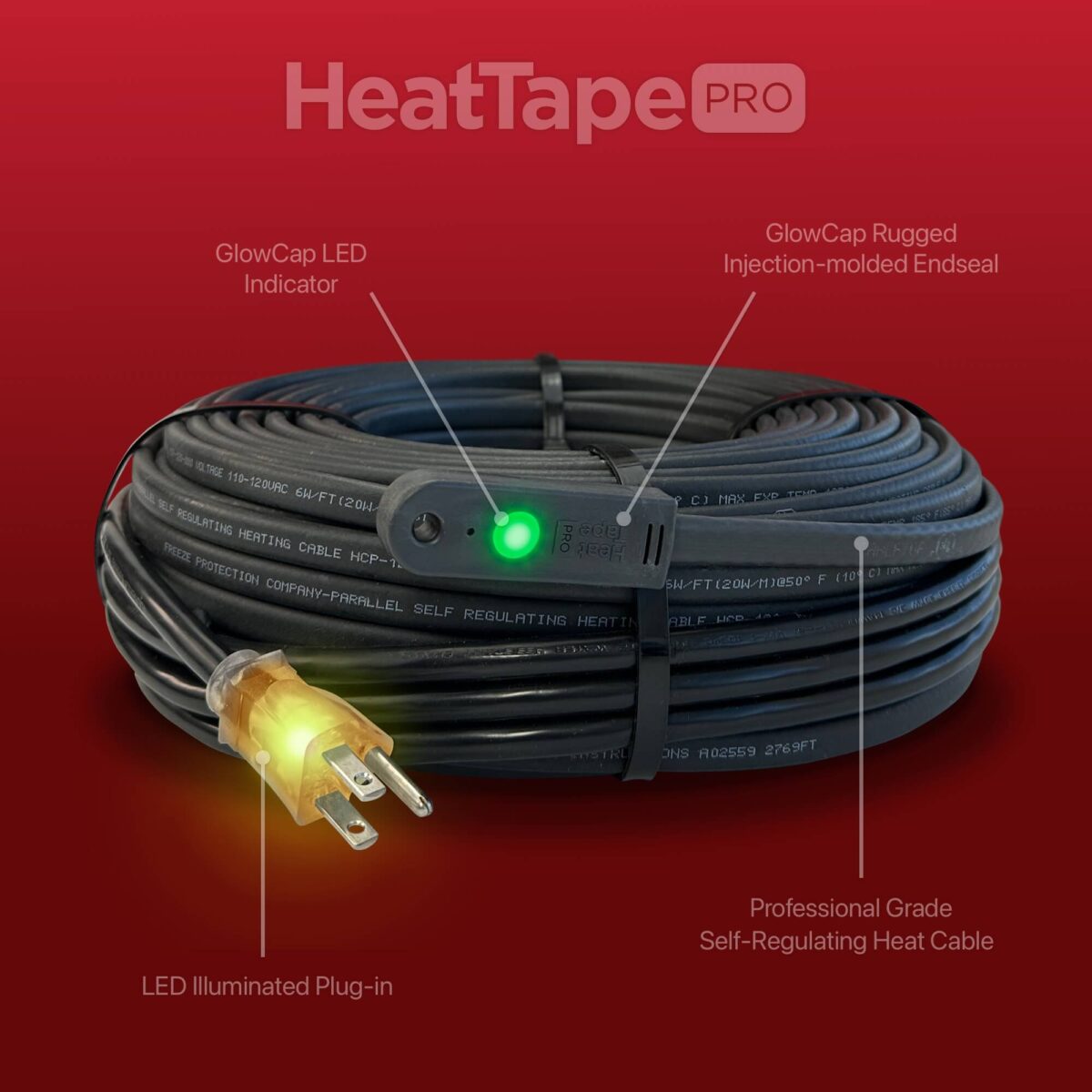
Self-Regulating Heat Tape: These are the clever kids on the block. They have a special core that senses the temperature. When it's super cold, they work harder and generate more heat (and use more electricity). But here's the magic: as the pipe warms up, or if the outside temperature rises, they automatically reduce their heat output and, consequently, their power consumption.
Think of it like a smart thermostat for your pipes. It's only giving you the warmth you need, exactly when you need it. This makes them incredibly efficient and often the best choice for most homeowners, even if they cost a little more upfront.
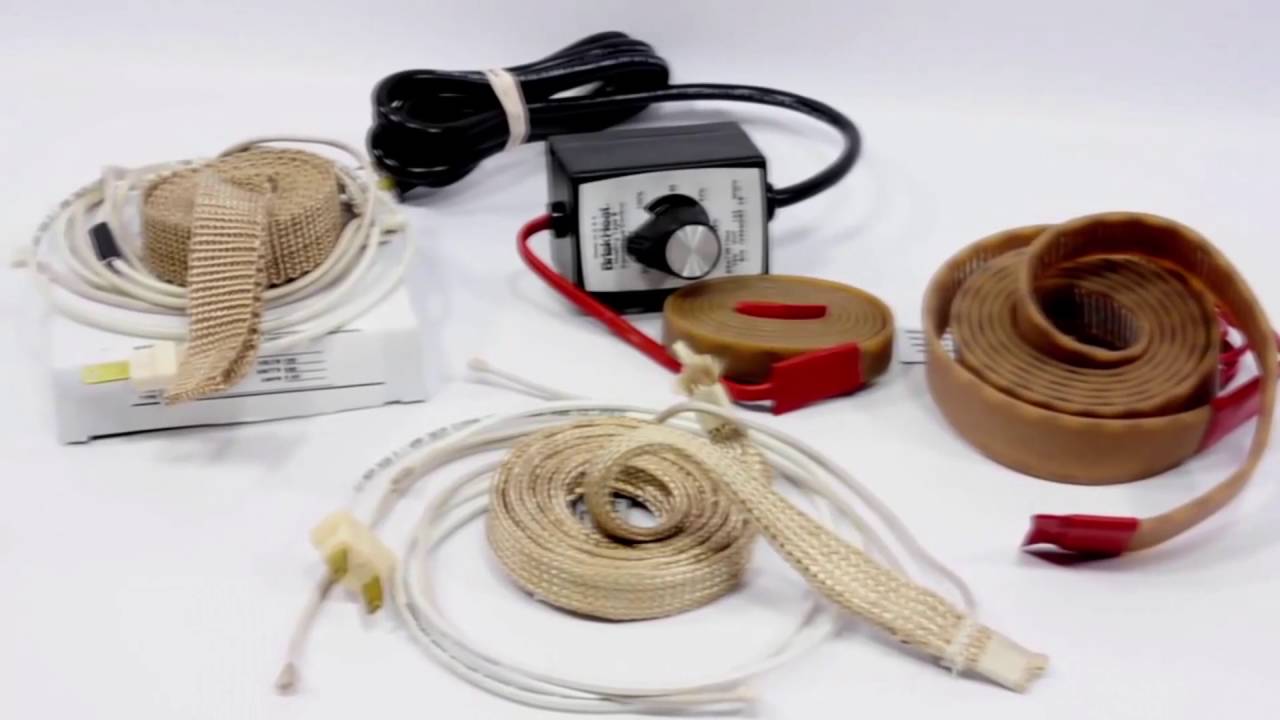
Constant Wattage Heat Tape: These are the simpler, more "old-school" versions. Once plugged in, they generate a consistent amount of heat and use a constant amount of electricity, regardless of the pipe's actual temperature. They're like a light switch – on or off. While effective, they can be less efficient if not paired with an external thermostat, as they might be heating pipes that don't need as much heat.
The Unsung Hero: Insulation!
Want to drastically reduce your heat tape's electricity usage? Wrap those pipes (and the tape!) in insulation! Think of insulation as a cozy blanket for your pipes. Just like wearing a warm jacket keeps you from needing to turn up the heat indoors, pipe insulation traps the warmth generated by the heat tape.
This means the heat tape doesn't have to work nearly as hard to maintain the desired temperature, and therefore, it uses much less electricity. It's probably the single most effective step you can take to keep those costs down and efficiency up.
Is The Cost Worth The Peace of Mind? (Spoiler: YES!)
Let's put this into perspective. Even if your heat tape runs for many hours during a cold snap, the electricity cost is likely to be a fraction of what you'd pay for a single burst pipe repair. We're talking hundreds, possibly thousands, of dollars in plumbing fixes, water damage, and potential mold remediation.
Compared to that potential disaster, the cost of running heat tape is genuinely peanuts. It's a small investment in preventing a much, much larger problem. It’s like buying insurance – you hope you never need it, but you're profoundly grateful when you do.
Tips for Being Even More Efficient
- Insulate, Insulate, Insulate! Seriously, we can't stress this enough.
- Opt for self-regulating heat tape whenever possible. It does the thinking for you.
- If you have constant wattage tape, consider adding an external thermostat or a timer that only activates it when temperatures are near freezing.
- Make sure the tape is installed correctly and is the right length for your application.
- Check it annually before winter arrives to ensure it's still in good working order.
So, does heat tape use a lot of electricity? Generally, not as much as you might think, especially if you're smart about insulation and choose self-regulating models. It's a clever, often invisible guardian that offers incredible protection for a relatively small energy footprint. It’s truly a cool (or rather, warm) piece of tech that keeps our winter worries at bay without making our electricity bills skyrocket.
Stay warm, folks!