
Do You Need A Carbon Monoxide Detector In Every Room

Hey there, coffee's on, pull up a chair! So, we need to chat about something a little serious, but in our usual, totally chill way. We're talking about carbon monoxide detectors. You know, those little gadgets that hum quietly, minding their own business until, well, they really shouldn't have to mind their own business anymore.
The big question swirling around the internet (and probably in your brain after a quick Google search, right?) is this: Do you need a carbon monoxide detector in every single room? Every. Single. Room. Like, even in the linen closet? Or where you keep your emergency snack stash? Let's dive in, shall we?
The Silent Sneaker: What Even IS Carbon Monoxide?
First off, a quick-and-dirty on CO. It's often called the "silent killer," which sounds super dramatic, but honestly, it’s not far off. It’s a gas, it’s invisible, it’s odorless, it’s tasteless. Basically, it’s the ultimate ninja of danger. You won't know it's there until it's too late, and that’s precisely why we need our trusty detectors.
Must Read
It usually comes from things like faulty furnaces, water heaters, gas stoves, or even your car idling too long in an attached garage. Basically, anything that burns fuel. And if it builds up, it replaces the oxygen in your blood, which is, you know, not ideal. So, detectors are definitely our friends here. No debate about that!
Every Room?! Are We Going Full-On CO Paranoia?
Alright, back to the "every room" dilemma. My immediate thought is, "Whoa there, cowboy! Let's pump the brakes a tiny bit." While you can never be too safe, outfitting every single nook and cranny of your home with a CO detector might be a bit much. I mean, are we talking about the laundry room? The pantry? The broom closet?

Imagine the symphony of alarms if one goes off! You'd have CO detectors screaming at you from every direction, and you'd spend half the night trying to figure out which one started the ruckus. Chaos, I tell you. Pure chaos.
Where You Absolutely, Positively Need Them
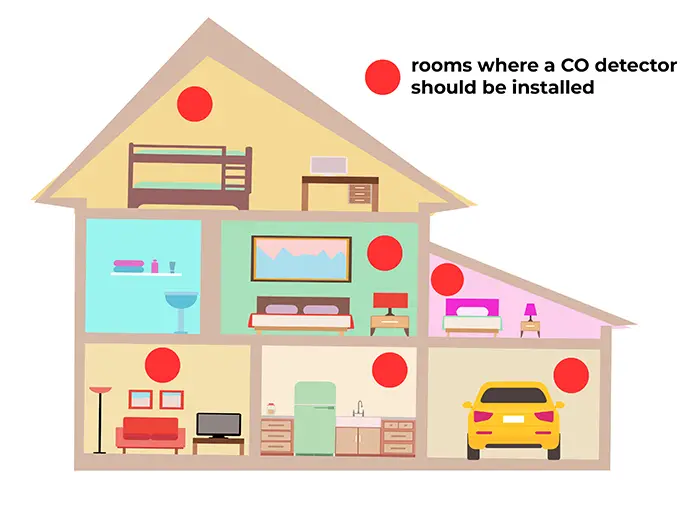
Let’s get real. There are some non-negotiable spots. These are the places where CO could potentially pose the biggest threat, especially when you’re most vulnerable.
One on each level of your home. This is like, CO Detector 101. If you have a basement, a main floor, and an upstairs, you need one on each of those levels. Period. End of story.

Near or in sleeping areas. This is crucial! You’re asleep, you can’t smell or see anything, and you’re blissfully unaware. Having a detector within earshot of where you snooze is paramount. Some folks even put one inside each bedroom. If you're going for extra vigilance, this is a great spot to do it.
Near attached garages. If you’ve got a garage connected to your house, especially if you ever start your car in there (even for a second!), you need a detector nearby. Exhaust fumes are no joke.

Near fuel-burning appliances. Furnace, water heater, fireplace – if it burns something, consider placing a detector in the general vicinity. Not right next to it, mind you, but in the same area so it can catch any sneaky leaks.
The "Just Right" Approach (The Goldilocks Method)
So, not every room, but definitely not just one lonely detector by the front door, either. We're aiming for the sweet spot, the "just right" amount, like Goldilocks finding her perfect porridge.
Think about where people gather, where they sleep, and where the potential sources of CO are. The idea is to have enough detectors to give you an early warning, allowing everyone to get out safely before things get dicey. It’s about creating a protective bubble around your home, not turning it into a sensory overload alarm factory.
A Few Quick Pointers for Placement
- Don't put them too close to open windows or doors, as fresh air can dilute the CO and delay the alarm.
- Keep them away from humid areas like bathrooms, as moisture can mess with their sensors.
- Mount them on a wall or ceiling, usually at least five feet from the ground. CO mixes with air, so it's not like smoke that rises straight up.
- And for goodness sake, test them regularly! Like, once a month. Press that little button. It’s like giving them a friendly pat on the back and saying, "Hey, still alive in there?"
Look, when it comes to safety, a little preparation goes a long way. You don’t need to go overboard and put a CO detector in your sock drawer (unless your socks are secretly operating a tiny, fuel-burning appliance, which would be quite impressive!).
Just be smart, be strategic, and make sure those sleeping areas and high-risk zones are covered. It’s an easy, relatively inexpensive way to buy some serious peace of mind. And honestly, who doesn't want more of that these days?
Stay safe out there, my friend!