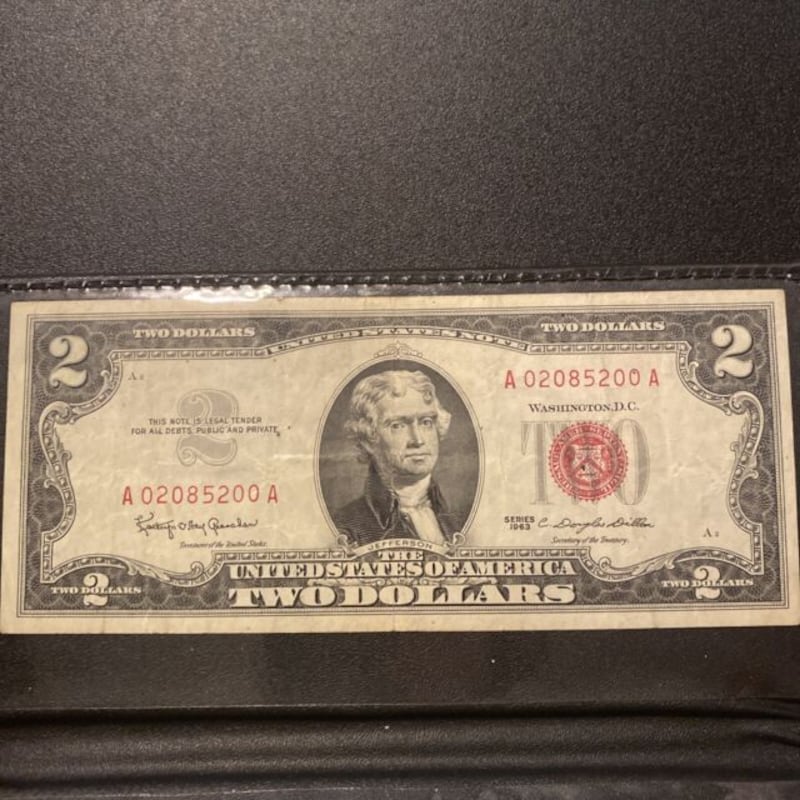
Cuanto Vale Un Billete De 2 Dolares Con Sello Rojo
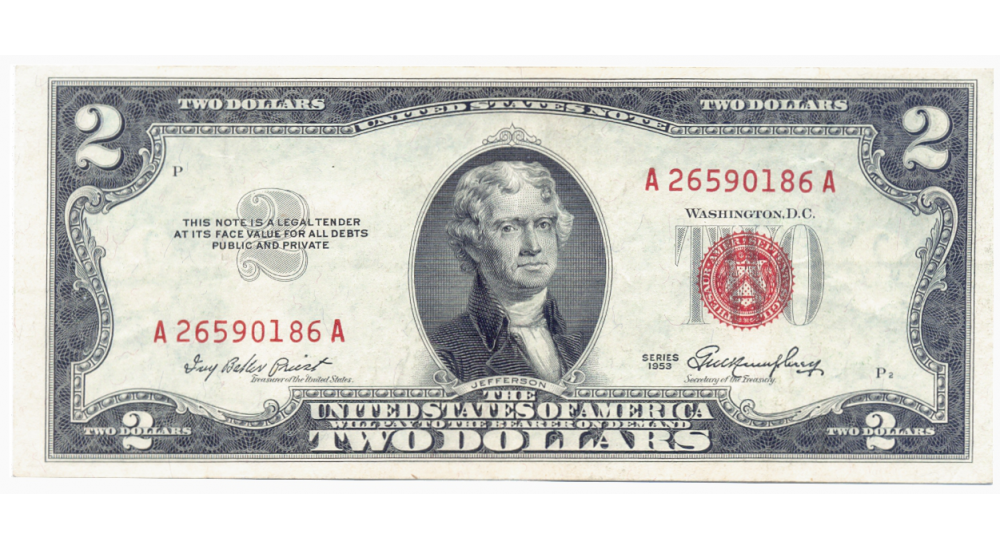
Okay, folks, let's talk about the elusive two-dollar bill, especially those sporting a vibrant red seal. Most of us have probably encountered one at some point, tucked away in a drawer or maybe even received it as change. But have you ever stopped to wonder… is it worth more than, well, two dollars?
The short answer? Maybe! But the long answer? Now that's where the fun begins. Think of it like this: your chances of finding buried pirate treasure are slim, but the idea of it is incredibly exciting, right? Red seal two-dollar bills are a bit like that. They’re not exactly rare golden doubloons, but their value can be… well, unpredictable.
First things first: not all red seal two-dollar bills are created equal. These bills were issued as United States Notes, rather than Federal Reserve Notes, and were printed from 1928 until 1966. That timeframe itself isn't ancient history, but it does put them firmly in the “vintage” category. Their value hinges on a few key things: condition, condition, condition! A crisp, uncirculated bill that looks like it just rolled off the presses will fetch a higher price than one that’s been folded, wrinkled, and used as a makeshift napkin at a picnic.
Must Read
Imagine your two-dollar bill is a celebrity. A pristine, never-touched bill is like a celebrity who's aged gracefully, with no visible signs of a wild past. A well-worn bill? Well, that’s like a celebrity who’s seen better days, perhaps with a few "character lines" and a story or two etched onto their face. Still interesting, perhaps, but not quite as valuable in the memorabilia market.
And then there's the series year. Some years are rarer than others, meaning fewer bills were printed. This scarcity, naturally, drives up the price. Trying to figure out which series you have is like playing detective. Grab a magnifying glass (or your reading glasses!), and look for a small number printed near the bottom right of the bill. This is the series year, and it can make a significant difference in the bill's value.
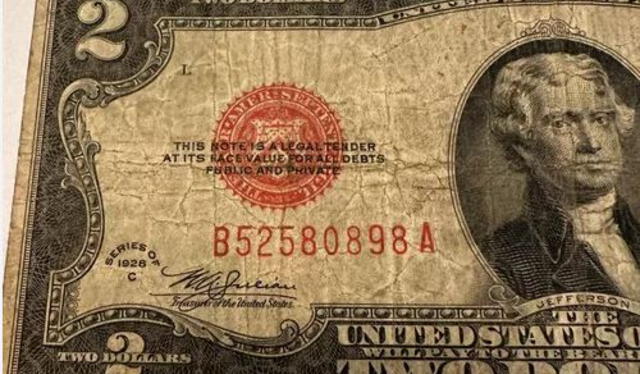
Let's say you've got a 1928 red seal two-dollar bill in excellent condition. You might be looking at a value significantly higher than face value – perhaps even several hundred dollars! But a 1963 bill in circulated condition? Probably closer to three or four dollars. Don't quit your day job just yet!
The Fun Factor: More Than Just Money
But here’s the really cool part: the value of a red seal two-dollar bill isn't just about cold, hard cash. It's about history. It's about nostalgia. It's about the sheer novelty of owning a piece of Americana that's a little bit different.
Think about it: a two-dollar bill is already somewhat uncommon. People often react with surprise or amusement when they receive one. Adding the red seal to the mix makes it even more intriguing. It's a conversation starter, a little piece of history you can hold in your hand.

I remember a story I heard about a grandfather who collected red seal two-dollar bills. He didn't do it for the investment; he did it because he loved the way they looked, and he enjoyed sharing them with his grandchildren. He'd tell them stories about the "olden days" when these bills were more common, and he'd use them to teach them about money and history. That, my friends, is a value you can't put a price on.
So, What's Your Bill Worth?
Determining the exact value of your red seal two-dollar bill requires a little bit of research. Online resources, coin and currency dealers, and even specialized forums can provide more information. Be sure to check the condition of your bill carefully. Even a tiny tear or crease can significantly impact its value.
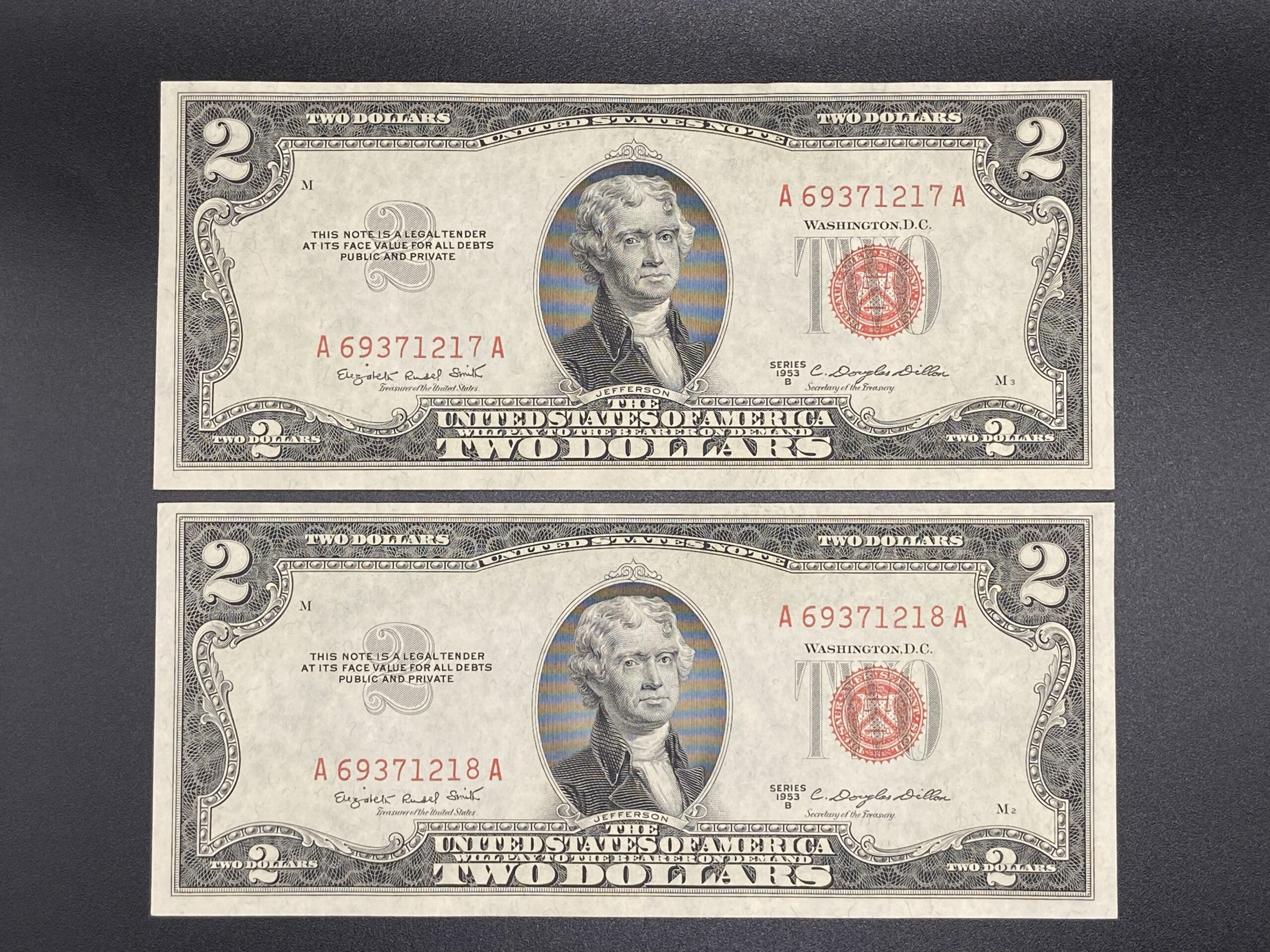
And remember, even if your bill isn't worth a fortune, it's still a cool piece of history. Keep it as a lucky charm, give it to a friend, or simply admire it for its vintage charm. After all, sometimes the best things in life aren't measured in dollars and cents. Sometimes, it's about the stories they tell and the memories they evoke.
So, next time you stumble upon a red seal two-dollar bill, take a moment to appreciate its unique history. Who knows, you might just have a little piece of hidden treasure in your pocket!
"It's not just about the money, honey. It's about the story!" - Aunt Mildred, renowned red seal enthusiast (probably).