
Conversion From Kw To Kwh
Ever stared at your electricity bill, feeling a little like you're trying to decipher ancient hieroglyphics? All those numbers, those mysterious abbreviations like kW and kWh... it can feel like your energy company is speaking a secret language. But what if I told you that understanding these terms isn't just easy, it can actually make your life a whole lot more fun and empowering?
That's right! Get ready to transform from a baffled bill-payer into an energy-savvy superhero. We're about to unlock the secrets of kW and kWh, and by the end, you'll be wondering why you didn't learn this sooner!
What's the Deal with kW? Meet the "Power" Player!
Let's start with kW, which stands for kilowatt. Think of kW as a measure of power. It tells you how much energy an appliance needs to operate at any given moment.
Must Read
Imagine a car: the kW is like your car's speedometer. It shows you how fast you're going right now. A powerful sports car might have a high kW rating, meaning it can use a lot of power to accelerate quickly. Your hairdryer might be 1.5 kW, meaning it needs 1.5 kilowatts of power to blast that hot air.
It's about the rate at which energy is being consumed or produced. A higher kW rating means more power, more oomph! But here's the kicker: your energy bill doesn't charge you for how much power an appliance can use, but rather for how much energy it actually does use over time. And that's where kWh comes in!
Enter kWh: The "Energy" Story!
Now for the star of your electricity bill: kWh, or kilowatt-hour. This is a measure of energy. While kW tells you the rate of power usage, kWh tells you the total amount of energy consumed over a period of time.
Going back to our car analogy: if kW is the speedometer (how fast you're going), then kWh is like your car's odometer (the total distance you've traveled). It's the cumulative sum!
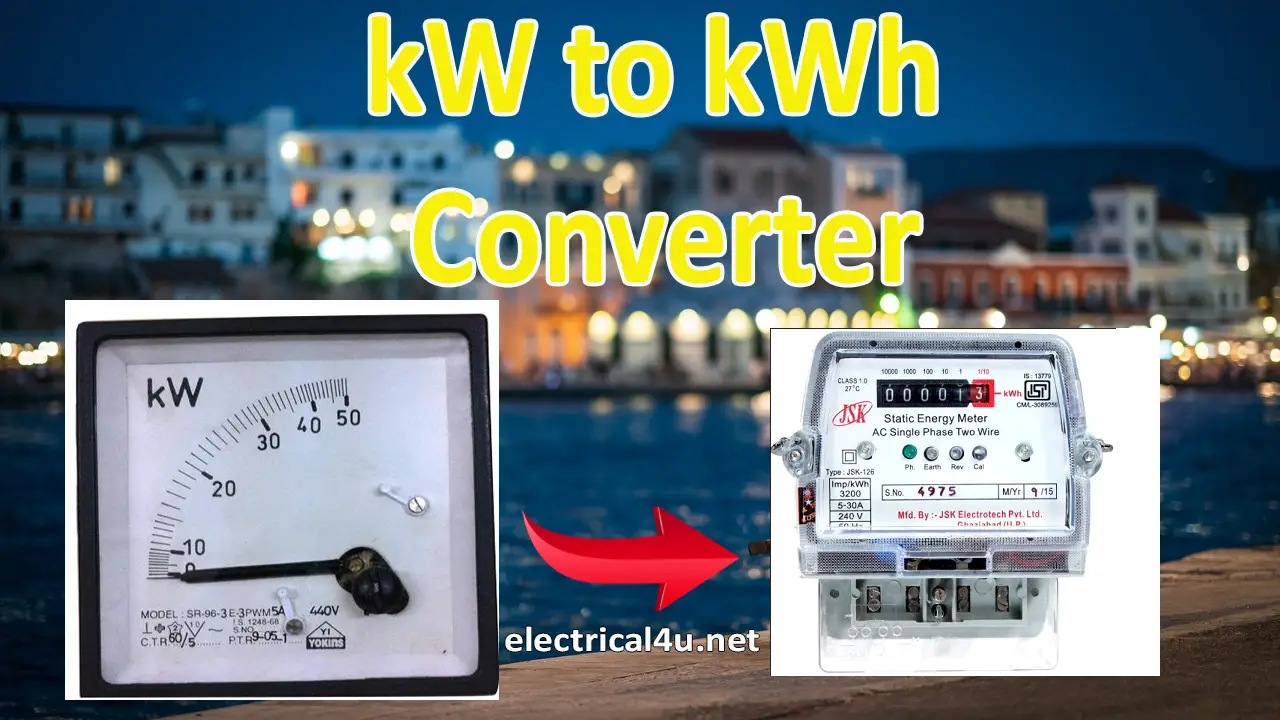
Your utility company charges you for kWh because that's the actual "work" your appliances have done. A 1 kW heater running for one hour consumes 1 kWh of energy. Simple, right?
The "Magic" Conversion: It's Easier Than You Think!
Here's the beautiful, uncomplicated truth: converting from kW to kWh is as simple as multiplication!
The formula is your new superpower:
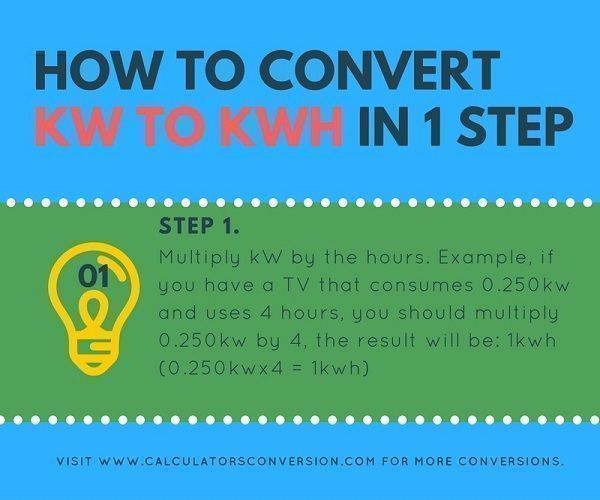
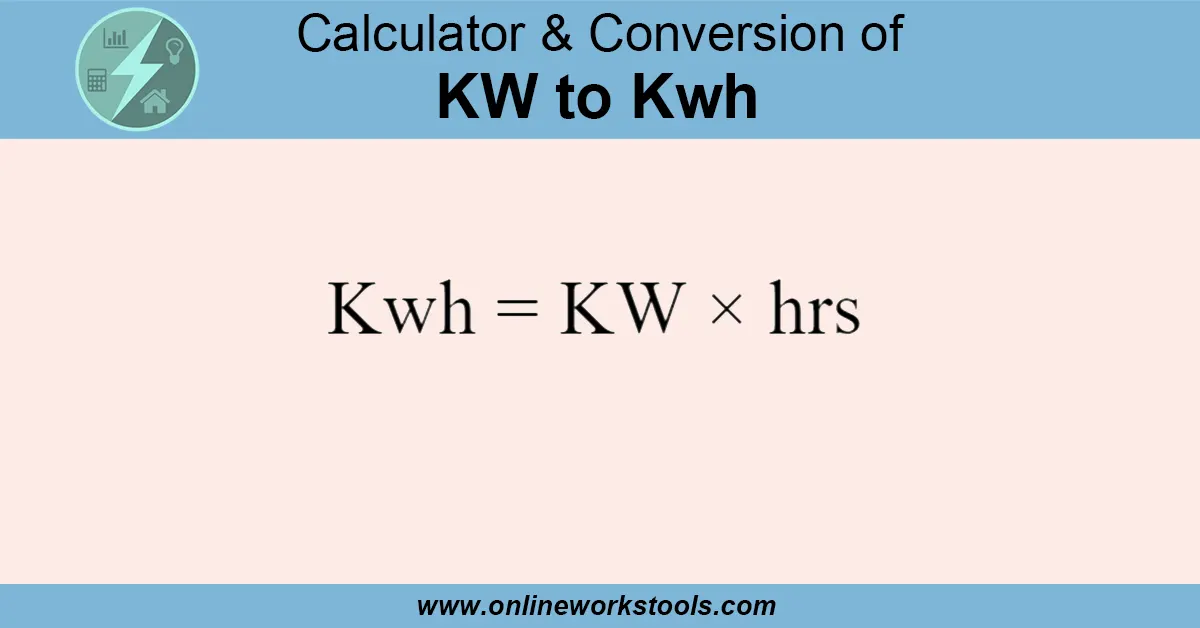
kW × hours = kWh

Let's try it out!
-
Imagine you have an electric kettle that uses 2 kW of power. If you boil water for a total of half an hour (0.5 hours) throughout the day, how much energy did it use?
2 kW × 0.5 hours = 1 kWh.
See? No complex calculus, no advanced physics degree required! You just multiply the power of the appliance (in kW) by the number of hours you use it.
One quick tip: appliances often list their power in watts (W). Since "kilo" means 1,000, 1 kW = 1,000 W. So, if your TV is 100 W, that's 0.1 kW. Easy peasy!
Why This Matters (And Makes Life More Fun)!
Okay, so you know the difference. Big deal, right? Wrong! This knowledge is incredibly empowering and can genuinely make your life better.
First, you're no longer baffled by your bill! You can now look at those charges and understand exactly what they mean. Hello, clarity!
Second, you become a smart consumer. Want to buy a new appliance? Now you can compare their kW ratings and estimate their kWh usage. You can identify the energy hogs in your home and make informed decisions. Is that old fridge really worth keeping if it's costing you a fortune in electricity? Probably not!
Third, you gain a sense of control. By understanding how much energy your devices consume, you can actively reduce your usage, save money, and even lessen your environmental impact. You're not just paying a bill; you're making conscious choices. Go you!
Imagine impressing your friends when they complain about their energy bills: "Ah, but have you considered the kW to kWh conversion of your ancient plasma TV versus a modern LED?" You'll be a household hero!
Your New Superpower: Tips for Action!
Ready to put your newfound knowledge to good use?
- Check Labels: Look at your appliances. Most will list their wattage (W) or kilowattage (kW).
- Track Usage: Pick one appliance, say your computer. Estimate how many hours you use it per day. Do the math! You might be surprised.
- Become a Detective: What's the biggest energy consumer in your home? Your AC? Your oven? Now you have the tools to figure it out.
- Make It a Game: Challenge yourself or your family to reduce your kWh usage by a certain percentage each month. Reward yourselves!
Embrace Your Energy-Savvy Future!
See? It wasn't scary at all! You've just unlocked a secret language of power and energy. kW is the instant power, and kWh is the total energy consumed over time, what you're actually paying for.
This isn't just about saving a few bucks (though that's certainly a nice bonus!). It's about understanding the world around you, taking control, and making informed decisions that benefit both your wallet and the planet.
So next time you look at your energy bill, don't just sigh. Smile! Because now you understand the story those numbers are telling. And who knows what other fascinating things you'll discover when you start digging deeper? The world of energy is surprisingly exciting, and you're now an honorary member of the "in the know" club. Keep learning, keep exploring, and keep being awesome!