
A Barrel Of Crude Oil Is How Many Gallons
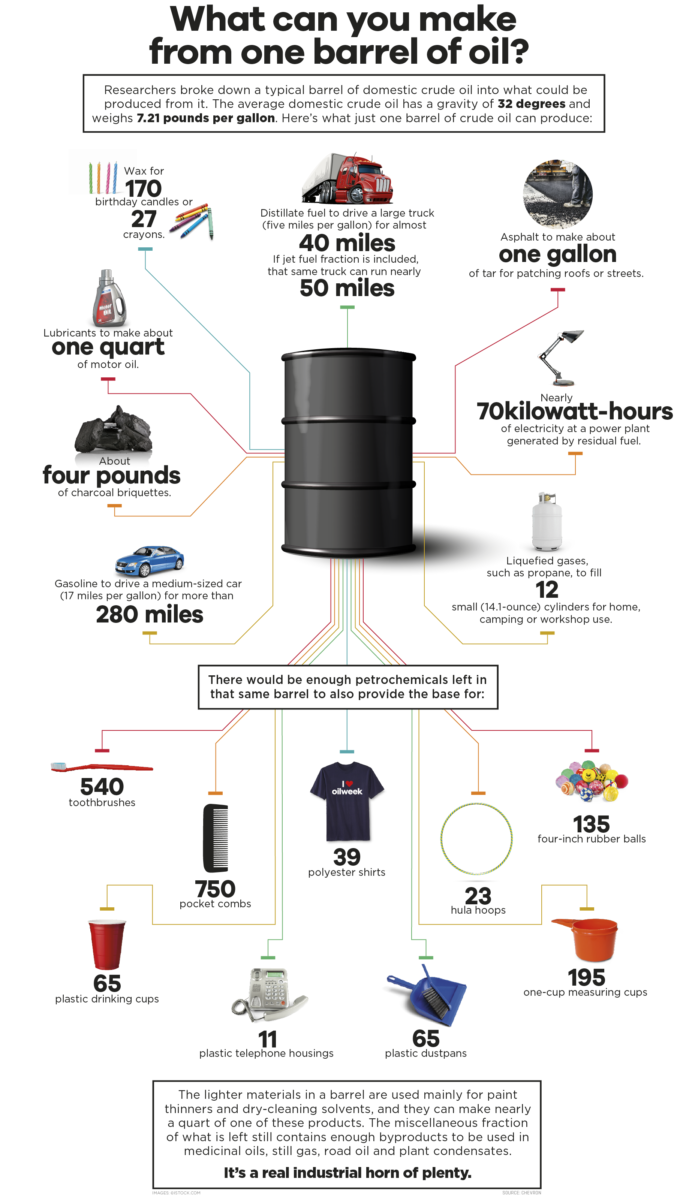
Ever stop to ponder the little mysteries of our world? The ones that make you scratch your head and just go, "Huh?" We’re talking about those quirky facts that seem designed purely to keep us on our toes. Today, let's dive into one such delightful head-scratcher.
It’s about something we hear about all the time: a barrel of crude oil. You see it in the news, read it in reports, and maybe even wonder about it in passing. But have you ever actually pictured what a barrel means?
Is it a big, wooden, pirate-movie kind of barrel? The sort you might roll down a hill in an old cartoon? Or perhaps it’s something entirely different, a secret industry term for... well, who knows what?
Must Read
The word barrel conjures up images, right? Something cylindrical, made of staves and hoops. Something you might store apples or pickled cucumbers in. But when we talk about crude oil, it’s a whole different beast.
It’s not really a physical barrel in the traditional sense anymore. Most crude oil moves through pipelines or massive tankers. The barrel is more of a unit of measurement, a phantom container.
And here’s where the fun really begins. We’re going to pull back the curtain on this particular enigma. Get ready for a number that might just make you chuckle.
The Big Reveal: It's Not What You'd Expect!
So, a barrel of crude oil. How many gallons are we talking? Is it a nice, round number like 10? Or maybe a substantial 50? Perhaps a neat 100 for easy calculations?
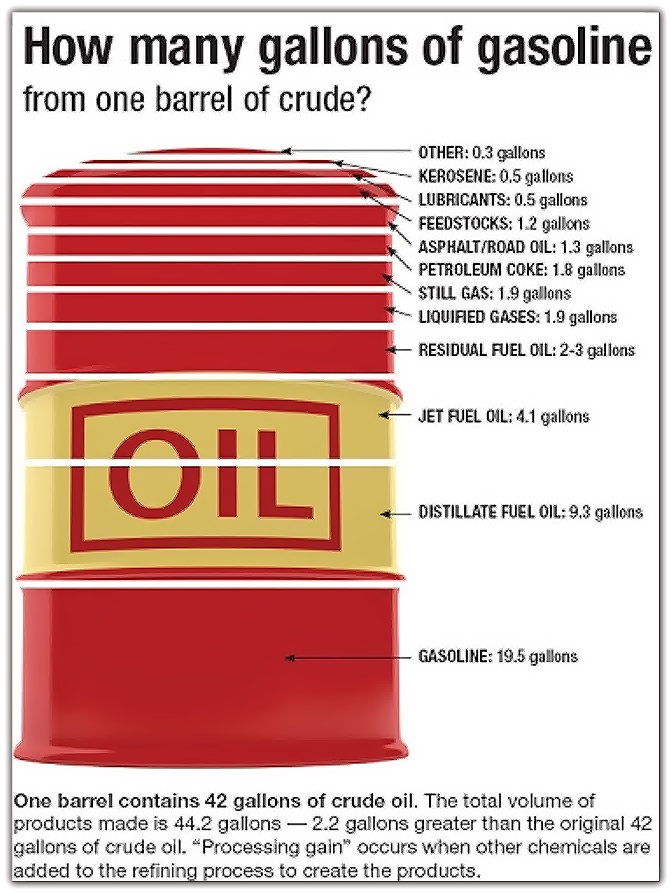
Prepare yourself. The answer is... 42 gallons.
Yes, you read that correctly. Not 40. Not 45. Not a perfect, symmetrical 50. It’s a wonderfully specific, slightly baffling 42 gallons.

Doesn't that just hit you in a peculiar way? Forty-two. It feels so delightfully arbitrary. Like someone just picked it out of a hat one Tuesday afternoon and said, "Yup, that's the one!"
My unofficial, entirely unscientific poll (which involved me talking to myself) suggests that 42 gallons is indeed an odd duck among measurements. Why not a more user-friendly figure?
Imagine if everything was measured in such peculiar increments. "I'll have 42 eggs, please." Or, "My car gets 42 miles to the gallon… of coffee." It just sounds a bit... wonky.
This isn't an earth-shattering revelation, of course. But it's one of those little nuggets of information that, once you know it, makes you see the world of oil and gas with a slightly more amused eye.
"Why 42? It feels like the universe just decided to throw in a little numerical curveball for fun."
Let's Put 42 Gallons Into Perspective
Okay, 42 gallons. What does that actually look like in real terms? Let’s try to visualize it beyond just the number.
Your average bathtub holds about 40 to 50 gallons when full. So, a barrel of crude oil is roughly one full bathtub of liquid gold (or rather, black gold). Can you imagine?
Think about your car’s gas tank. Most cars have tanks that hold between 12 and 20 gallons. So, one barrel of crude oil is enough to fill up your car's tank roughly two to three times.

That's quite a bit! But still, the number 42 just sits there, stubbornly refusing to be a nice, round 40 or 50. It truly is a numerical rebel.
Perhaps it makes you wonder about other arbitrary standards. Who decided there are 12 inches in a foot? Or 16 ounces in a pound? These things seem so set in stone, yet someone, somewhere, made a decision.
The history behind the oil barrel measurement is actually pretty fascinating, in a quirky, historical standards kind of way. It stretches back to the 1860s in Pennsylvania.
Back then, when the first oil wells started gushing, they needed something to transport the oil. There wasn't a standardized container yet. So, they used what was available.
What was readily available? Good old whiskey barrels and wine barrels. These typically held around 40 gallons. But then, a clever idea surfaced.
To account for spills, leaks, and evaporation during transport, they started filling these 40-gallon barrels with an extra two gallons. This way, the buyer would still receive a full 40 gallons upon delivery.
And just like that, the 42-gallon barrel was born! It became the official standard for measuring crude oil in the United States in 1866. A practical solution that turned into a charmingly odd legacy.
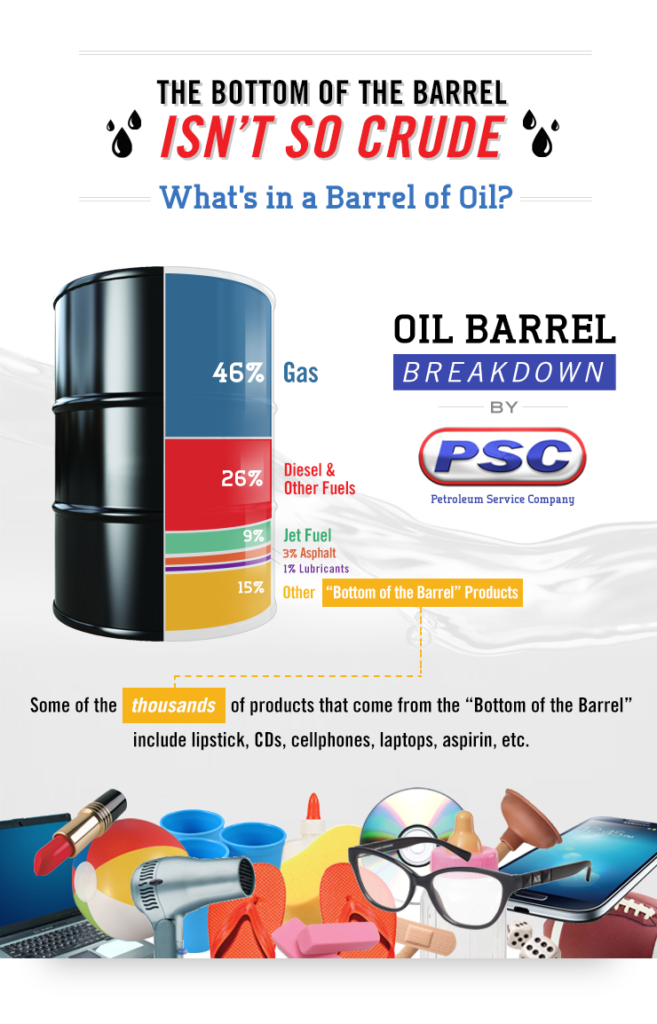
So, it wasn't just pulled from thin air. It had a reason, a very practical reason rooted in the dusty, wild early days of the oil industry. But it still feels a bit like a secret handshake, doesn't it?
It’s like the industry is saying, "Welcome to the club. The first rule of oil club is: the barrel is 42 gallons. Don't ask why it's not 40."
This specific number is embedded deep in the global energy language. When you hear about oil prices, it’s always "per barrel." And that barrel, my friends, is hiding 42 gallons.
My "Unpopular" Opinion (That You Probably Agree With)
Okay, here's my slightly "unpopular" opinion, which I suspect many of you quietly share. Wouldn’t it be just a little bit nicer if a barrel of crude oil was, say, a neat 50 gallons?
Or even a straightforward 40 gallons, given its historical roots? Think of the ease of mental math! The sheer tidiness of it all!
"Oil prices are up to $80 a barrel!" "Great, so that's two bucks a gallon for the rough stuff." Easy peasy. But no, we get 42 gallons.
It forces us to do slightly more awkward division. $80 divided by 42? That’s not a number that rolls off the tongue quite as smoothly.
I'm not saying we should rewrite history or change established global standards. That would be quite the undertaking, and probably cause more confusion than it solves. But a person can dream of simpler measurements, can't they?
Imagine a world where everything was in nice, round tens or hundreds. Our brains would hum with mathematical contentment. No more tricky conversions or odd remainders.
But alas, we live in a world of historical quirks and charmingly inconvenient numbers. And the 42-gallon barrel of crude oil is one of its finest examples.
It's a testament to how past practices, even if slightly peculiar to modern sensibilities, can become deeply entrenched. A little historical ripple creating a very specific and enduring measurement.
So, the next time you hear about oil prices, take a moment to chuckle. Remember that behind that single word, barrel, lies a very particular and slightly quirky volume.
It's 42 gallons of the black gold, ready to power our world. A number that serves as a little reminder that even in the serious business of global commodities, there's always room for a bit of numerical whimsy.
Who knew that such a fundamental unit could carry such a specific, slightly arbitrary charm? Now you know the secret of the oil barrel. Go forth and amaze your friends with this delightfully odd fact!