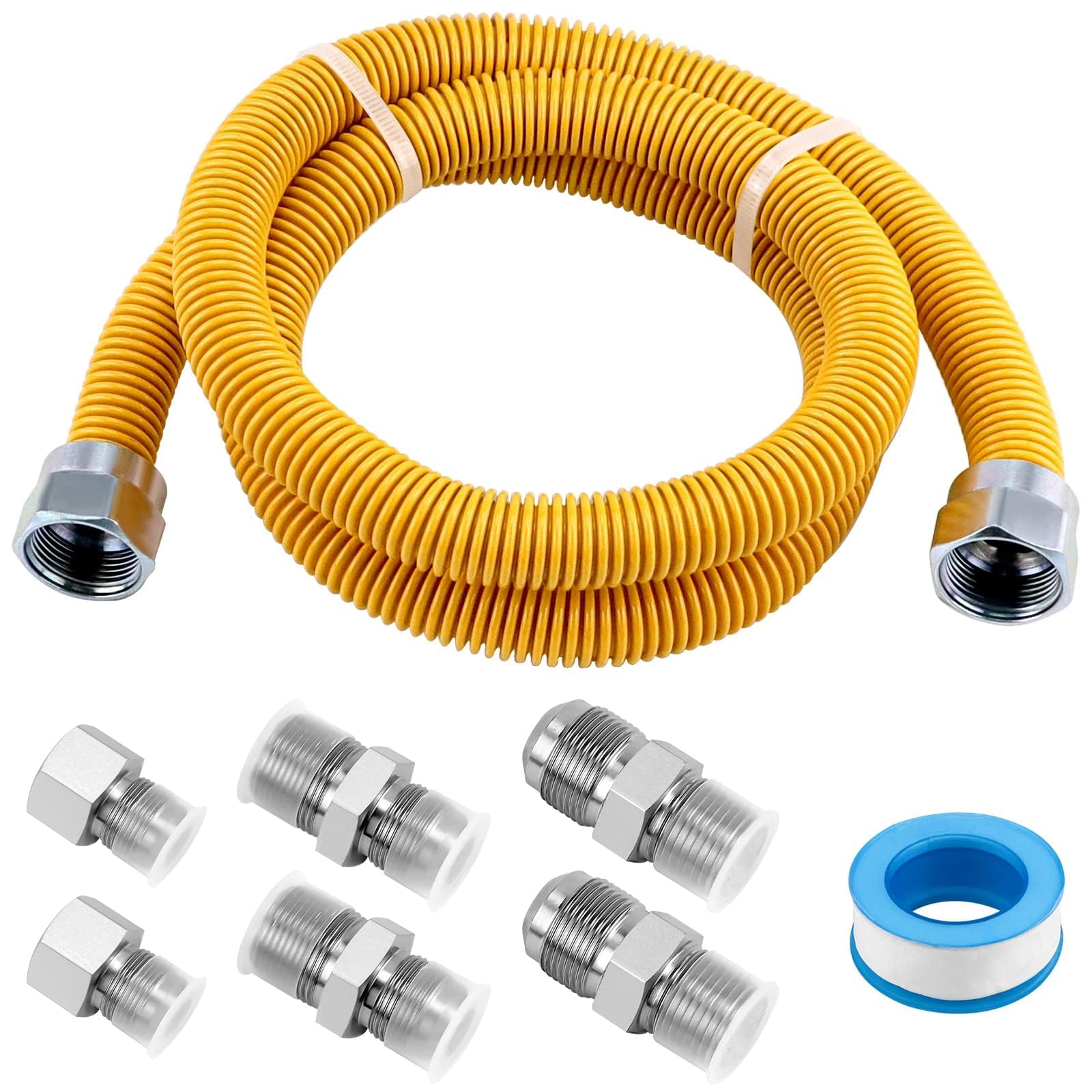
8 Foot Flexible Gas Line For Dryer

Let's talk about something that might not sound glamorous, but is absolutely essential for many of us: the flexible gas line for your dryer! Why's it fun? Well, think about it – this unassuming little hose is the key to warm, fluffy towels and perfectly dry clothes. Without it, you're air-drying everything, which takes forever. Plus, understanding how it works and installing it yourself can save you money and give you a real sense of accomplishment. Who doesn't love that?
So, what's the big deal about an 8-foot flexible gas line specifically? Simply put, it connects your gas dryer to the gas supply in your home. The "flexible" part is crucial because it allows you to move the dryer for cleaning or maintenance without disconnecting the gas line entirely. The "8-foot" length gives you ample reach, making installation easier in various laundry room layouts. It's especially useful if your gas outlet isn't directly behind your dryer.
Different folks benefit in different ways. For beginners, using a flexible gas line is generally much easier than dealing with rigid pipes. It reduces the risk of leaks and makes the installation process more forgiving. For families, the peace of mind knowing your dryer is safely connected is invaluable. No one wants to worry about gas leaks. And for the DIY hobbyist, installing a flexible gas line offers a chance to learn a new skill and save on professional installation fees.
Must Read
There are a few variations to be aware of. Some flexible gas lines are coated with yellow epoxy for extra corrosion resistance, which is a great option if you live in a humid environment. Others have different fitting sizes, so make sure you get the one that matches your dryer and gas supply. You might also find "no-nick" fittings which are designed to prevent accidental damage to the gas line during installation.

Ready to get started? Here are some simple, practical tips: First and foremost, ALWAYS turn off the gas supply before you begin any work. Double-check it! Second, use pipe thread sealant specifically designed for gas lines. Apply it carefully to all threaded connections. Third, use two wrenches: one to hold the fitting and the other to tighten the nut. This prevents twisting and damaging the gas line. Finally, and this is crucial, test for leaks with soapy water after installation. If you see bubbles, tighten the connections further. If leaks persist, call a qualified professional. It's better to be safe than sorry!
Remember, working with gas requires caution. If you're uncomfortable with any part of the process, don't hesitate to call a licensed plumber or gas fitter. But with a little preparation and care, installing an 8-foot flexible gas line for your dryer can be a rewarding and practical DIY project. Enjoy the satisfaction of knowing you've kept your clothes dry and saved some money along the way!