Words That Rhyme With Fall
Ever find yourself humming a tune, tapping your foot, and suddenly realize you need a word to complete the perfect rhyme? Or maybe you're crafting a heartfelt poem for a loved one and that one line just feels... unfinished? That's where the delightful pursuit of finding words that rhyme comes in! It's a playful exercise, a creative spark, and a surprisingly useful skill, all rolled into one.
The simple act of brainstorming rhymes serves several important purposes. For starters, it's a fantastic mental workout. It challenges you to think associatively, digging into the recesses of your vocabulary for words you might not use every day. This can improve your overall cognitive flexibility and boost your memory. Beyond the mental benefits, finding rhymes is a cornerstone of creative expression. Think of song lyrics, poetry, even witty advertising slogans – rhyme adds a layer of musicality and memorability that makes them more engaging.
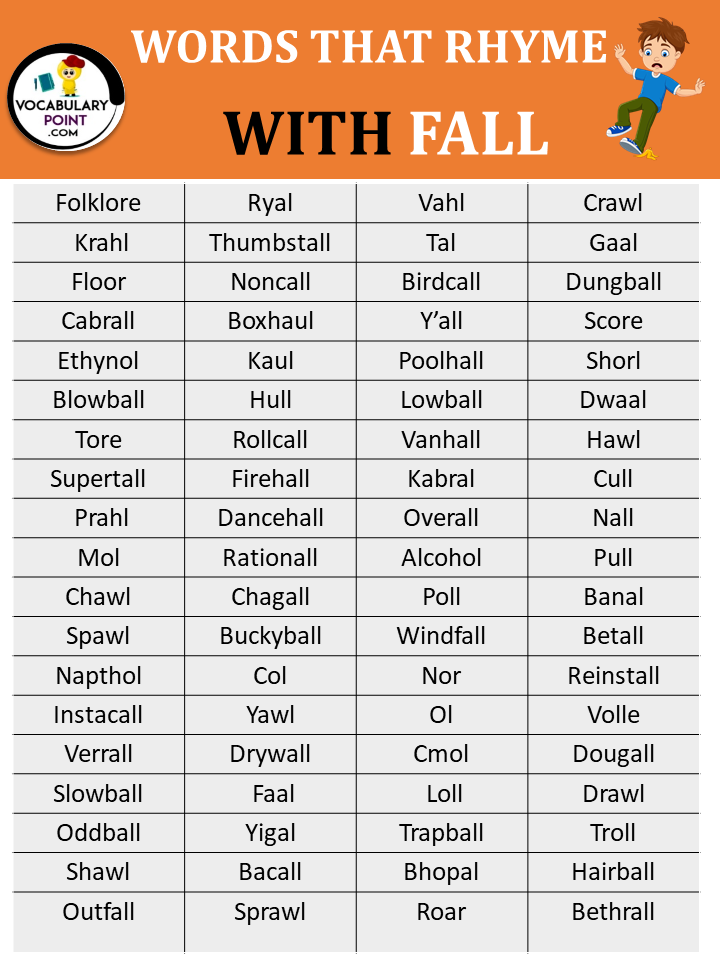
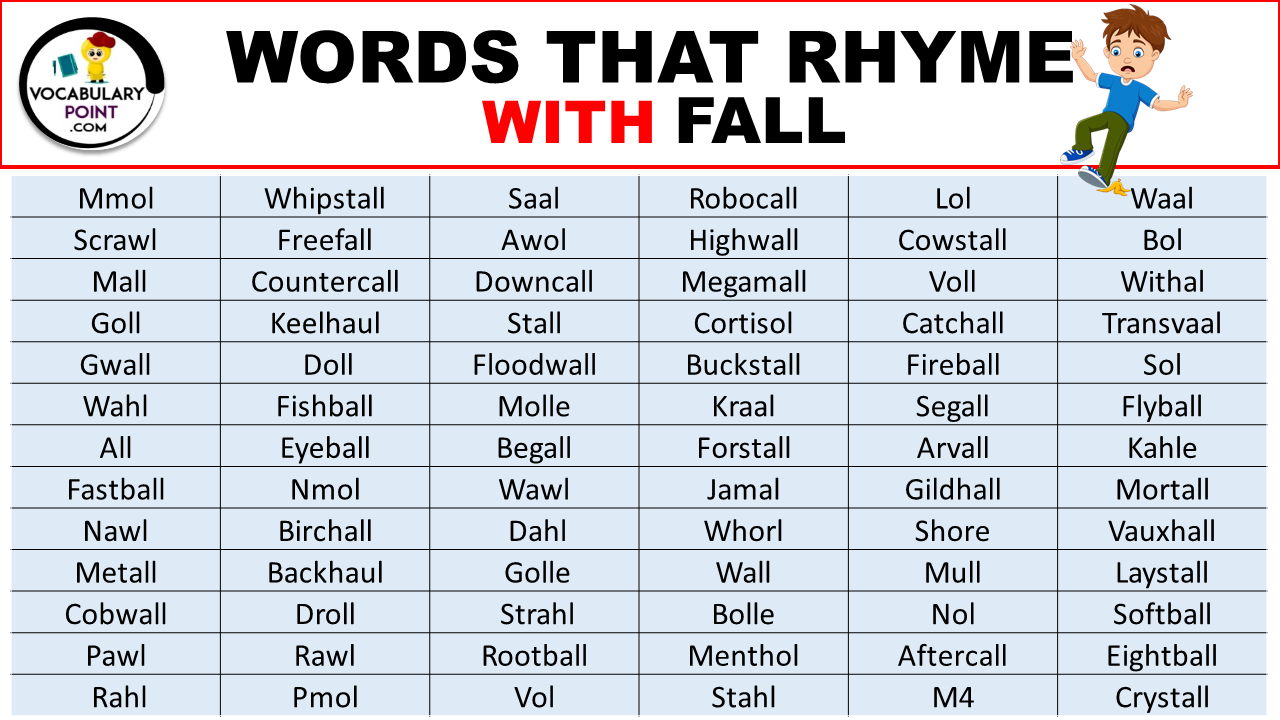
So, what rhymes with "fall?" Let's dive in! The most obvious candidates are "ball," "tall," "wall," and "small." These are the workhorses of the rhyming world, the words that come to mind immediately. But don't stop there! We can get more creative. Consider "call," "stall," "squall," "crawl," or even less common words like "gall" (meaning impudence) or "appall." Think about the context and what feeling you want to evoke. A playful poem about autumn leaves might benefit from "ball" or "small," while a more dramatic piece could use "squall" or "appall." The possibilities are nearly endless, and that's what makes it so much fun.
Must Read
Rhyming isn't just for poets and musicians, though. It creeps into everyday language in subtle ways. Think of catchphrases, mnemonic devices ("In fourteen hundred ninety-two, Columbus sailed the ocean blue"), and even the way we tell jokes. A well-placed rhyme can make your point more memorable, persuasive, or simply funnier. Kids learn phonics and develop literacy skills through rhyming games. It’s a foundational element in language development.

To enjoy the art of rhyming more effectively, here are a few practical tips: Embrace a thesaurus. If you're stuck, a thesaurus can offer synonyms that unlock new rhyming possibilities. Don’t be afraid to get silly! Sometimes the best rhymes are unexpected and a little absurd. Keep a notebook or use a digital app to jot down rhyming words as they come to you. This creates a personal rhyming dictionary to draw upon later. Practice makes perfect. The more you play with words, the easier it will become to find those perfect rhymes. And most importantly, don't be afraid to break the rules a little. Sometimes an imperfect rhyme (a slant rhyme or near rhyme) can add a unique texture to your writing.
So, next time you find yourself searching for that elusive rhyme, remember it's more than just a game. It's a way to flex your mental muscles, express your creativity, and connect with the rhythm and beauty of language. Now go forth and rhyme… with all your might!