
Why Is Cool On Flashing On My Thermostat
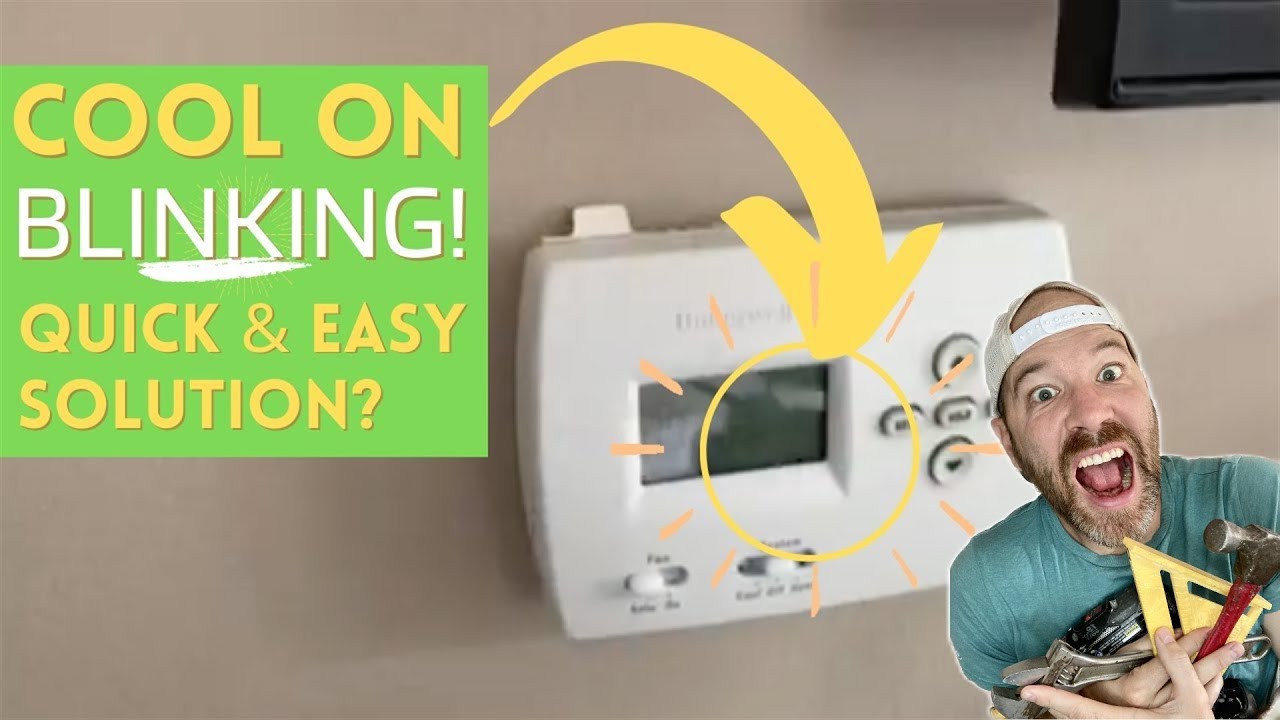
Okay, picture this: You wake up, still half in a dream, shuffle into the living room for that first glorious cup of coffee, and glance at your thermostat. What do you see? That little screen, usually so stoic and reassuring, is now blinking at you. Specifically, it's flashing "Cool On".
Panic? Maybe just a tiny bit. "Is it broken?" you wonder, a shiver running down your spine that has absolutely nothing to do with the AC. "Are we doomed to a sweltering existence? Did I accidentally anger the HVAC gods by setting the temperature one degree too low last night?"
Let's be real, we've all been there. That flashing text can feel like a cryptic message, a warning that your comfort is about to take a nosedive. But here's the good news, my friend: most of the time, it’s not a doomsday signal. In fact, it’s quite the opposite! Your thermostat is actually being super smart and protective.
Must Read
Think of it like this: your thermostat isn't just a fancy on/off switch. It's got a tiny brain, and that brain is looking out for your air conditioning unit. And that flashing "Cool On" message? It's usually a sign that its brain is working overtime to prevent serious damage to your system.
Curious yet? You should be! Because once you know what's really going on, you'll see that flashing light not as a problem, but as a reassuring blink from your home's climate control guardian.
![Why is My Honeywell Thermostat Flashing “Cool On”? [7 Easy Fixes] - www](https://www.mechstudies.com/wp-content/uploads/2023/09/honeywell-thermostat-flashing-cool-on-how-fix.jpg)
What's the Deal with the Flashing "Cool On"?
Alright, let's dive into the nitty-gritty. That flashing "Cool On" usually indicates that your thermostat has initiated a delay cycle. This isn't a malfunction; it's a built-in protective feature designed to prevent something called short cycling.
What's short cycling, you ask? Good question! Imagine your car trying to start, stopping, and then immediately trying to start again, over and over. That's essentially what short cycling is for your AC. It’s when the compressor, which is the heart of your air conditioning system, turns on and off too frequently or too quickly.
And why is that bad? Well, for several reasons:
- Wear and Tear: Each time the compressor starts up, it draws a significant amount of power and puts a lot of stress on its components. Constant starting and stopping dramatically shortens its lifespan. Think of it like constantly hitting the accelerator and then the brake – eventually, something's going to give.
- Energy Inefficiency: An AC unit is most efficient when it runs for a sustained period. Short cycling means it's constantly in the least efficient part of its operation, driving up your energy bills.
- Reduced Cooling: If it's turning off too quickly, it's not effectively removing heat and humidity from your home. You'll feel less comfortable, and your system will struggle to reach the set temperature.
![Why is My Honeywell Thermostat Flashing “Cool On”? [7 Easy Fixes] - www](https://www.mechstudies.com/wp-content/uploads/2023/09/honeywell-thermostat-flashing-cool-on-how-fix-troubleshoot.jpg)
So, to prevent all that nastiness, most modern thermostats have a delay timer. This timer typically ranges from 3 to 5 minutes. When you see "Cool On" flashing, it means the thermostat has received a command to turn the AC on, but it's holding off for that short period.
Why the wait? It allows time for the pressures within the refrigerant system to equalize. This is crucial because starting the compressor against high pressure can cause damage. It's like taking a deep breath before a big effort; the system needs its moment.
This delay often kicks in after a few scenarios:
- A brief power outage or fluctuation.
- You just manually adjusted the temperature, perhaps significantly.
- The system just completed a cooling cycle, and you're asking it to start another one immediately (maybe you're just really hot, I get it!).
- You recently flipped the circuit breaker for your AC unit.

In all these cases, your thermostat is basically saying, "Hold your horses, chief! I'm going to give the system a little breather to protect it, and then we'll get that cool air flowing."
When Should You Actually Worry?
Okay, so most of the time, the flashing "Cool On" is your thermostat being a responsible adult. But are there times when it means something more? Of course! Life isn't always that simple, is it?
You should start to get a little concerned if:
- The "Cool On" message flashes continuously for more than 5-10 minutes and the AC unit never actually kicks on. If the delay seems to be stuck or the system repeatedly tries and fails to start, that’s a red flag.
- You hear strange or alarming noises coming from your outdoor AC unit or indoor furnace/air handler while the light is flashing or when it attempts to start.
- The room temperature is significantly higher than your set point, and despite the flashing, no cool air is ever produced.
- The issue is happening persistently and frequently, even without obvious reasons like power outages or manual adjustments.

If you're noticing these symptoms, it might indicate an underlying problem. It could be something relatively simple like a clogged air filter (seriously, check your filters, folks!), a tripped circuit breaker, or blocked vents. These are good first checks!
But if those simple checks don't yield results, or if you're experiencing more serious signs, it's probably time to call in a professional HVAC technician. They can diagnose if there's a problem with the thermostat itself, the wiring, the compressor, or another component in your system. Don't let a small issue turn into a big, expensive headache (and a very sweaty summer!).
So, next time you see that "Cool On" flashing on your thermostat, take a deep breath. For the most part, it's just your system being smart, efficient, and trying to live a long, happy life. And now you're in the know, empowered with the knowledge to either relax and wait, or to know when it's truly time to act. Pretty cool, right? (Pun absolutely intended.)