
Why Does Carbon Monoxide Detector Beep
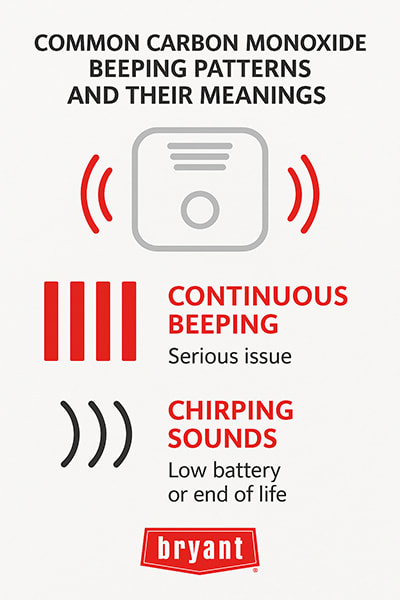
Ever been chilling at home, maybe binging your favorite show or attempting a new recipe, when suddenly – BEEEP! BEEEP! BEEEP! Your carbon monoxide (CO) detector decides it's time to make itself heard. Your heart jumps, right? It’s not quite as dramatic as a smoke alarm, but that distinct chirping or blaring can still send a shiver down your spine. But have you ever stopped to wonder, what exactly is this mysterious CO, and what makes that clever little box beep?
Let's dive into the fascinating world of carbon monoxide and why its detection is such a big deal. Think of your CO detector as a tiny, vigilant guardian, always on watch for a silent, invisible threat. Pretty cool, huh?
Meet the Silent Ninja: Carbon Monoxide
First things first, what is carbon monoxide? It's often called the "silent killer," and for good reason. Unlike a smoky fire that alerts you with its smell and visible fumes, CO is completely odorless, colorless, and tasteless. It's truly a stealthy gas, capable of sneaking into your home unnoticed.
Must Read
So, where does this sneaky ninja come from? It's a byproduct of incomplete combustion. Basically, whenever something burns fuel without enough oxygen, CO is produced. Think about your furnace, gas stove, water heater, fireplace, or even a car running in an enclosed space. If these appliances aren't working correctly, or if vents are blocked, CO can build up. Generators, especially when used improperly indoors, are also notorious CO producers. It's a natural part of burning things, but when trapped, it becomes a problem.
Why Is This Invisible Gas Such a Big Deal?
Okay, so it’s invisible. So what? Here’s where it gets a bit science-y, but stay with me, it’s super interesting. Our bodies need oxygen to survive, right? Oxygen hitches a ride on a special protein in our red blood cells called hemoglobin. Think of hemoglobin as a busy taxi driver, constantly ferrying oxygen to all parts of your body.
Now, here's the catch: hemoglobin is way more attracted to carbon monoxide than it is to oxygen. Like a super-magnetic personality, CO swoops in and basically steals oxygen's seat in the hemoglobin taxi, and it doesn't let go! Suddenly, those taxis are full of CO, not oxygen, and your body's cells start to starve.
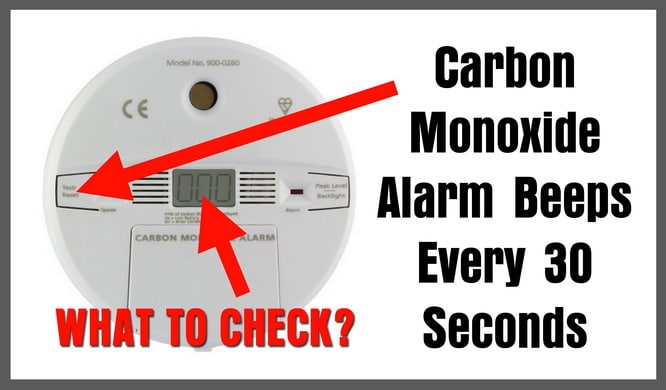
Initially, you might feel a bit off – a headache, dizziness, nausea, maybe you just feel tired. These symptoms are often mistaken for the flu! But as CO levels rise, you can become disoriented, lose consciousness, and tragically, it can lead to death. All without ever smelling, seeing, or tasting a thing. Pretty scary, which is why that little detector is such a lifesaver!
How Does That Clever Box Sniff It Out?
This is where the magic happens! Your CO detector isn't just randomly beeping; it's got some sophisticated tech packed inside. While there are a few types, the most common ones use a special sensor that's designed to react specifically to CO.
Imagine a tiny, super-sensitive chemical nose inside the detector. When CO gas floats past this sensor, it triggers a reaction. One common type, the electrochemical sensor, literally creates an electrical current when CO is present. The more CO, the stronger the current. It's like a little internal alarm bell that gets louder as the threat increases.

Another type, the metal oxide semiconductor (MOS) sensor, changes its electrical resistance when it comes into contact with CO. Think of it like a mini electronic circuit that gets "tickled" by the CO molecules, causing a measurable change.
Some even use a biomimetic sensor, which involves a gel that changes color in the presence of CO, and a light sensor detects this color change. How cool is that? It's like a CO chameleon inside your detector!
No matter the technology, the goal is the same: to be a vigilant, non-stop watcher, much better than any human nose or eye could ever be.
Why the Beep? Understanding the Alarm's Language
So, the sensor detects CO. But why does it actually beep? Well, detectors are programmed to respond to specific levels and durations of CO exposure. It’s not just a binary "yes/no" answer; it's more nuanced.

Typically, a CO detector will have different alarm patterns. For instance, a few short beeps or chirps might indicate a lower, but still concerning, level of CO that has been present for a while. This is like a "hey, heads up, something's not quite right here, but don't panic yet" signal. It’s a warning to investigate.
However, if your detector starts blaring a loud, continuous, and rapid alarm – often four distinct beeps followed by a pause – that means CO levels are dangerously high and rising fast. This is the "DANGER! GET OUT NOW!" signal. It’s not messing around. It's telling you there's an immediate threat to your health and safety.
The detector also has a memory and a timer. It doesn't just react to a momentary puff of CO. It measures exposure over time because even low levels can be harmful if you breathe them in for long enough. So, that beep is a carefully calculated alert based on scientific thresholds designed to protect you.

When It Beeps: What's Your Move?
Here’s the golden rule: never ignore your carbon monoxide detector. Even if you don't feel sick, or if it's just chirping intermittently, it's telling you something important. Remember, CO symptoms can be subtle and easily dismissed.
If your CO detector goes off:
- Get everyone outside immediately into fresh air. Don't waste time looking for the source.
- Once everyone is safe, call your local emergency services (like the fire department) from a neighbor's house or your cell phone. They have specialized equipment to detect and measure CO levels accurately.
- Do NOT re-enter your home until emergency personnel tell you it's safe and the source of CO has been identified and fixed by a qualified technician.
It’s that simple. A beep is a call to action, not a suggestion.
A Little Guardian with a Big Purpose
So, the next time your carbon monoxide detector chirps or blares, take a moment to appreciate the incredible technology packed into that small device. It’s not just an annoying noise; it's a sophisticated, silent sentinel constantly working to keep you safe from an invisible danger. It’s a true hero, and understanding why it beeps makes it all the more remarkable, doesn't it?