
Why Does A Hardwired Smoke Detector Chirp
Ah, the sound that can wake you from the deepest slumber, send your heart racing, and turn you into a midnight detective armed with a flashlight and a stepladder. We're talking, of course, about that infernal, intermittent, utterly maddening chirp from your hardwired smoke detector. It’s not a full-blown alarm, oh no. That would be too straightforward. This is something far more sinister, a passive-aggressive beep designed to slowly chip away at your sanity, usually around 3 AM.
You’ve probably been there: jolted awake, frantically scanning the ceiling, whispering "Which one IS IT?!" as you navigate furniture in the dark. It feels like a cruel joke, right? Especially since it's hardwired! It gets its power directly from your house's electrical system, so a dead battery shouldn't even be a thing... or should it?
The Sneaky Backup Battery
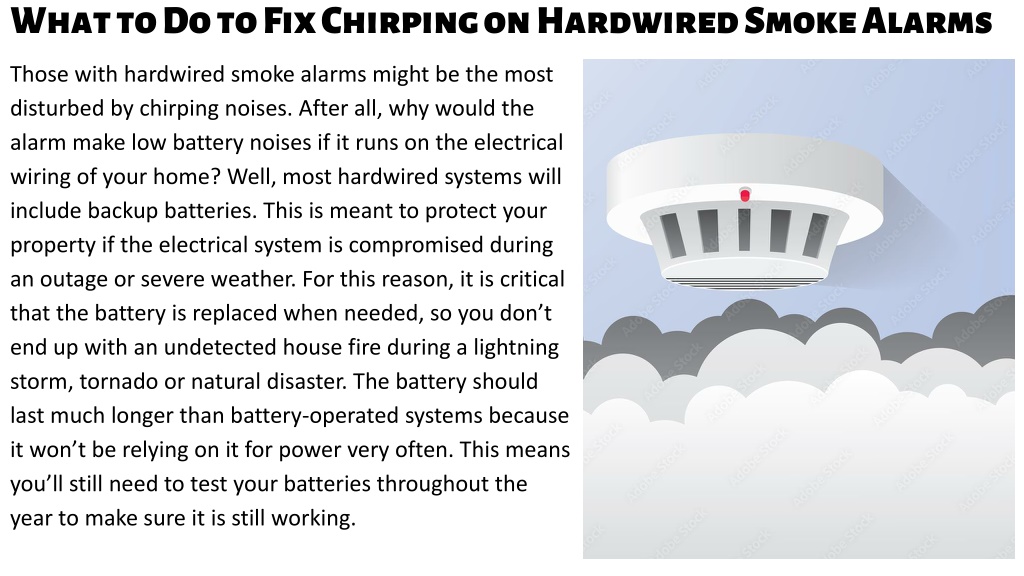
Let's get this out of the way first, because it's the number one culprit. Yes, even your hardwired smoke detector has a battery. Think of it as its own little emergency snack pack. This battery isn't for everyday use; it's a backup, designed to keep your smoke detector vigilant during a power outage. Because, let's face it, fires don't politely wait for the electricity to be on.
Must Read
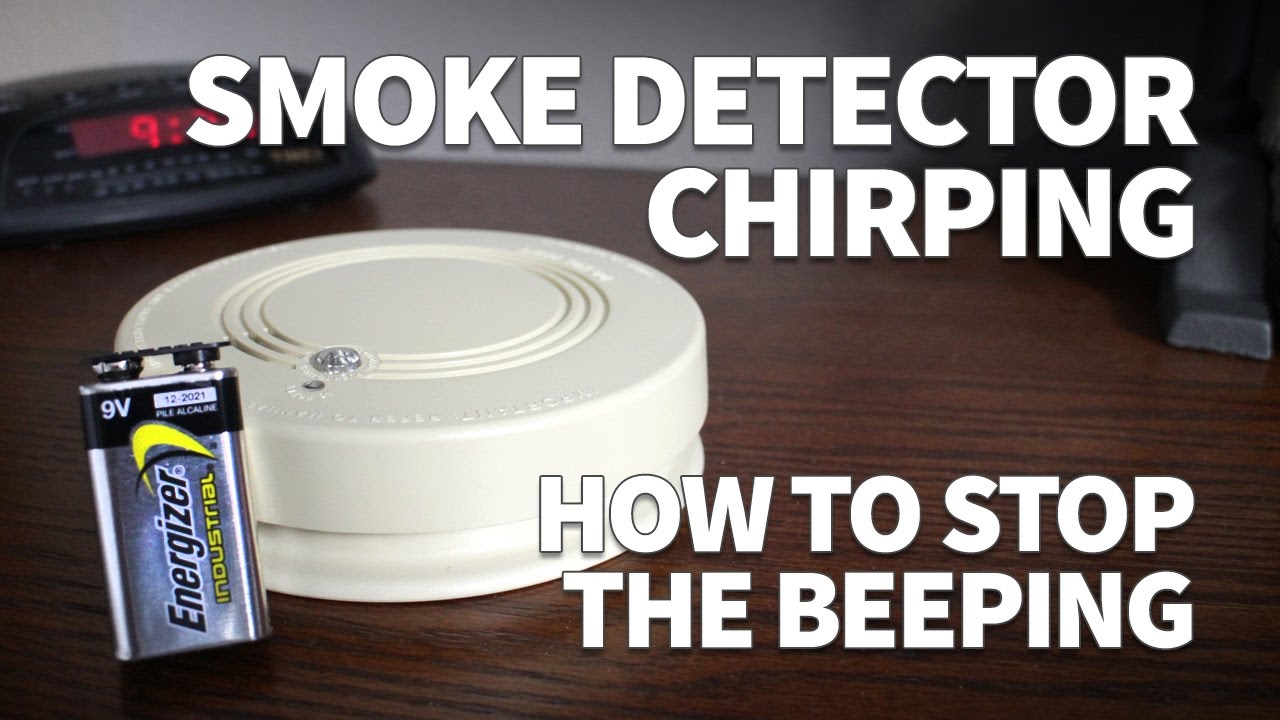
And just like your phone screaming at you when it hits 10%, that little 9-volt or AA battery eventually runs out of juice. Instead of just quietly giving up the ghost, it lets out that pathetic little "chirp." It's basically your smoke detector's way of saying, "Hey! I'm still here, I'm just feeling a bit peckish, and could really use a fresh battery, please! Don't make me die in the dark!" So, next time, before you blame the whole electrical grid, grab a chair and check those batteries first. You might be surprised.
"I'm Not Getting Any Younger!" The End-of-Life Chirp
Here’s one that fewer people realize, and it's less about a battery and more about an expiration date. Believe it or not, smoke detectors don't last forever. Most manufacturers recommend replacing them every 8 to 10 years. Their internal sensors, which are constantly monitoring the air for smoke particles, can simply wear out over time. They get tired, like an old dog trying to learn new tricks.
When a smoke detector reaches its golden years, it often starts chirping as a polite (or not-so-polite) warning that its time is up. It’s not broken; it’s just retiring! It’s saying, "Look, I've seen a lot of toast smoke and burnt popcorn in my day. I've done my duty. Now, please, for the love of all that is holy, replace me before I completely lose my ability to detect actual danger!" So, flip it over and look for a manufacture date. You might be dealing with an old timer.
Dust Bunnies and Tiny Invaders
Sometimes, the problem isn't the battery or age, but rather a tiny, almost imperceptible intruder. Smoke detectors have a small sensing chamber where they detect smoke. If dust, dirt, or even a tiny bug finds its way into this chamber, it can confuse the detector. It’s like having a speck in your eye; it might not be a huge problem, but it sure is annoying and makes you react.
The detector thinks this foreign object is smoke, or at least enough of an anomaly to warrant a check-in. Instead of going into full alarm (which would be overkill for a dust bunny), it just lets out a hesitant "chirp." It's saying, "Uh... guys? I think there might be something weird in here. Not sure what, but it's making me nervous." A quick vacuuming around the detector or a blast of canned air can often solve this problem. Just be gentle; you don't want to accidentally dislodge the entire unit!
The Power Flicker Tango
Your hardwired detector is designed to be robust, but sometimes, even a brief hiccup in your home's power can throw it off. We’re talking about those tiny, almost unnoticeable power blips, sometimes called "brownouts" or "sags." They're so quick you might not even register them, but your smoke detector certainly does.

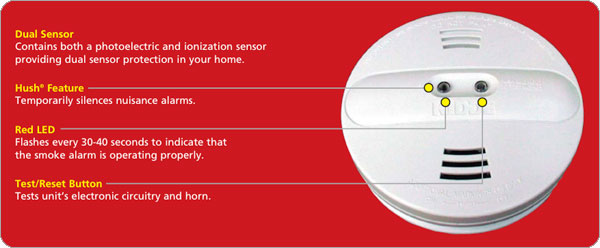
When the power flickers, even for a millisecond, the detector can get confused. It might be trying to switch from house power to battery power, and then back again, getting caught in a digital limbo. It’s like when your computer briefly glitches after a power surge – it doesn't break, but it might need a moment to collect itself. That "chirp" is its way of saying, "Whoa! What just happened? Did you guys feel that?" Sometimes, a simple manual reset (often a button on the detector itself) can bring it back to its senses.
A Problem with the Pack: Interconnected Systems
Many modern homes have interconnected smoke detectors. If one goes off, they all go off. This is great for safety, but sometimes if there’s a problem with one unit, it can confuse the entire system. It’s like a group chat where one person sends a weird, ambiguous message, and suddenly everyone else starts to buzz with questions and confusion.

If one detector is truly having an issue (a faulty sensor, a dying battery it can't quite articulate), it might trigger a network-wide chirp that’s harder to pinpoint. This is where the midnight detective work gets tricky. You might need to check each one individually, almost like interrogating them, until you find the source of the communication breakdown.
So, What's the Takeaway?
That annoying chirp, as frustrating as it is, is actually your smoke detector being a really diligent, if slightly dramatic, friend. It’s not chirping to annoy you; it's chirping to warn you that something isn't quite right. It's a subtle alert, a heads-up that it might not be able to do its job perfectly if a real emergency were to strike.
So, the next time that little sound wakes you up, try not to curse too loudly. Instead, remember it’s just your home's unsung hero asking for a little attention. Check the battery, look for an expiration date, give it a quick clean, or try a reset. A few minutes of detective work can restore your peace of mind and, more importantly, keep your home and family safe from actual danger. Sweet dreams (hopefully, chirp-free ones!).