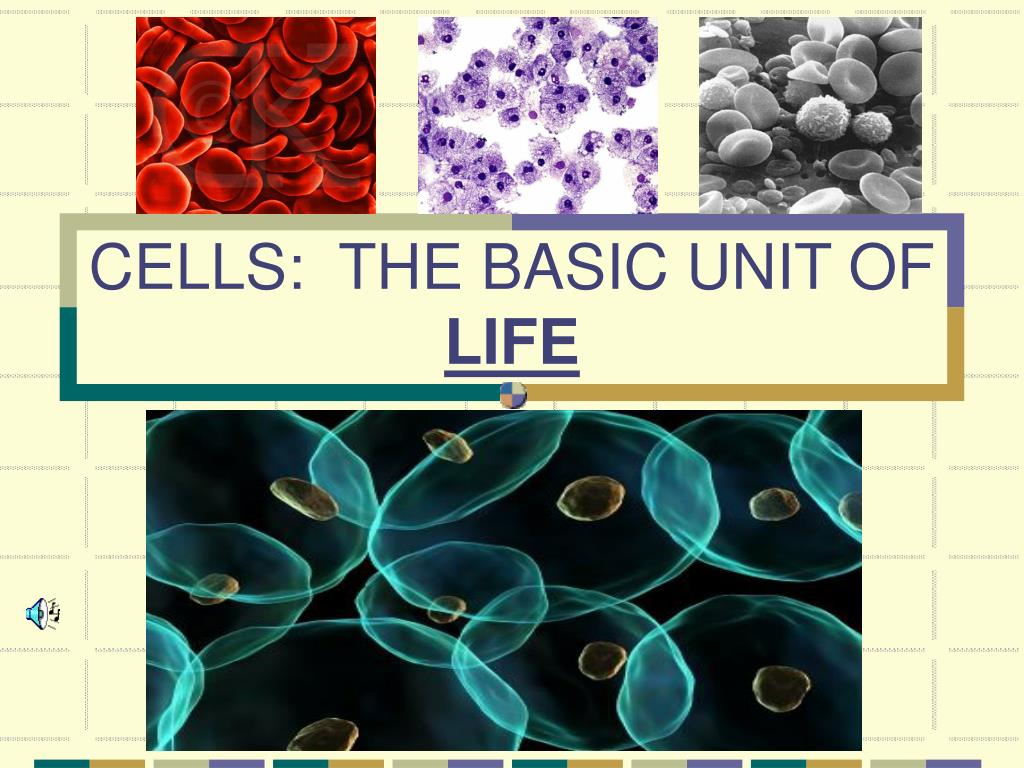
Why Are Cells Considered The Most Basic Unit Of Life

Hey there, friend! Ever wonder about, like, life itself? I mean, it's a pretty big topic, right? But let's zoom way, way in – smaller than a breadcrumb, smaller than a dust mite, smaller than… well, you get the picture. We're talking about cells! And guess what? They're considered the most basic unit of life. Why? Let's dive in – it's way less scary than high school biology, I promise!
First things first, what is a cell? Think of it like a tiny, self-contained apartment complex. It has everything it needs to survive: walls (a membrane), furniture (organelles – fancy word for tiny organs), and a power supply (usually some form of energy production). It even has a little control center (the nucleus, where the DNA lives). Basically, it's a miniature version of you… except, you know, way smaller and probably doesn't binge-watch Netflix (though, who knows what those organelles are up to when we're not looking?).
Now, why "basic?" Well, consider this: everything alive is made of cells. From the tiniest bacteria to the biggest blue whale, it's all just a collection of these little guys working together. You're made of trillions! Imagine the office parties! (Okay, maybe not. More like highly organized, constantly working factories.)
Must Read
Here's the Breakdown: Why Cells Reign Supreme
Okay, so why are cells so important? Think of it this way:
- Cells are the smallest unit capable of performing all the functions of life. That means they can grow, reproduce, respond to their environment, and generally just keep on truckin'. You can't really get smaller and still be considered "alive." A single atom? Nope. A molecule? Still no. It's gotta be the cell!
- Cells are the building blocks of everything alive. Think of them like Legos. You can't build a cool Lego castle without the individual bricks, right? Same with life! No cells, no organism. Simple as that.
- Cells contain the instructions for life. Remember that control center, the nucleus? It holds all the genetic information (DNA) that tells the cell what to do and how to do it. It's like a tiny instruction manual, but for life! (And hopefully less confusing than assembling Ikea furniture.)
In simpler terms: If you break something down further than a cell, you just end up with non-living chemicals. You need that cellular structure and organization to make something truly alive. It's like taking apart a clock: you might have all the gears and springs, but it's not telling time anymore. You need the whole cell for life's intricate dance to continue!
Let's say you're building a house. You need bricks, wood, nails, and all sorts of materials. But just having a pile of materials doesn't give you a house! You need them organized and working together according to a blueprint. Cells are like the perfectly organized, pre-fabricated units that become life. Without them, you just have a chaotic mess of chemicals.
Think about viruses for a second. They aren't made of cells! They need to hijack a living cell to reproduce, because they don't have all the necessary machinery themselves. They're like freeloading cousins who always raid your fridge and never do the dishes. (Okay, maybe that's a bit harsh... but you get the point.)
So, What Does This All Mean?
It means you're an amazing, walking, talking, thinking collection of trillions of these tiny, self-sufficient units. Pretty cool, huh? And every single living thing on this planet owes its existence to these fundamental building blocks. Next time you look at a flower, a dog, or even a slightly moldy piece of cheese (okay, maybe admire it from afar), remember the incredible complexity and organization happening at the cellular level!
Isn't it mind-blowing to think about how something so small can be so incredibly important? It just goes to show that even the smallest things can have a massive impact. So go out there and be a fantastic collection of cells! After all, you're a walking miracle (and probably due for a snack).