
Which Solution Is The Positive Control
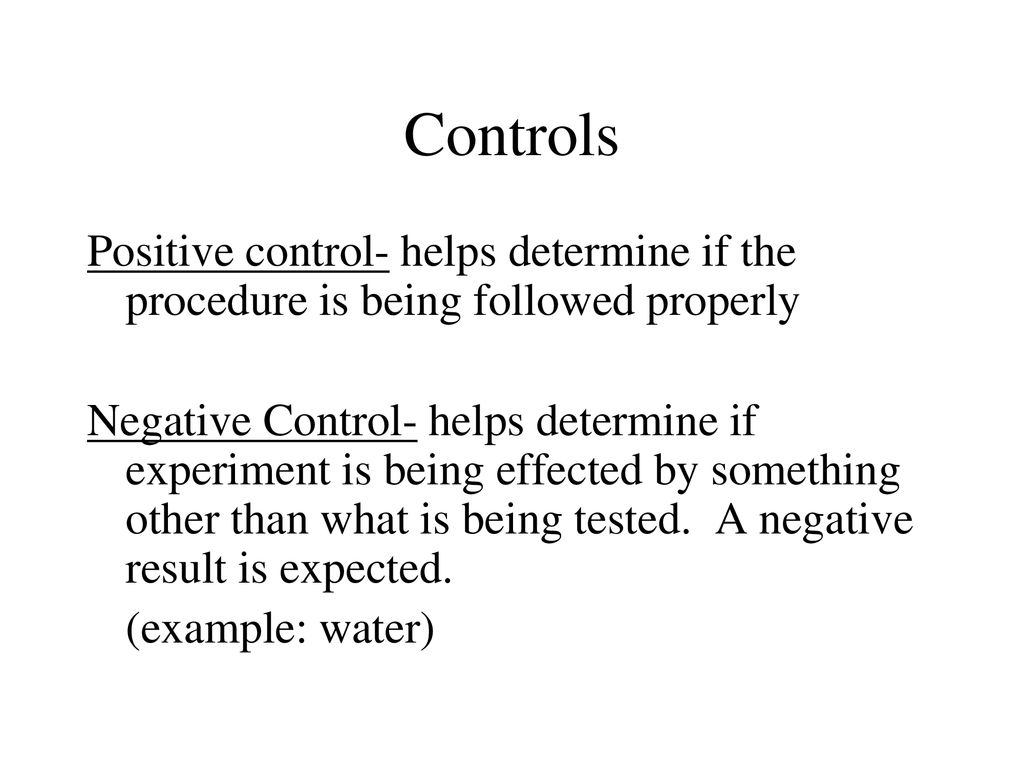
Okay, buckle up, science adventurers! We're diving into the super-secret, slightly-less-than-thrilling-but-actually-kind-of-important world of… positive controls! Now, before your eyes glaze over, picture this: you're baking a cake. The recipe is your experimental procedure, and you're trying to figure out if your oven is actually, you know, baking.
You meticulously mix all the ingredients, pop it in, and… nothing. Flat, goopy mess. Is it the recipe? Did you forget the baking powder (tragic!)? Or is your oven just pretending to be an oven and secretly running a disco in its metallic belly? That's where the positive control swoops in to save the day!
The Hero We Deserve: The Positive Control
Think of the positive control as the “yes, I work!” solution. It's the solution that should give you a result, a big, shiny, "Ta-da!" result, assuming everything is working correctly. In our cake analogy, a positive control would be baking a cake you know works. Maybe it's Grandma's famous chocolate cake recipe that has never, ever failed. You whip that bad boy up and stick it in the oven.
Must Read
If Grandma's cake comes out fluffy and delicious, you know your oven isn't the problem! Hallelujah! It’s time to investigate the original recipe, maybe that trendy new gluten-free, vegan, sugar-free thing just wasn't meant to be (some things are sacred, people!). But if even Grandma's cake is a disaster, you know your oven is officially staging a rebellion. Time to call the repairman!
Spotting the Positive Control in the Wild
Positive controls are everywhere! They're the secret agents of the lab, ensuring our experiments aren't just elaborate science theater. Let's say you're testing a new cleaning product on your notoriously germ-infested doorknob (we all have one!). You spray the product, wait, and then… silence. Are the germs gone? Did the cleaner even do anything?

A positive control here could be using a bleach solution, something guaranteed to obliterate any microorganism it encounters. If the bleach doesn't kill the germs (unlikely, but hey, let's imagine!), you know something is seriously wrong – maybe you're dealing with super-germs from outer space! But if the bleach works, and your new cleaner doesn't, well, you might want to stick to bleach. Or maybe invest in a hazmat suit. Just kidding… mostly.
Another example! Imagine you're testing a new fertilizer on your petunias. You want to see if it makes them bloom like they're auditioning for a Broadway musical. The positive control? A fertilizer you know works, the one that always makes your petunias explode with color. If your tried-and-true fertilizer produces a floral fiesta, but the new fertilizer results in sad, droopy petals, you know the new stuff is a dud. Stick to the classics!

The positive control is the gold standard, the benchmark, the "show me the money!" solution. It's the friend who always tells you the truth, even when it hurts (like when they tell you that you have spinach stuck in your teeth). It confirms that your experimental setup is actually capable of producing a result, that your instruments are working, and that you haven't accidentally switched the sugar and salt (a baking catastrophe of epic proportions!).
So, next time you're faced with a science experiment, remember the trusty positive control. It's the key to unlocking the truth, the guardian of reliable results, and the savior of countless hours spent wrestling with perplexing data. Now go forth and experiment, knowing that the positive control is always there to shine a light on the right path! Think of it as your experimental spirit guide, leading you to scientific enlightenment! And maybe, just maybe, bake a cake to celebrate. You deserve it!

