
Which Of The Following Would Be Considered Analogous Structures

Okay, folks, let's dive into something slightly nerdy but surprisingly fun: analogous structures. What are they? Think of it like this: two things that do the same job, but arrived at the party separately. They weren't invited together.
Feathers and Fur: A Fluffy Face-Off
First up, the classic example! Bird feathers versus mammal fur. Both keep their owners warm and cozy. But birds and mammals aren't exactly close cousins, are they?
The Case for Shared Snuggles
Feathers evolved from reptile scales, while fur... well, fur is its own mammalian marvel. Completely different origins! Yet, both provide insulation. They’re like rival fashion designers creating winter coats, but they’re not even talking to each other.
Must Read
Is it analogous? Absolutely. It's like two different roads leading to the same toasty destination. A warm destination.
Wings: The Ultimate Flight Club
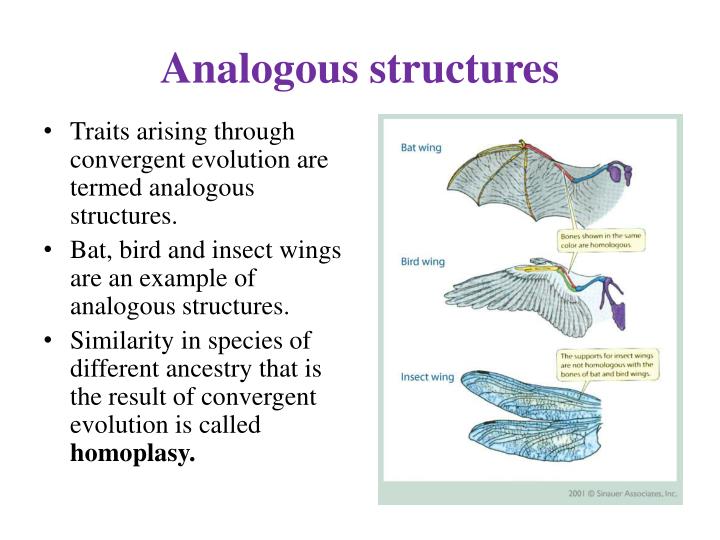
Next, let's consider wings. Birds have them. Bats have them. Insects have them. Superman wishes he had them.
A Wing and a Prayer (and Different Bones)
Bird wings are modified forelimbs with feathers. Bat wings are skin stretched over elongated finger bones. Insect wings are…well, they’re insect wings! They're their own thing.
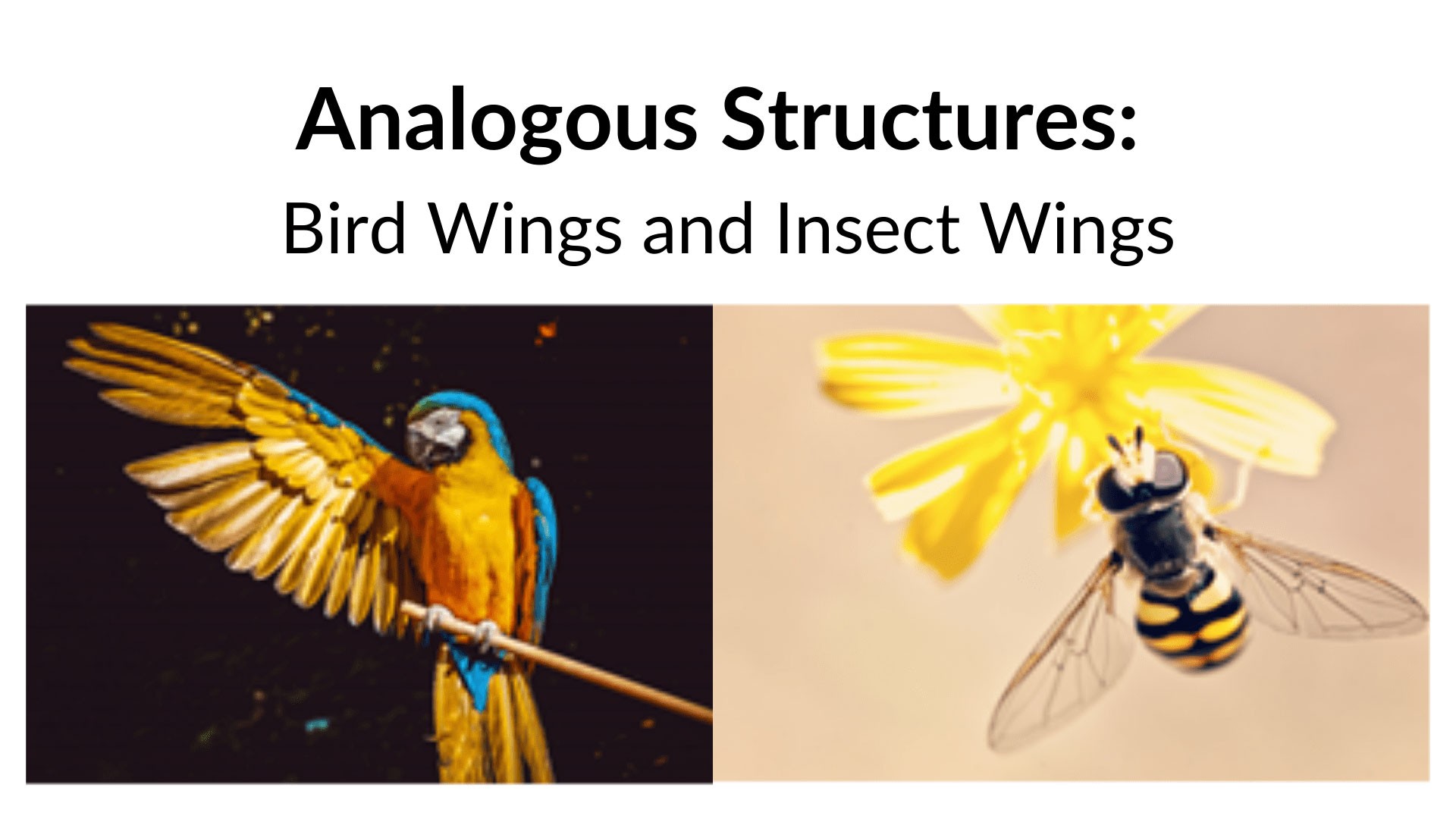
They all allow for flight, but each is built from fundamentally different blueprints. It’s like three different construction crews building airplanes, but each using totally different materials and blueprints.
Analogous? Definitely! Flight achieved through completely independent evolutionary paths. A truly amazing feat of evolutionary convergence.
Eyes: Windows to (Very Different) Worlds
Eyes! We all have them (hopefully). But are all eyes created equal? Nope! Not even close.
From Simple Spots to Complex Spheres
Consider the simple eyespots of a flatworm versus the complex camera eyes of an octopus or a human. One detects light; the others perceive the world in vibrant detail. Completely different leagues.
They both sense light, but the complexity and mechanisms are vastly different. It’s like comparing a flashlight to a high-powered telescope. Both use light, but one’s way more advanced.
Analogous? Yep! Light sensing is the shared function, but the execution is worlds apart. Different levels of complexity.
My Unpopular Opinion: Forks and Chopsticks!
Okay, here's where I might lose some of you. Ready for my potentially controversial take?

The Utensil Underground
Forks and chopsticks! Both are used to get food from plate to mouth. Both solve the problem of eating without using your bare hands. Consider that for a moment.
Yes, I know, forks are Western, chopsticks are Eastern, and their design and cultural significance are wildly different. But, at their core, they perform the same function.
Bear with me! My argument isn’t about biology. I propose an analogy based on function and problem solving! They both solve the "how do I eat this without making a mess?" problem.
Think about it! One evolved in a culture that valued stabbing and scooping. The other, a culture that prized precision and graceful manipulation. Yet, the end result is the same: food successfully delivered to the face.

Is it a stretch? Maybe. But food is delivered successfully to the mouth.
The Verdict
Maybe this is more of a conceptual analogy, a cultural echo of biological convergence. Perhaps I'm pushing it. But I stand by my utensil analogy!
Whether you agree or think I'm completely bonkers, hopefully, this has made you smile and think about the wonderful ways different things can arrive at the same solution, totally independently. Think analogously!
So, next time you see a bird, a bat, or someone struggling with chopsticks, remember the magic of analogous structures. They're a reminder that there's more than one way to skin a cat… or, you know, eat a bowl of noodles.