
Which Of The Following Is Not A Fluid

Okay, everyone, gather 'round! We're playing a game! It's called "Which One Doesn't Belong," and it's surprisingly profound. Get ready to challenge your assumptions about some everyday materials.
The Contenders
Our four contestants vying for the title of "Not a Fluid" are: Water, Air, Toothpaste, and... a Brick. Intriguing, isn't it? Let's meet our players!
Water: The Classic Fluid
Ah, water! The lifeblood of our planet. It flows, it fills, it quenches our thirst. You know it, you love it, you probably drink it every day.
Must Read
Air: The Invisible Friend
Next up, air! Can't see it, but it's everywhere. We breathe it, kites need it, and balloons wouldn't exist without it.
Toothpaste: The Minty Mystery
Then there's toothpaste. It comes in a tube, it fights cavities, and it makes our breath smell amazing. But is it really a fluid?
Brick: The Solid Superstar
Finally, we have the brick. Solid, sturdy, and used to build houses. Seems pretty straightforward, right?
So, Which One Isn't a Fluid? The Obvious… and the Not-So-Obvious
Most of you are probably shouting "The Brick!" And you're mostly right. Bricks are designed to hold their shape. But let's not dismiss the other contenders so quickly!
Water is undeniably a fluid. It’s the quintessential example. It takes the shape of its container and flows freely.

Air, though invisible, is also a fluid. It's a gas, and gases are fluids too! They spread out and conform to their surroundings.
The Toothpaste Twist
Here’s where things get interesting. Toothpaste is a bit of a trickster. Is it a solid, a liquid, or something else entirely?
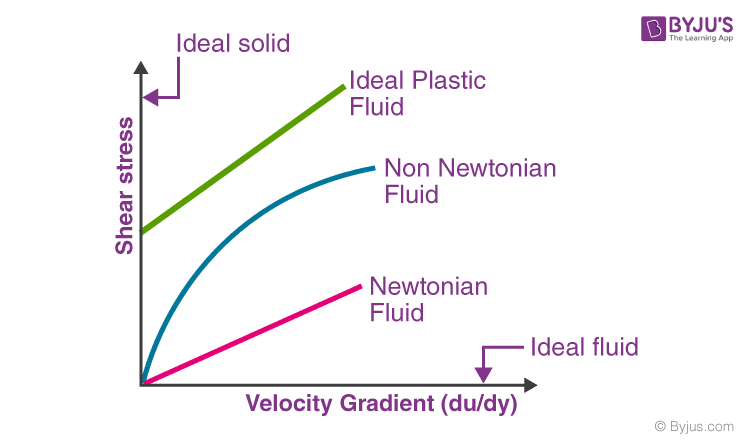
Technically, toothpaste is a non-Newtonian fluid. What a mouthful! This means its viscosity (how thick it is) changes depending on the force applied to it.
Think about it: when you squeeze the tube, it flows easily onto your toothbrush. But when it's just sitting there, it holds its shape. That’s because the shear stress changes its viscosity.
A Deeper Dive: What Makes a Fluid a Fluid?
Fluids are substances that can flow. They deform continuously under applied shear stress. Shear stress is like a force that tries to make the substance slide or deform.
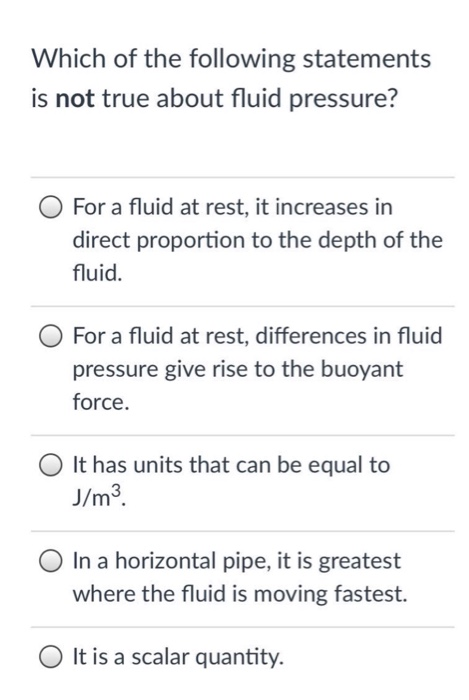
Solids, on the other hand, resist shear stress. They might bend or break, but they won't flow continuously.
Water easily flows as you pour it. That is because the water molecules move freely past one another. Think of them as tiny, slippery marbles.
Solids, like our trusty brick, the molecules are locked in place. They can vibrate, but they can't move past each other freely.
Back to Toothpaste: The "Almost" Fluid
So, toothpaste is a fluid...sort of. It's more accurate to say it exhibits fluid-like behavior under certain conditions. It's a master of disguise!
This characteristic puts it in a special category with other substances like ketchup, paint, and even some types of mud. These are also non-Newtonian fluids!
Why Does This Matter? The Unexpected Applications
Understanding fluid dynamics isn't just for scientists in lab coats. It affects our everyday lives in countless ways.
From designing airplanes to predicting weather patterns to even squeezing that last bit of toothpaste out of the tube, fluid mechanics plays a crucial role.
Engineers use fluid dynamics to optimize the design of everything from pipelines to cars. Doctors use it to understand blood flow. Chefs use it to create perfect sauces.
Beyond the Science: A Moment of Appreciation
Think about the simple act of pouring a glass of water. It's so commonplace that we rarely give it a second thought. But there's a whole world of physics at play in that simple action!
Consider the air we breathe. It's invisible, yet it sustains us. It carries sound, allows birds to fly, and shapes the weather.
Even toothpaste, that minty marvel, is more complex than it seems. It reminds us that things aren't always as simple as they appear on the surface.
The Verdict: The Brick Stands Alone
So, after all that, the answer remains: the brick is the one that is not a fluid. It's a solid through and through. No flow here!
But hopefully, this little game has opened your eyes to the fascinating world of fluids. They are all around us, shaping our world in ways we often don't realize.
Maybe next time you pour a glass of juice, you'll think about viscosity and shear stress. Or maybe you'll just enjoy the refreshing taste. Either way, you'll have a new appreciation for the science of flow!
Final Thoughts: Embrace the Flow
The world is full of surprises. Even something as simple as deciding which item is not a fluid can lead to unexpected discoveries. Be curious, ask questions, and embrace the flow of knowledge!
And remember, even though the brick wasn't a fluid, it's still pretty awesome. It helps us build things, after all! Every substance has its own unique properties that make it special.
So, go forth and explore the amazing world around you. You never know what fascinating secrets you might uncover!