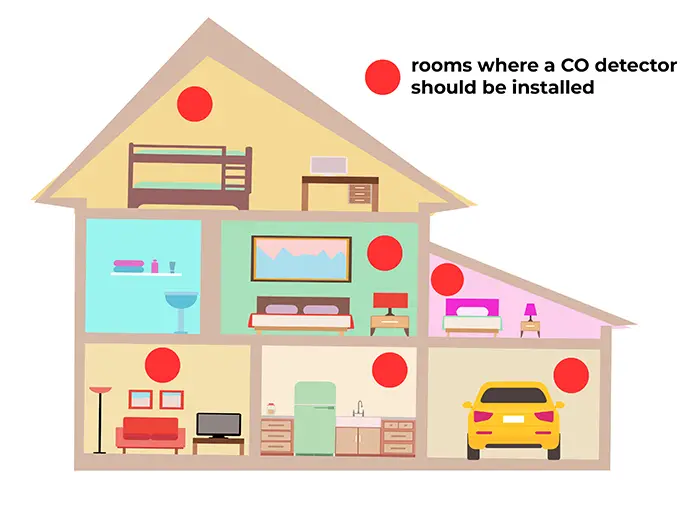
Where To Position Carbon Monoxide Alarm

Ever found yourself looking at the little gadgets around your home and wondering about the best way to make them work their magic? It's a bit like a treasure hunt for optimal safety and peace of mind! Today, we’re diving into the curious case of the carbon monoxide alarm – specifically, where exactly to position this unassuming guardian. It might seem like a small detail, but understanding it is a super power in keeping your loved ones safe and sound.
So, what's the big deal about carbon monoxide (CO)? Well, it's often called the "silent killer" for a reason. This gas is completely undetectable by human senses – it's odorless, colorless, and tasteless. It’s produced when fuels like gas, oil, coal, and wood don't burn completely, which can happen with faulty furnaces, water heaters, stoves, or even car exhaust. The scary part is that CO can quickly build up to dangerous levels in enclosed spaces, leading to flu-like symptoms, dizziness, confusion, and even death. That's where our clever alarms come in! Their sole purpose is to constantly sniff the air for this invisible threat, letting out a loud warning chirp if danger is detected. The benefit? Pure, unadulterated peace of mind, knowing you have an early warning system against such a serious hazard.
Thinking about how this plays out in daily life and education, it's really about being proactive. In our homes, it’s about making sure every family member knows what the alarm sounds like and what to do if it goes off. For younger audiences, learning about CO alarms is a vital part of basic home safety education, just like fire drills. It’s not just about having an alarm; it’s about having it positioned effectively. For instance, in a typical home, you’ll want an alarm on every level of your house, including the basement. Crucially, place one in or near every sleeping area. If you have a separate furnace room or an attached garage, those are also smart spots. Consider it your home’s unseen bodyguard, strategically placed at key checkpoints.
Must Read
Ready to put your newfound knowledge to the test? Here are some simple ways to explore this topic and ensure your home is protected. First, grab a flashlight and literally walk around your home, identifying where your current CO alarms are. Are they in the right spots according to the advice above? Many experts suggest placing them at chest or head height, as CO mixes well with air, so detection at breathing level is key. Avoid placing them directly next to fuel-burning appliances, in direct sunlight, or near vents, windows, or doors, as these can interfere with accurate readings. A fantastic tip is to always read your alarm’s specific manual, as different models might have slightly varied optimal placement recommendations. Finally, make it a habit to test your alarms monthly using the test button and replace batteries (if applicable) annually. This small act of curiosity and vigilance can make a huge difference, ensuring your silent guardian is always ready to speak up when it counts.