
Where To Place Carbon Monoxide Detectors
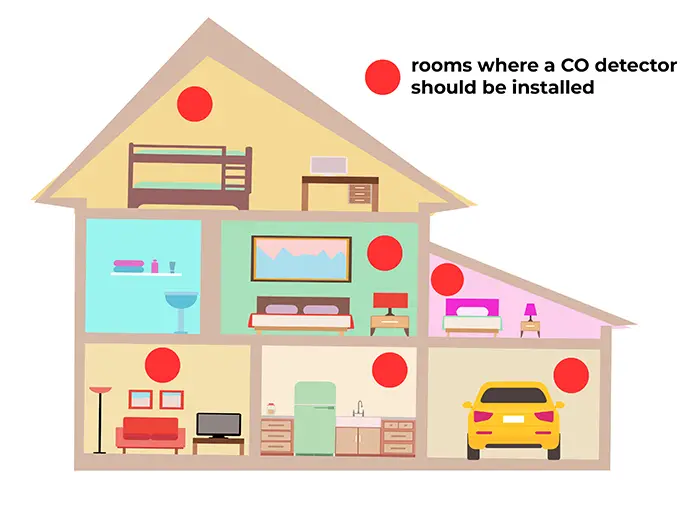
Alright, let's talk about carbon monoxide (CO) detectors. We all know they're important – they're like the unsung heroes of home safety, quietly doing their thing to keep us safe from the "silent killer." But sometimes, knowing what to do isn't as clear as knowing why. Like trying to figure out the perfect spot for that new plant, there's a method to the madness of placing your CO detectors for maximum peace of mind. And trust us, it's way easier than assembling IKEA furniture.
Think of your home as your personal sanctuary, your chill zone. We want to keep it that way, free from invisible threats. So, grab a cup of coffee (or your favorite sparkling water), and let's unravel the mystery of where to put these essential guardians, shall we?
The Golden Rule: Every Level, Everywhere You Sleep
This is your starting line, your absolute non-negotiable. You need at least one CO detector on every single level of your home. Yes, basement included, even if it's just for storage. CO doesn't care about your finished vs. unfinished square footage. It travels, it mixes, and it can be sneaky.
Must Read
Beyond that, the most critical placement is near sleeping areas. Picture this: you're drifting off to dreamland, totally oblivious. If CO starts to build up, you need that detector to wake you and your loved ones up before symptoms set in. So, think hallways leading to bedrooms, or even inside larger master bedrooms if they're far from the main hallway.
Pro Tip: Don't put it inside the bathroom directly next to the bedroom – steam can cause false alarms. Just outside the bathroom, in the hallway, is perfect.
The Hot Zones: Where CO Lurks
Now, let's get a bit more specific. CO is a byproduct of incomplete combustion, meaning anything that burns fuel can be a source. Think of these spots as your home's potential "hot zones" for CO:
1. Near Attached Garages
If you've got an attached garage, this is a big one. Even briefly idling a car can produce dangerous levels of CO. That exhaust doesn't just stay put; it can seep into your living space through shared walls or open doors. Place a detector a few feet inside your home from the door connecting to the garage. It’s like having a security guard right at the border.

2. Near Fuel-Burning Appliances
Your furnace, gas water heater, fireplace, gas stove, dryer – these are the workhorses of your home, and while they usually behave, a malfunction could lead to a CO leak. Place detectors within 10-15 feet of these appliances, but not right next to them. Too close can sometimes lead to nuisance alarms from normal operation or be less effective at detecting widespread CO.
Imagine your detector as a polite observer, not a nosy neighbor. It wants a good vantage point, not to be right in the appliance's face.

Where Not to Place Them (The "Uh-Oh" Spots)
Just as important as knowing where to put them is knowing where not to. Avoid these spots to ensure your detectors are always working optimally and not giving you false alarms:
- Too Close to Cooking Appliances: Your oven and stovetop can emit small amounts of CO during normal use. Placing a detector too close might lead to unwarranted beeps while you're whipping up dinner.
- In Direct Sunlight or Near Vents: Extreme temperatures or strong airflow can mess with the sensor's accuracy. Think of it like trying to read a book in a hurricane – not ideal.
- Behind Furniture or Curtains: Your detector needs to "breathe" to detect CO effectively. Don't block it!
- In High-Humidity Areas: Steam from bathrooms or laundry rooms can interfere with the sensor.
- On the Ceiling (Often): While smoke detectors love ceilings, CO detectors are often more effective at about chest height or on a wall roughly 5 feet from the floor. CO is slightly lighter than air but mixes readily, so manufacturers often recommend a mid-level placement, aligning with our breathing zone. Always check your specific model's instructions!
A Few More Practical Pointers
Combined Units: Many people opt for smoke and CO detector combo units. These are fantastic for efficiency, but remember that smoke detectors typically go on the ceiling, while CO detectors are often better at mid-height. If you use combos, usually the ceiling placement is fine, but always double-check the manufacturer's guidance for optimal CO detection.

Test Regularly: Just like you check your phone battery, hit that test button once a month. A quick beep means it's working! And when Daylight Saving Time rolls around, it's a great reminder to change batteries (if yours isn't hardwired).
Know the Lifespan: CO detectors aren't forever devices. They have an expiration date, usually 5-7 years, printed on the back. After that, the sensor can degrade, making it unreliable. Mark your calendar or slap a reminder sticker on it! It's an easy fix that makes a world of difference.
Your Home, Your Sanctuary
In the end, placing CO detectors is a small act of self-care for your home and everyone in it. It's about being proactive, not reactive. It’s about creating a true sanctuary where you can relax, entertain, and live your best life without a hidden worry. So, take a few minutes this weekend, walk through your home with this guide, and give yourself the ultimate gift: peace of mind.