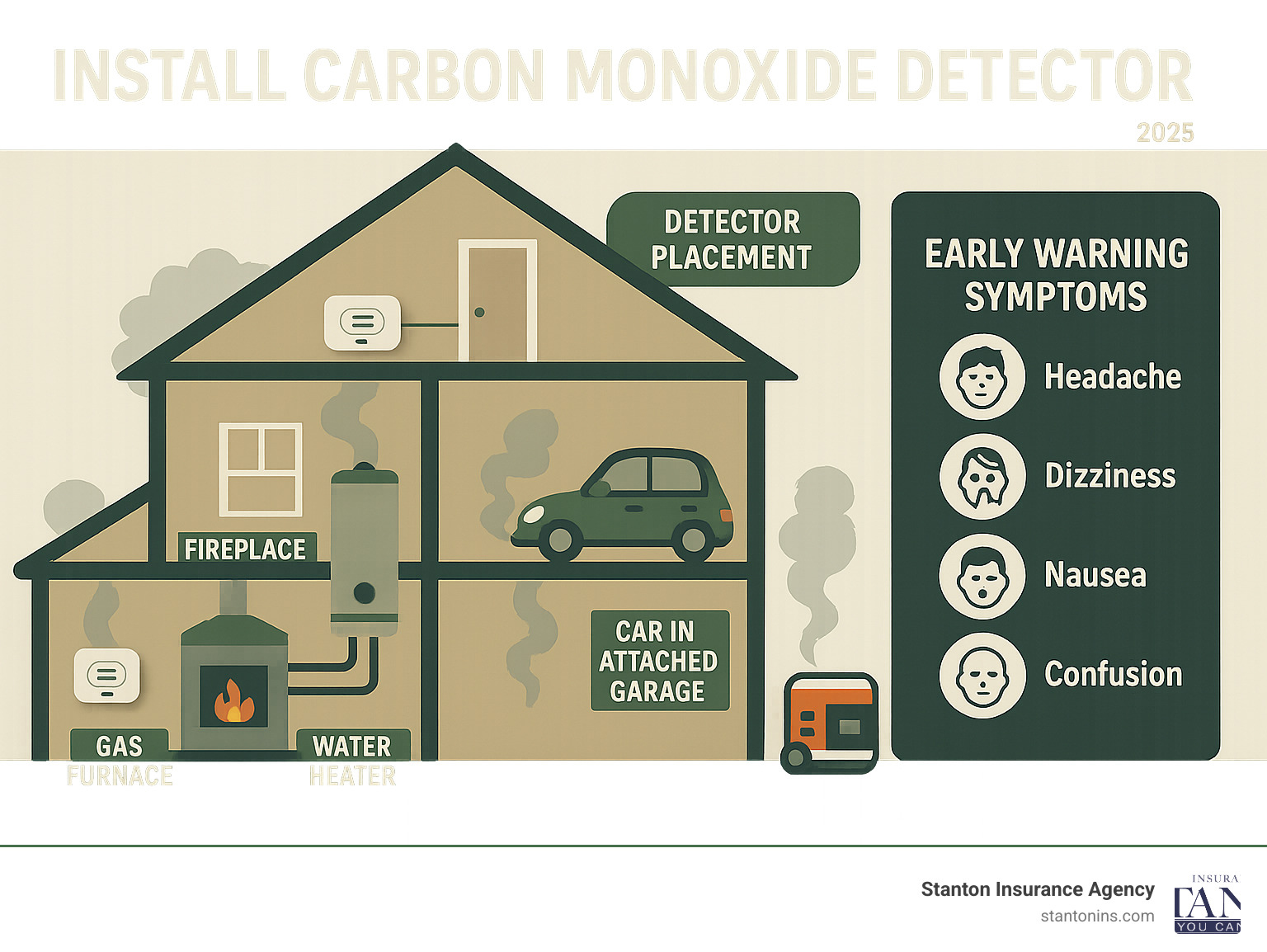
Ah, the trusty < Strong>carbon monoxide detector. That little sentinel, silently standing guard against an invisible foe. We all know we need one, maybe even several. But then comes the moment of truth, the great philosophical ponderance that truly tests our DIY mettle: Where, oh where, do we actually < Em>stick the darn thing?
It’s not like deciding where to put the new fancy throw pillow, is it? One wrong move and suddenly you're hosting a silent, odorless party of peril. The manuals, bless their detailed hearts, offer a dizzying array of rules. My eyes glaze over faster than toast on a Sunday morning. You read them, you nod, and then you stand in your hallway, detector in hand, feeling utterly perplexed.
The Expert’s Creed (and Our Human Frailties)
Experts, with their vast knowledge and lack of real-world clutter, will tell you things. Lofty advice, delivered with the gravitas of a Supreme Court ruling. Things like:
“Install a CO detector on every level of your home.”
“Place it within 10-15 feet of all sleeping areas.”
Where to Install a Carbon Monoxide Detector in Your Home
“Avoid direct sunlight, high humidity, and areas near combustion appliances!”
“Definitely not behind curtains or inside cupboards!”
You read that last one and glance sheepishly at the little nook where you < Em>thought it would look so discreet. Then you picture your house. Every wall feels wrong. Is this 10 feet? Or 12? What about the < Em>invisible air currents they mentioned? It’s enough to make you want to just toss the whole thing in the junk drawer and call it a day. (Please, for the love of all things breathable, don’t do that.)
Where to Install Carbon Monoxide Detectors (High or Low?) - Prudent Reviews
The Real-World Placement Puzzle
Let’s be real. Most of us aren't living in lab-grade airflow chambers. We're living in homes with pets, kids, and that one mysterious draft that always seems to blow < Em>only when you're trying to light a candle. So, my slightly “unpopular” opinion on the matter? Get one. < Strong>Test it regularly. And then, within reason, put it where it makes sense < Em>for you and your actual living situation.
Consider the humble < Strong>bedroom. The official advice says "near sleeping areas." Great. But "near" can mean different things. Too close to your bed, and a sudden, sharp chirp from a low battery at 3 AM might lead to an involuntary ceiling-punching incident. Maybe just outside the bedroom door? High on the wall? This is often a perfectly sensible compromise. It's close enough to detect any creeping gas, but far enough not to scare the wits out of you.
How To Install Smoke and Carbon Monoxide Detectors - YouTube
What about the < Strong>kitchen or that utility room where your furnace hums? The manuals often say "don't put it near appliances that produce CO." But wait, isn't that where you'd actually < Em>want to know if something's amiss? The experts mean < Em>too close to avoid false alarms from normal operation, like when you’re charring toast or the furnace kicks on. Find a spot a little bit away from the oven or furnace, but still in the general vicinity. A good rule of thumb: if you can smell your dinner burning, it’s probably too close to the CO detector too.
Then there’s the < Strong>hallway. Ah, the unsung hero of CO detector placement. High up, central. It can monitor multiple rooms. It's often out of the way, less likely to get bumped by an errant vacuum cleaner or covered by that ambitious new bookshelf you just bought. It’s the diplomatic choice, the middle ground, the quiet achiever.
Eye-Level or Up in the Clouds?
The gas itself is slightly lighter than air, or at least mixes well. So high up is generally good. But eye-level is so much easier for pressing that glorious < Em>test button. Ah, the eternal dilemma! My take: if it's high up, make sure you have a broom handle or a step stool ready for testing day. Because a < Strong>CO detector that isn't tested is just a very expensive piece of wall decor.
How To Install Hardwired Smoke / Carbon Monoxide Detector - DIY Step By
Where NOT to Put It (with a Wink)
Just for fun, let's list some places to avoid. Do not, under any circumstances, place your < Strong>carbon monoxide detector:
Inside the oven (tempting for a direct read, but no).
Under your bed (unless you enjoy surprise concerts at 3 AM).
Duct-taped to the family dog (they're cute, but not detectors).
Directly over the stove (unless you < Em>like screaming alarms every time you boil water).
Behind that gigantic, dusty, forgotten plant in the corner (it won't help).
The Real Goal
The goal isn't perfect, scientific placement that would impress a NASA engineer. The goal is < Em>detection. It's to give you that crucial heads-up, to alert you to danger before you even suspect it. So, while adhering to guidelines is always a good idea, don't let the quest for absolute perfection paralyze you into inaction. An imperfectly placed < Strong>CO detector is infinitely better than no detector at all.
So, next time you're holding that little guardian, take a deep breath. Read the instructions (or skim them, we won't tell). And then, with a playful shrug, find a spot that feels right. A spot that's not too far, not too close, and definitely not under the bed. Just put it < Em>somewhere reasonable. Your lungs will thank you, and your sanity will remain intact. Remember, < Strong>a detected carbon monoxide is a defeated carbon monoxide.