What Score Do You Have To Get On The Asvab
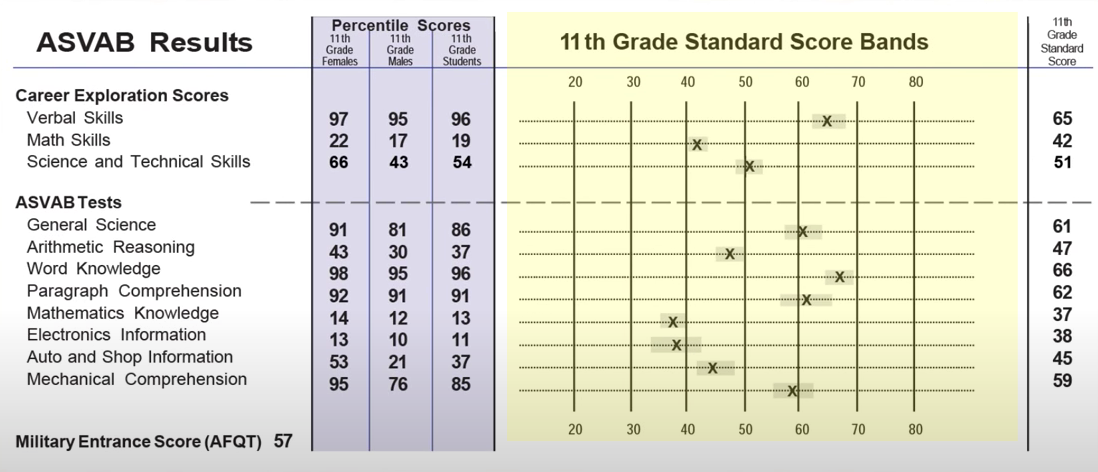
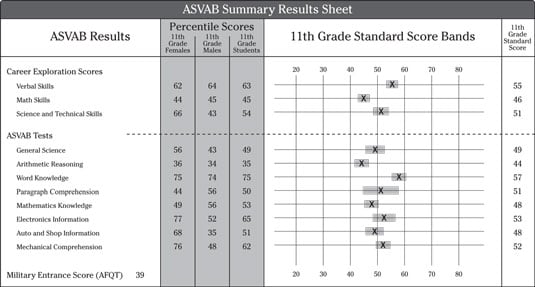
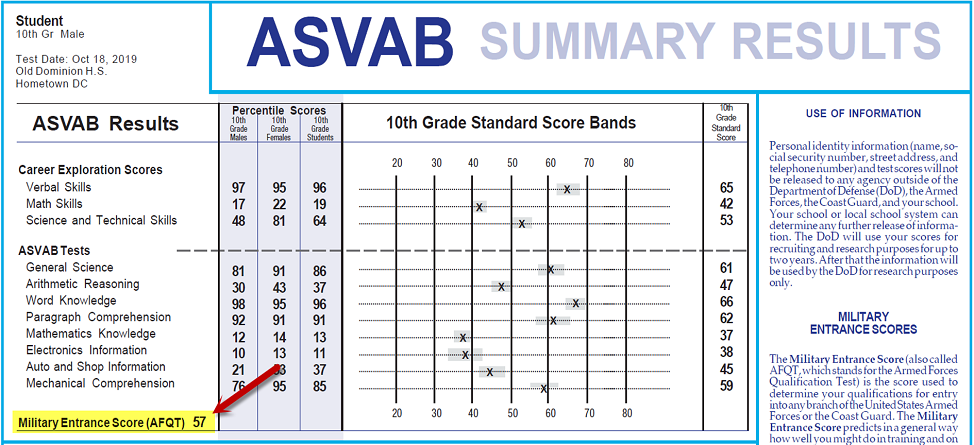
The ASVAB. Just the name itself can conjure up images of tense classrooms, bubbling in answer sheets, and a general feeling of…pressure. But what many people don't realize is that the ASVAB isn't some monolithic gatekeeper designed to thwart your dreams. Instead, think of it as a super-powered personality quiz, mixed with a dash of aptitude assessment. And the question everyone asks? What score do you actually need?
The truth is, there isn't one single "magic number." The required score depends entirely on what you want to do in the military. Different branches and different military occupational specialties (MOS), or jobs, have varying minimum score requirements. So, wanting to be a tank mechanic requires a different score than, say, wanting to be a military musician or a computer specialist. In essence, the ASVAB helps the military match your strengths and aptitudes with the roles where you'll thrive. Think of it as the military's incredibly detailed (and standardized) way of ensuring you end up in a job you're good at and, hopefully, enjoy!
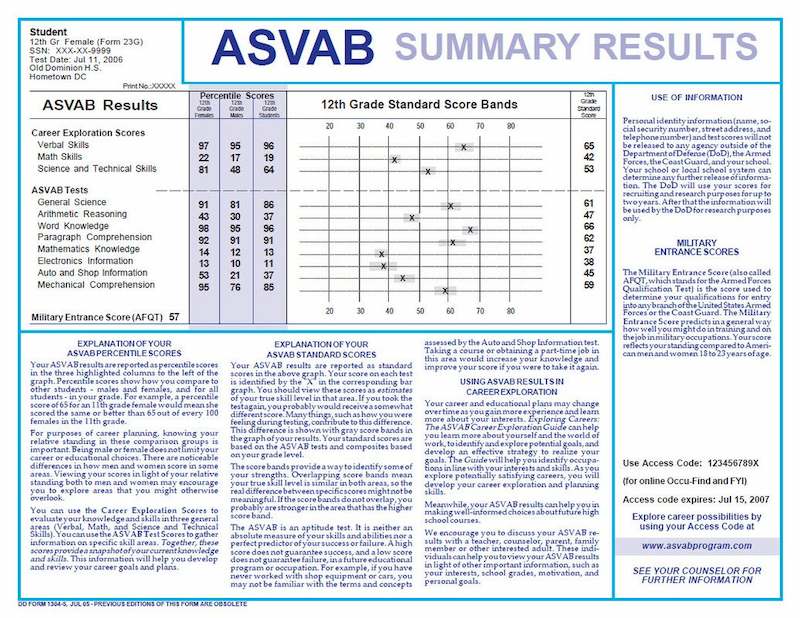
But beyond its primary function for military recruitment, the ASVAB can also be a surprisingly useful tool for civilians. Taking the ASVAB, or more specifically, utilizing the ASVAB Career Exploration Program (CEP), can unlock insights into your own aptitudes and interests. Perhaps you're an aspiring artist struggling to find your niche. The ASVAB could reveal a hidden talent for spatial reasoning, steering you towards graphic design or architecture. Maybe you're a hobbyist who enjoys tinkering with electronics; a high score in electronics information could validate your passion and point you toward a career path you hadn't considered. For casual learners, the ASVAB provides a valuable benchmark, highlighting areas where you excel and areas where you might want to focus your learning efforts. It's essentially a detailed skills audit, customized to you.
Must Read
Imagine you discover a knack for mechanical comprehension. This could inspire you to delve deeper into automotive repair, engine building, or even robotics. A high score in verbal ability might suggest a talent for writing, public speaking, or even law. Maybe you find out you’re incredibly adept at assembling objects, guiding you towards a passion for carpentry or the design and construction of complex models.
While you can't exactly "try" the official ASVAB at home (unless you're scheduling the official test), you can definitely practice! Numerous online resources and practice tests are available that mimic the format and content of the ASVAB. Focus on understanding the underlying concepts rather than just memorizing answers. Khan Academy offers excellent resources for math and science concepts, while vocabulary-building apps can help improve your verbal skills. Consider purchasing an ASVAB study guide for a comprehensive overview of the test sections. And remember, practice makes progress! Even a little bit of studying each day can significantly improve your performance.
Ultimately, understanding the ASVAB isn't about stressing over a specific score. It's about recognizing it as a tool – a tool for self-discovery, career exploration, and, for many, a pathway to serving their country. It's an opportunity to learn more about yourself, your strengths, and your potential. And that, in itself, is something to enjoy and appreciate. Good luck, and have fun exploring your potential!