
What Rpm To Run Pool Pump For 15k Gallon Pool

Okay, picture this: you're driving down the highway. You could floor it the entire way, burning gas like it's going out of style. Or, you could find that sweet spot, a comfortable cruising speed that gets you there without emptying your wallet and stressing out your engine. Your pool pump is kinda the same deal.
We're talking about your 15,000-gallon backyard oasis here, and keeping it sparkling clean. But how hard does that pump need to work? What's the magic RPM to keep things ship-shape without turning your electric bill into a monster?
The Great RPM Mystery (Unveiled!)
Let's be real. "RPM" sounds technical, right? Like something only rocket scientists or race car drivers understand. But all it really means is Revolutions Per Minute. It’s how fast that motor is spinning around. Higher RPM = faster spinning = more water moving.
Must Read
Now, for a 15,000-gallon pool, there's no one-size-fits-all answer. It's more like finding the perfect pair of jeans – you gotta try a few things on to see what fits best. But, we can give you some solid starting points.
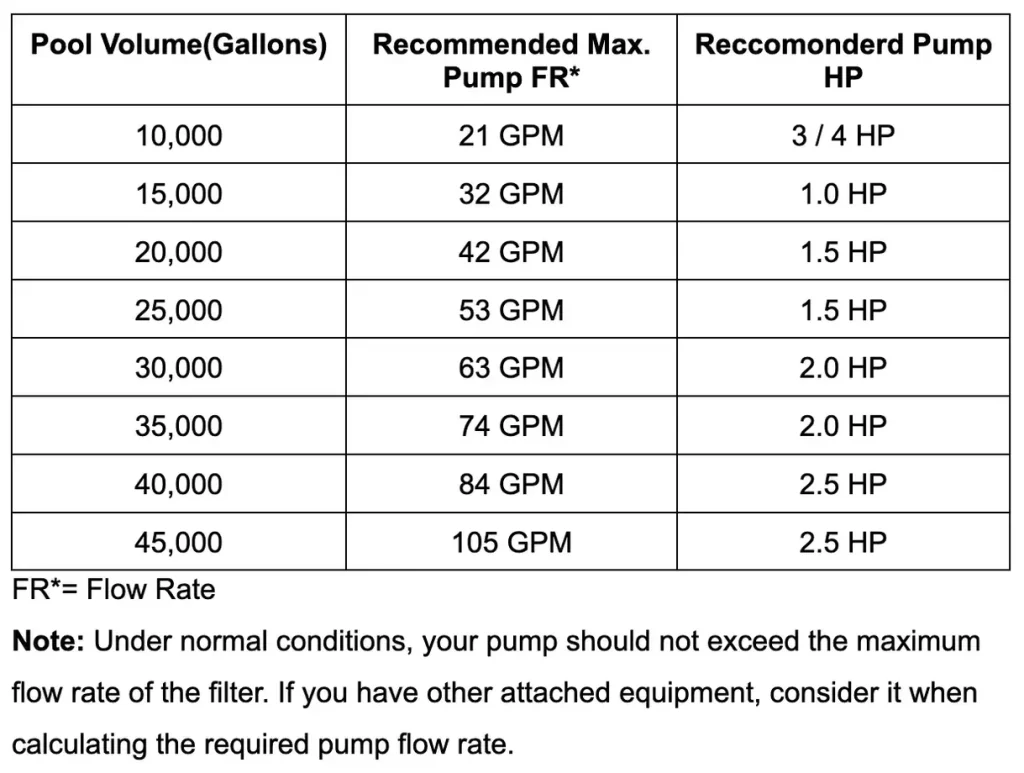
The general rule of thumb is to turn over your entire pool volume about once a day. That means cycling all 15,000 gallons through your filter.

Figuring Out Your Flow Rate (Without Getting a Headache)
This is where things get slightly… math-y. Don’t run away! It’s not as scary as it looks. Remember back in school when you used to dread word problems? This is simpler. Pinky swear!
Here's the deal: you want to filter 15,000 gallons in about 8 hours (giving yourself some wiggle room). To figure out the flow rate (gallons per minute or GPM), you divide the total gallons by the number of minutes in 8 hours (8 hours * 60 minutes/hour = 480 minutes).
So, 15,000 gallons / 480 minutes = roughly 31.25 GPM. Write that number down; it's important.
Variable Speed Pumps: The Superstars
If you've got a variable speed pump (the cool kid on the block), you're in luck! These babies let you precisely control the RPMs. The goal is to find the RPM setting on your pump that gives you that 31.25 GPM flow rate.
Your pump's manual should have a flow rate chart. This chart shows you the relationship between RPM and GPM for your specific pump model. Find the RPM that corresponds to 31.25 GPM. That's your starting point!

However, all pools are different! If you see debris collecting at the bottom, or your water isn't crystal clear, you might need to bump up the RPMs slightly.
Conversely, if your pump is roaring like a jet engine, and your electric bill is making you weep, try lowering the RPMs a little. It's all about finding that balance.
Single-Speed Pumps: The Old Reliables
If you have an older, single-speed pump, you're essentially stuck at one RPM. These are like cars with only one gear. They work, but they're not exactly fuel-efficient. Typically single-speed pumps move water at high flow rates. Consider upgrading to a variable speed pump when you can. The energy savings are substantial!

The Bottom Line (and Why You Should Care)
Running your pump at the right RPM isn't just about saving money (although that's a HUGE perk). It's also about extending the life of your equipment, reducing noise, and keeping your pool water healthy and sparkling. Think of it as giving your pool the spa treatment it deserves!
So, experiment! Tinker! And most importantly, enjoy that beautiful, clean pool of yours! You've earned it.
Pro Tip: Invest in a flow meter. It’s a simple device that measures the actual flow rate of your pump, taking the guesswork out of the equation. It's like having a speedometer for your pool!