
What Is The Unit Of Speed

Alright, let's talk about speed. Not the "need for speed" adrenaline rush (though that's kinda related!), but the nitty-gritty, what-do-we-actually-measure-it-with kind of speed. We're talking about the unit of speed, folks!
Think about it: you're late for a date (oops!), so you glance at your car's speedometer. What do you see? Probably something like "60 mph" or "100 km/h." That's it! That's our answer, hiding in plain sight! But let's unpack it a little, shall we?
Miles Per Hour (mph) and Kilometers Per Hour (km/h)
Miles per hour (mph) is pretty common in the US and a few other places. It literally means how many miles you cover in one hour. Imagine a really, really dedicated snail. Let's say he manages to crawl one mile... in a whole hour. That snail is moving at 1 mph. Respect.
Must Read
Now, kilometers per hour (km/h) is the go-to in most of the world. Same idea, just using kilometers instead of miles. One kilometer is a bit shorter than a mile (roughly 0.62 miles, for those of you playing along at home). So, if our super-snail was European, he'd probably be bragging about his 1.6 km/h speed. Still slow, but sounds more impressive, right?
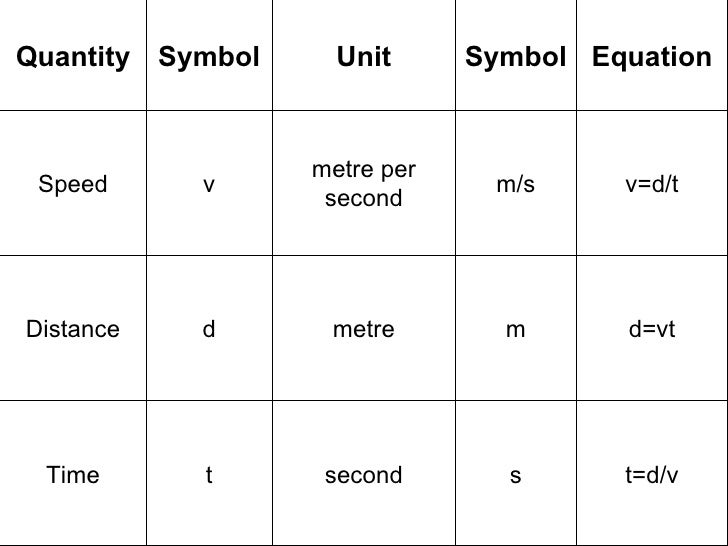
These are both examples of compound units. That's a fancy way of saying they're made up of two different units stuck together: a unit of distance (miles or kilometers) and a unit of time (hours).
Why Not Just... Speed Units?
I know what you're thinking. Why can't we just have "speed units"? Why all this distance-per-time business? Well, speed is all about how quickly something covers a distance. It's inherently relational. You can't just say "that car is moving at a speed of 50!" 50 what? Apples per banana? It doesn't make sense! You need to say "50 miles per hour" to give it context.
Think about baking. You need ingredients – flour, sugar, eggs. Speed is like a recipe. It needs distance and time as its ingredients. Without them, you just have... nothing. A sad, empty bowl.
Other Speed Units: The Exotic Zoo
While mph and km/h are the everyday superstars, there are other speed units lurking out there. We’re talking about the exotic zoo of speed units!
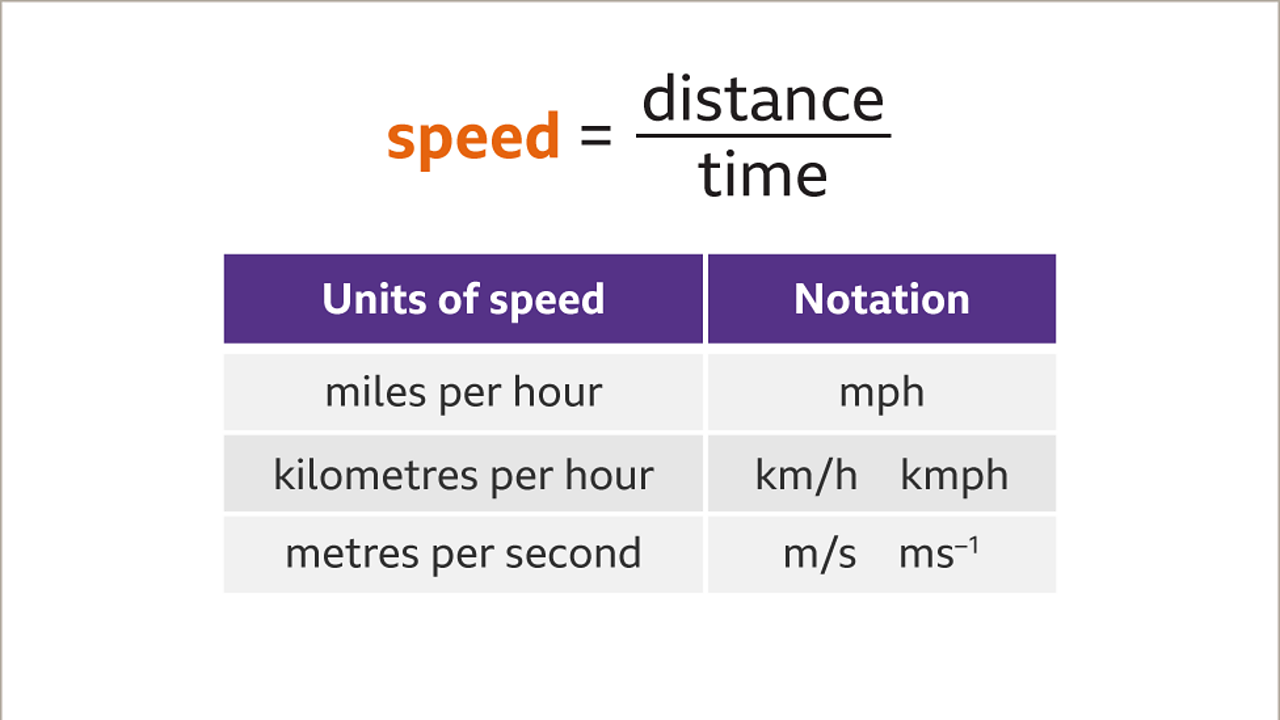
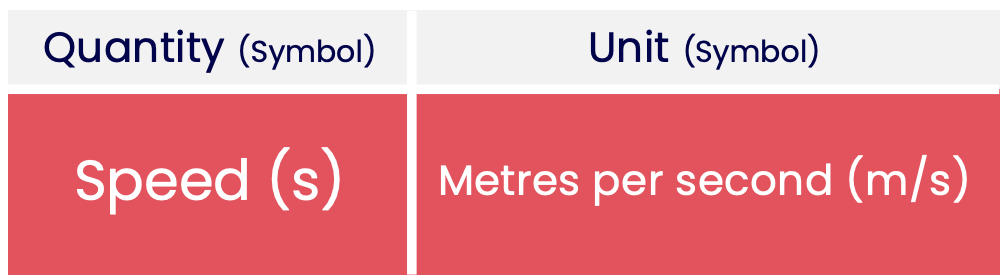
Meters per second (m/s): This is the standard unit in the scientific world. It's smaller and more precise than mph or km/h. Picture a cheetah sprinting. Scientists might describe its speed in m/s, because those tiny fractions of a second matter when you’re chasing down a gazelle.
Knots: Used mainly for boats and airplanes, a knot is one nautical mile per hour. A nautical mile is slightly longer than a regular mile, because... well, because sailors are different, I guess? Don't ask me, I just work here.
Mach: This one's for the speed demons. Mach 1 is the speed of sound. Mach 2 is twice the speed of sound. And so on. If you're hearing about Mach numbers, you're probably watching a documentary about fighter jets or reading a sci-fi novel.
It All Boils Down To...
So, there you have it! The unit of speed is usually something like miles per hour, kilometers per hour, or meters per second. They all tell you how much distance is covered in a certain amount of time. It’s all about the relationship between distance and time. It's not rocket science (unless you're measuring the speed of a rocket, then it kinda is rocket science).
Next time you're driving, running, or even just watching a snail crawl, remember the unit of speed. And maybe spare a thought for that poor, dedicated snail. He's doing his best.
