
What Is The Interest Rate On Margin Account Td Ameritrade

Alright, gather 'round, folks! Let's talk about something that sounds drier than week-old toast: margin account interest rates at TD Ameritrade. But trust me, we're going to make this surprisingly… well, at least less boring than watching paint dry. Think of me as your financial Indiana Jones, hacking through the jungle of jargon to find the hidden treasure of understanding!
So, what is this magical "interest rate" we're talking about? Imagine this: you’re at a bake sale, and you're dying for a cupcake. But alas, you’re short on cash. A friend (TD Ameritrade, in this case) says, "Hey, I'll spot you the money, but you gotta pay me back… with a little extra!" That "little extra" is essentially interest. With a margin account, you're borrowing money from your broker to buy stocks, and that loan comes with a cost – the interest rate.
The Rate Race: Not As Scary As It Sounds
Now, the interest rates on margin accounts aren't usually advertised in flashing neon lights (probably because they’d scare away half the potential customers). They’re often tied to a benchmark rate, like the Broker Call Rate. Think of the Broker Call Rate as the wholesale price of money – what banks charge brokers. TD Ameritrade then adds a little extra on top (their profit margin, naturally), and voilà, you've got your margin interest rate.
Must Read
The exact rate you pay depends on how much you borrow. It's like buying in bulk at Costco: the more you borrow, the potentially lower the rate you get (though not always – read the fine print!). TD Ameritrade usually has a tiered system, so if you borrow, say, $10,000, your rate might be different than if you borrow $100,000. Check their website or call them up to get the most current and accurate information because those rates are prone to changing like the wind.
Here's a pro-tip: Don't be afraid to ask! Call TD Ameritrade and say, "Hey, I'm thinking about using margin, what are your current interest rates for different borrowing amounts?" It's your money (or, well, their money that you're borrowing), so you have a right to know!

Understanding the Fine Print: Avoid Financial Face-Plants
Reading the fine print is crucial. It’s like reading the instructions before assembling IKEA furniture – you might think you know what you're doing, but trust me, you don't. Pay attention to how the interest is calculated. Is it compounded daily, monthly, or something else? Compounding frequency can make a surprisingly big difference over time.
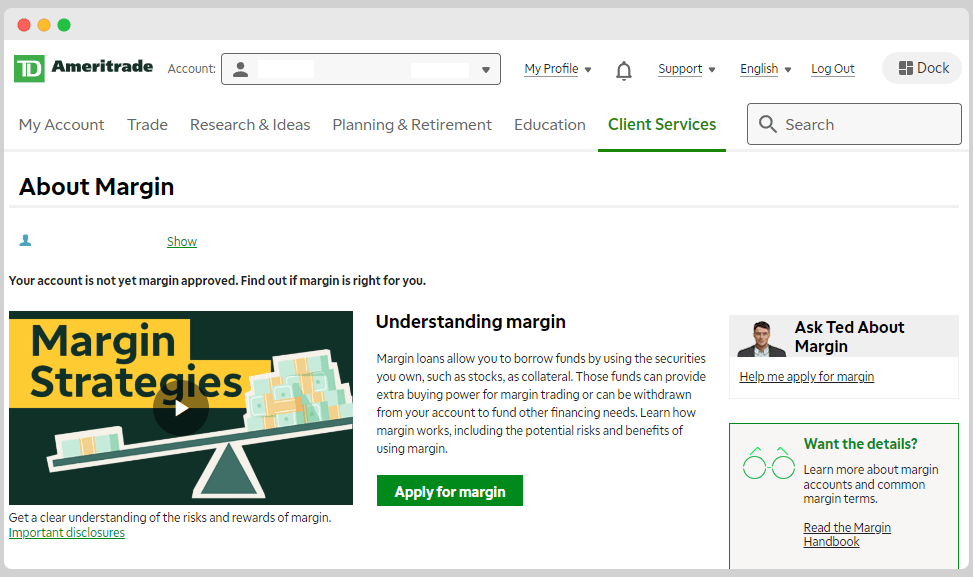
Another thing to watch out for is the dreaded margin call. This happens when the value of your investments drops below a certain level, and TD Ameritrade asks you to deposit more funds to cover your losses. If you can't cough up the cash, they might sell your investments to recoup their loan. Ouch! Think of it as your broker giving your portfolio a surprise haircut... and not in a good way.
Important: Using margin can amplify your gains, but it can also amplify your losses. It's like driving a sports car: exhilarating, but also potentially dangerous if you don't know what you're doing. So, before you dive into the world of margin trading, make sure you understand the risks and have a solid investment strategy.
Margin Mania: Is It Right For You?
Margin isn't for everyone. It's like that spicy food challenge – some people thrive on it, while others end up regretting their life choices. Ask yourself these questions before using margin:
- Am I comfortable with risk?
- Do I understand how margin works?
- Do I have a plan for managing potential losses?
If you answered "no" to any of these questions, then it's probably best to steer clear of margin trading for now. Stick to what you know, and don't be afraid to ask for help from a qualified financial advisor.
Final Thoughts: Proceed With Caution (and Maybe a Cupcake)
So, there you have it – a hopefully-not-too-painful explanation of margin account interest rates at TD Ameritrade. Remember, knowledge is power, and understanding the risks and rewards of margin trading is essential for making informed decisions. And if all else fails, just remember: even the smartest investors make mistakes. The key is to learn from them, and maybe treat yourself to a cupcake after you've navigated the sometimes treacherous waters of the stock market. You deserve it!
Disclaimer: I'm just a friendly face on the internet, not a financial advisor. This information is for entertainment purposes only and should not be considered financial advice. Always consult with a qualified professional before making any investment decisions.
