
What Is The Difference Between A Burglary And Robbery

The Case of the Sneaky Squirrel vs. The Confrontational Bear: Understanding Burglary and Robbery
Ever found yourself watching a crime show or listening to the news and hearing the words "burglary" and "robbery" thrown around, maybe even interchangeably? You're not alone! These two terms often get tangled up like a garden hose after a particularly enthusiastic watering session. But fear not, dear reader, because today we're going to untangle them with a smile, a few everyday examples, and maybe even a chuckle or two.
Why bother, you ask? Well, knowing the difference isn't just about sounding smart at your next dinner party (though that's a nice bonus!). It actually helps you understand the world around you, talk clearly with authorities, and even makes sure your insurance claims are, well, accurate. So, let's dive in!
Meet the Burglary – The Sneaky Squirrel
Imagine your house. All cozy and quiet. You're out living your best life, perhaps at the park or enjoying a nice cup of coffee. While you're gone, someone decides to unlawfully enter your home, shed, or even your locked car, with the intent to commit a crime once they're inside. Most often, that crime is theft, but it could also be vandalism or something else.
Must Read
This, my friends, is a burglary. Think of it like a sneaky squirrel who finds an open window to your pantry. He doesn't confront you; in fact, he probably hopes you're nowhere in sight. He just wants to get in, grab some nuts (or your shiny new laptop), and scurry away before anyone notices.
The key here is that a burglary is primarily a property crime. It's about invading your space. You don't even have to be home for it to happen! Your neighbour's garage could be burgled while they're on vacation. A store can be burgled in the middle of the night when it's closed. No person needs to be directly threatened or harmed for a burglary to occur.

So, if you come home to find your back door jimmied open and your favourite cookie jar (and maybe some valuables) missing, that's a burglary. It’s upsetting, absolutely, but it happened to your property, not directly to you in a confrontation.
Now, Say Hello to Robbery – The Confrontational Bear
Now, let's meet the other character: robbery. This is a whole different beast. Imagine you're walking down the street, perhaps humming a happy tune and scrolling through cat videos on your phone. Suddenly, someone steps in front of you, demands your phone and wallet, and perhaps even shoves you a little or flashes something intimidating. You feel scared, threatened, and a direct confrontation has just occurred.
That, right there, is a robbery. It's not just about taking stuff; it's about taking stuff from a person, and it involves force or the threat of force. This isn't a sneaky squirrel; it's more like a grumpy bear who directly demands your picnic basket while growling. The bear is right there in front of you, making demands.
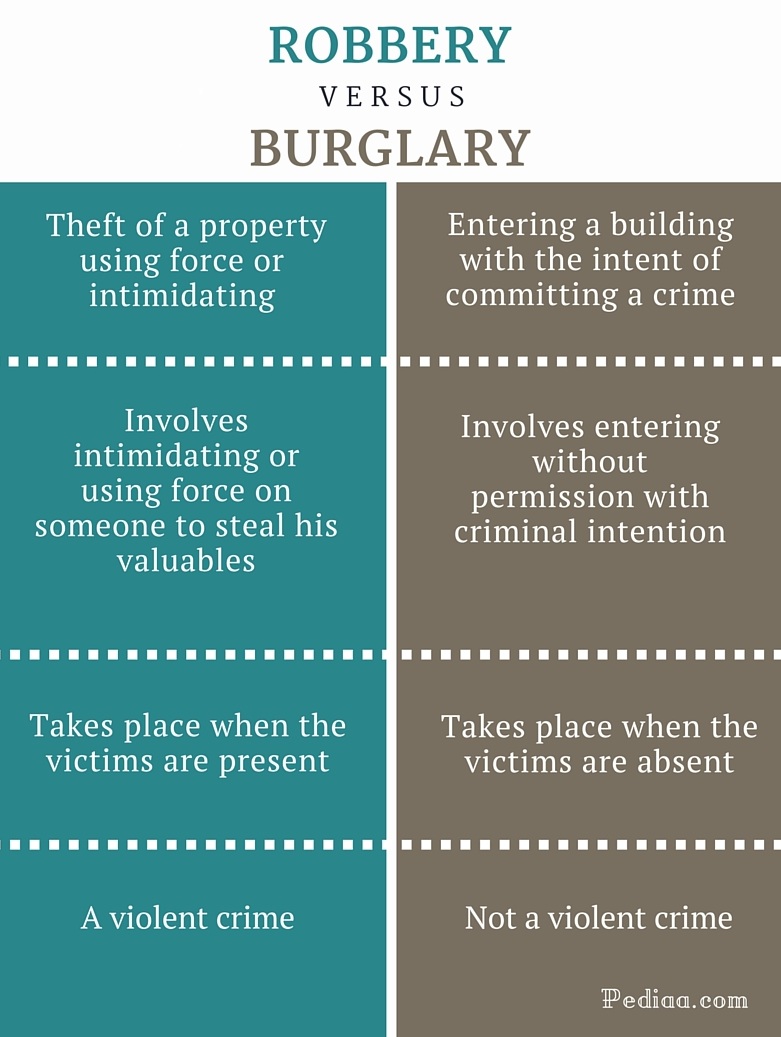
A robbery is a crime against a person. The victim is always present and directly involved. Think about bank heists in movies – the bad guys don't sneak in after hours; they storm in during business hours, holding up tellers and demanding money. That's a classic robbery.
So, if someone snatches your purse directly from your hand, or demands your car keys at a stop light, that’s a robbery. The direct confrontation and the threat to your personal safety are what define it.
The Big, Shiny Difference: Who and Where!
Okay, so here's the nutshell version to tuck into your brain:

- Burglary: It's about where – unlawfully entering a building or property. No direct confrontation with a person is required. Think of it as a crime against your stuff in your space.
- Robbery: It's about who – taking something directly from a person, using force or the threat of it. The victim is always present and often terrified. Think of it as a crime against you, personally.
So, you can have your house burgled while you're at work, but you can only be robbed if you're actually there when your belongings are taken directly from you with threats or force. A burglar might run if they see you; a robber wants to see you to get what they want.
Why Should You Care About This Mumbo Jumbo?
Beyond being able to correct your friends (gently, of course!) when they mix them up, knowing the difference actually matters!
First, when you report an incident to the police, being precise helps them understand the nature of the crime and respond appropriately. If you say your house was "robbed" when it was "burgled," it might confuse the initial assessment. Robberies, involving direct personal threat, often prompt a different level of urgency and investigation.

Second, insurance companies definitely care! Your homeowner's insurance covers burglary, while personal item coverage (often an add-on or part of broader personal property policies) might kick in for robbery. Mislabeling could lead to delays or complications with your claim. Imagine trying to explain your garden gnome was "robbed" from the porch while you were sleeping! They'd politely inform you it was a "burglary" of the gnome's outdoor residence.
And finally, it empowers you with knowledge about your personal safety and property security. If you're worried about burglary, you might focus on better locks, alarm systems, or secure windows. If you're concerned about robbery, you'd think more about situational awareness, avoiding risky areas, and protecting your personal belongings while out and about.
So there you have it! The sneaky squirrel and the confrontational bear, clearly distinguished. Now you're equipped to understand the nuances of these crimes, chat smartly about them, and maybe even give a knowing nod next time a TV detective uses the terms correctly. Stay safe, stay smart, and keep those smiles coming!