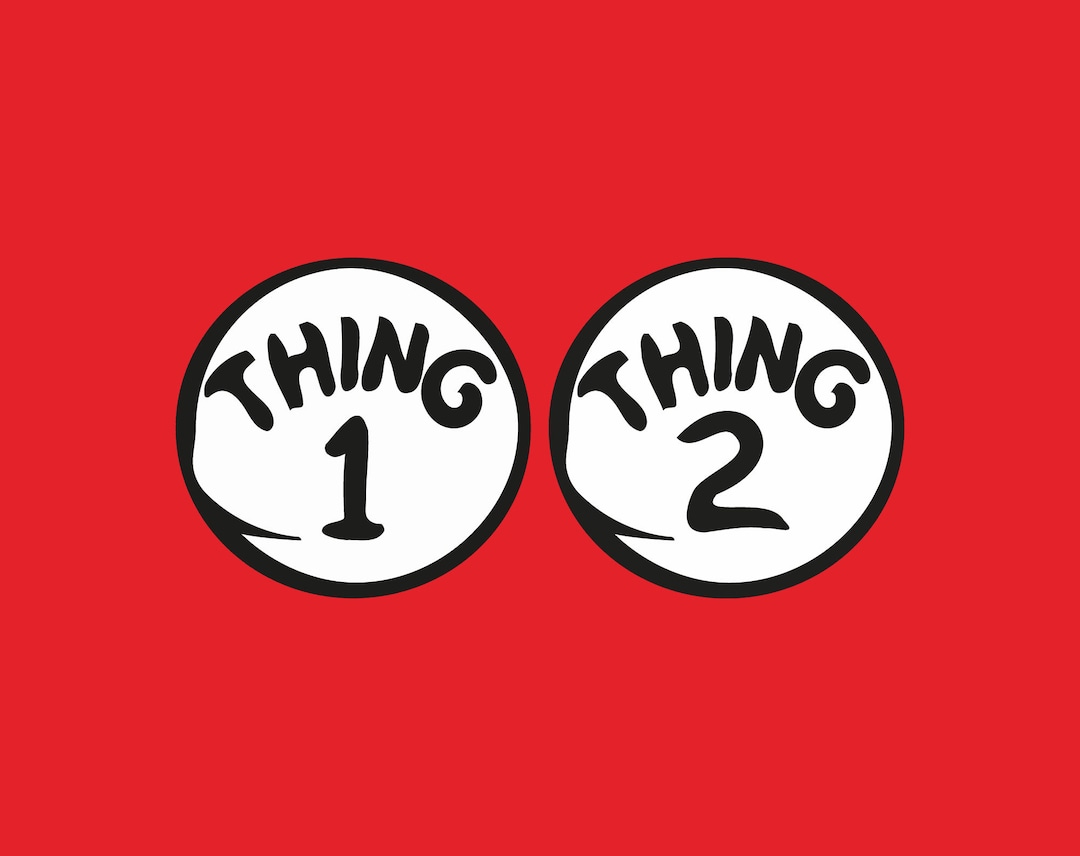
What Font Is Used For Thing 1 And Thing 2
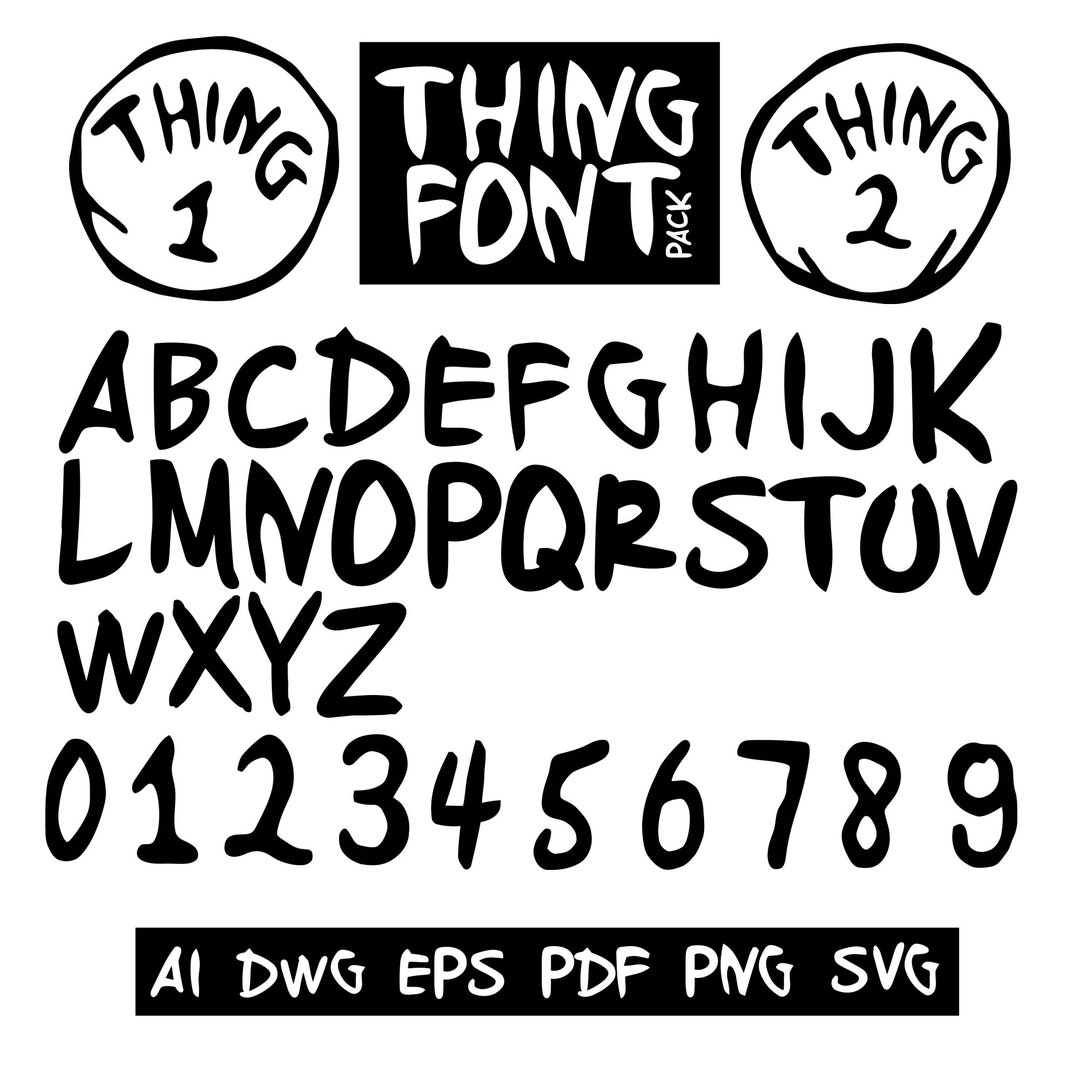
Ever wondered about the secret sauce behind your favorite things? Sometimes, it's not about complex algorithms or hidden ingredients, but simply the font! Digging into the world of fonts might seem like a niche hobby, but it's surprisingly fascinating and applicable to everyday life. Think about it: a well-chosen font can make a website feel trustworthy, a book easier to read, or even a logo more memorable. So, let's explore the fonts used for "Thing 1" and "Thing 2" and see what we can learn.
Why should you care about fonts? Well, it depends on who you are! For beginners, understanding basic font families (like serif vs. sans-serif) can help you choose fonts that are visually appealing and readable for simple projects, like writing emails or creating presentations. For families, knowing a little about dyslexia-friendly fonts can make a huge difference in your child's reading experience. And for hobbyists – whether you're designing invitations, creating social media content, or even writing a novel – font choices are crucial for setting the right tone and conveying your message effectively.
So, what about "Thing 1" and "Thing 2"? Let's imagine "Thing 1" is the New York Times website. They primarily use a serif font called Georgia for body text. Georgia is known for its readability, especially on screens, making it a great choice for long articles. For headlines, they might use a bolder, more modern sans-serif font to grab your attention. Now, let’s say "Thing 2" is a popular children's book series. Many children's books use simple, clear sans-serif fonts like Comic Sans MS or Open Sans because they're easy for young children to recognize and read. Of course, this is just an example; the actual fonts used can vary!
Must Read
These are just two examples, and the world of fonts is vast! There are countless variations within each family. For example, under "serif," you have fonts like Times New Roman (classic and formal), Garamond (elegant and old-fashioned), and Bodoni (high contrast and dramatic). Under "sans-serif," you'll find Helvetica (clean and neutral), Arial (similar to Helvetica), and Montserrat (modern and geometric).

Getting started is easy! Here are a few tips:
- Use a font identifier website: If you see a font you like, websites like WhatTheFont or Font Squirrel's Matcherator can help you identify it.
- Experiment with font pairings: Try combining a serif font for body text with a sans-serif font for headings.
- Consider your audience and purpose: A playful font might be perfect for a children's party invitation, but inappropriate for a business proposal.
- Don't be afraid to break the rules: But learn the rules first!
Ultimately, exploring fonts is a fun and rewarding experience. It's a chance to tap into your creativity, enhance your communication skills, and appreciate the often-overlooked details that make our world a little more beautiful and accessible. So, go ahead, start noticing the fonts around you, and see what you discover! You might be surprised at how much they influence your perceptions and emotions.