
What Does Auxiliary Battery Malfunction Mean
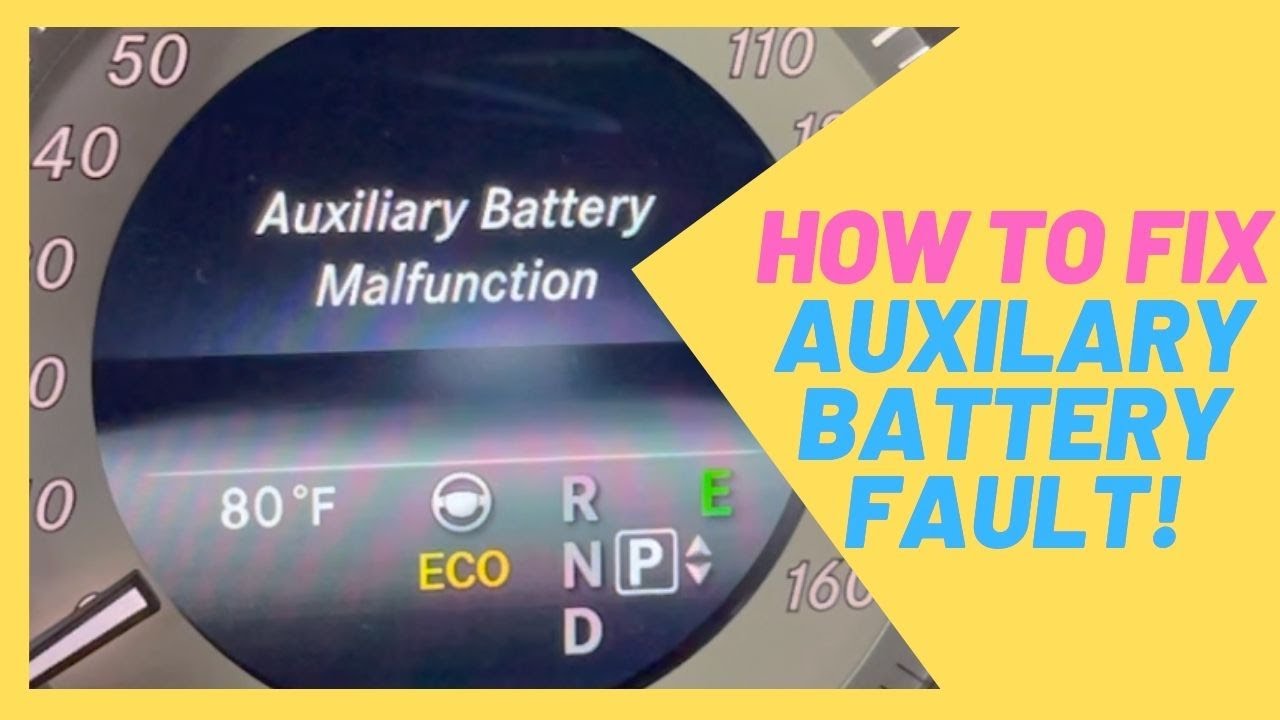
Alright, picture this: You're cruising along, maybe humming a jaunty tune, feeling like the king or queen of the road. Then, BAM! A little yellow light pops up on your dashboard, accompanied by a message that sounds like it was dreamt up by a particularly stressed robot: "Auxiliary Battery Malfunction."
Your heart does a little jig, right? You immediately imagine your car sprouting wings and flying into the sun, or perhaps just slowly dissolving into a pile of rust. "Auxiliary? Malfunction?" It sounds like a secret mission gone wrong, or a component from a very expensive washing machine.
But fear not, my friend! Pull up a comfy virtual chair, grab your imaginary latte, because we're about to demystify this scary-sounding warning. It’s far less dramatic than it sounds, more like your car’s tiny, often-forgotten sidekick throwing a bit of a tantrum.
Must Read
So, What IS This "Auxiliary Battery" Thingy?
Let's clear this up first. When you hear "battery," you probably think of that big, heavy box under your hood that kicks your engine into gear. That's your main battery, the undisputed heavyweight champion. The auxiliary battery? Think of it as the backup singer, the understudy, the guy who holds the coat while the main star is busy doing its thing.
It's typically a much smaller battery, and you'll often find them in modern cars, especially those with fancy stop-start systems, hybrids, or a truckload of electronics. Its job is to power all the "nice-to-have" (but let's be honest, we all love them) electrical components when the main battery is otherwise engaged. For example, if your car has a stop-start system, the auxiliary battery might keep your radio on and the climate control humming while the engine temporarily shuts off at a traffic light.

It also plays a crucial role in preventing your main battery from being constantly drained by minor electrical loads. It's like having a dedicated snack drawer, so you don't have to raid the main pantry every time you want a biscuit. Surprising fact! In some vehicles, particularly certain hybrids, the auxiliary battery is crucial for things like shifting gears from Park to Drive when the main battery is isolated or low. So it's not entirely just for creature comforts!
Why Does It Decide to "Malfunction"? Is It Just Being a Drama Queen?
Honestly? Mostly, it’s just getting old. Like us, batteries have a lifespan. They can only charge and discharge so many times before they decide they’ve had enough and want to retire to a nice, warm garage in Florida. This is the most common reason for an auxiliary battery malfunction: it's simply experiencing age-related fatigue.

Other culprits? Extreme temperatures – both scorching heat and freezing cold can shorten a battery's life. Sometimes, there might be a minor issue with the car's charging system, but that's less common for the auxiliary battery specifically. Mostly, it's just a weary little power pack saying, "I've given my all, folks. My time has come."
What Happens When This Little Guy Throws in the Towel?
This is where the reassuring part comes in. Unlike your main battery dying (which is usually a spectacular, "I'm going nowhere, fast" event), an auxiliary battery malfunction is usually more of a mild inconvenience than a full-blown automotive catastrophe.
- Your Stop-Start System Quits: This is probably the most common symptom. If your car usually shuts off its engine at red lights and now stubbornly stays on, the auxiliary battery is likely giving you the cold shoulder. Your car has decided it's done being eco-friendly for a bit.
- Random Electrical Shenanigans: Your radio might flicker, your windows might be a bit sluggish, or your central locking might act temperamental. It's like your car's electrical system is having a tiny, localized nervous breakdown.
- Warning Lights (Obviously): Apart from the initial "Auxiliary Battery Malfunction" message, you might see other electrical system warnings pop up.
- Fussy Features: Some luxury or high-tech features might simply refuse to work, or work intermittently, as they rely on the stable voltage the auxiliary battery helps to provide.
The good news? Your car will likely still start, drive, and get you where you need to go. You won't be stranded on the side of the road, frantically hailing passing pigeons for help. The auxiliary battery isn't responsible for the fundamental act of getting your engine running, so breathe easy.
So, What's the Game Plan? Do I Need a Tiny Spaceship Mechanic?
Nope, no spaceships required! Here’s the straightforward advice:
- Don't Panic (Seriously): As established, it's not an emergency. You have time to sort it out.
- Check Your Owner's Manual: That dusty tome in your glove compartment? It might have specific advice for your vehicle model. It’s like consulting an ancient oracle, but with better diagrams.
- Visit Your Mechanic: This isn't usually a DIY job for the average person. These batteries can be tucked away in odd places (under seats, in the trunk, behind panels – it's a scavenger hunt!), and replacing them often involves specific procedures to avoid messing up your car's delicate electronics. Your mechanic can easily test it, confirm the diagnosis, and replace it.
The cost of replacing an auxiliary battery is generally quite a bit less than a main battery, so you probably won't need to sell a kidney. Think of it as a routine maintenance item, like replacing spark plugs or getting an oil change, just a little less frequent and with a fancier name.
The Takeaway: Appreciate the Unsung Heroes!
In the grand symphony of your car, the auxiliary battery is a vital, if often overlooked, instrument. It ensures the smooth operation of countless systems, making your driving experience just a little bit more comfortable and reliable. When it malfunctions, it’s not a sign of impending doom, but rather a gentle nudge from your car saying, "Hey, remember that little guy? He needs a break!"
So, next time you see "Auxiliary Battery Malfunction," give a little chuckle. It’s your car’s way of having a minor electrical hiccup, not a heart attack. Get it checked out, and you and your car will be back to humming jaunty tunes in no time.