What Causes A Septic Tank To Back Up

Ah, the septic tank. That mysterious, silent workhorse buried in your yard, doing its dirty business so you don't have to think about it. Until, of course, you suddenly do have to think about it. Usually, that thinking starts with a gurgle, followed by a slow-motion horror movie unfolding in your lowest toilet or shower drain. Suddenly, you're faced with that particular brand of household emergency that makes you want to crawl under a rock and pretend you live in a forest. But fear not, fellow homeowner! Understanding why your underground buddy decides to throw a fit isn't as scary as the smell. In fact, it's often quite relatable to our own everyday overindulgences.
Let's dive into the pungent possibilities, shall we?
The Great Flood: When Your Septic Gets Thirsty (and Then Drowned)
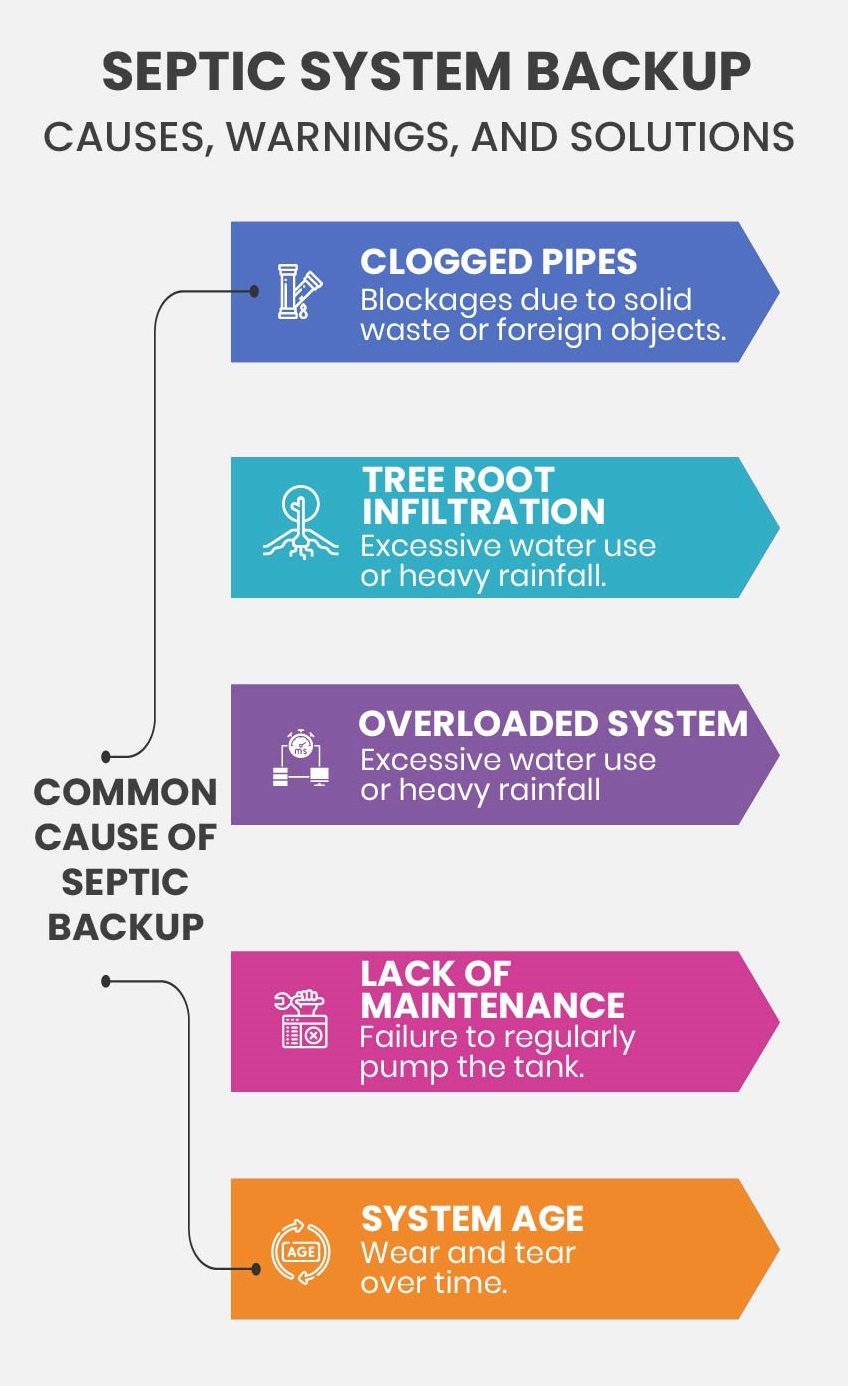
Imagine you've just eaten a gigantic holiday meal. You're stuffed, groaning, and just want to lie down. Now, imagine someone keeps piling more food on your plate. That's pretty much what happens to your septic system when it gets hit with too much water. It's designed to process a steady flow, not a tsunami. Long showers back-to-back, doing five loads of laundry on a Sunday, running the dishwasher and watering the lawn all at once – it's like throwing a huge party where everyone arrives at the exact same moment. The poor tank and its drainfield just can't keep up, and suddenly, you've got a plumbing situation that's less "spa day" and more "swamp monster." Your system gets overwhelmed, and boom – everything starts looking for an easier exit... usually back up your pipes.
Must Read
The Clog Party: When Solids Overstay Their Welcome
Your septic tank isn't just a big hole; it's a miniature wastewater treatment plant. Bacteria are the unsung heroes, munching away at the solids. Over time, lighter solids (scum) float to the top, and heavier solids (sludge) sink to the bottom. In the middle, you have the "effluent" – the mostly liquid stuff that goes to the drainfield. If you don't pump your tank regularly, these layers of scum and sludge build up and eventually start making their way into the outlet pipe, which is designed for liquids only. Think of it like trying to fit a square peg in a round hole, except the peg is much bigger and smellier. When those solids escape into the drainfield, they gum up the works, making it impossible for the liquid to disperse properly. It's a slow-motion horror movie for your plumbing.
The Forbidden Flush: Because Your Toilet Isn't a Magic Trash Can
Alright, let's have a heart-to-heart. We've all been tempted. That tissue, the "flushable" wipe (spoiler alert: they almost never are), cotton balls, dental floss, even leftover spaghetti (don't judge, we've heard stories!). Your toilet has one job: handling human waste and toilet paper. Anything else is like inviting a bunch of non-biodegradable rock stars to a quiet library – they just don't belong and cause absolute chaos. These items don't break down, creating impenetrable clogs in the pipes, or worse, making their way into the septic tank itself and adding to the solids buildup. It's like trying to digest a plastic toy – your stomach (or septic system) just isn't equipped for it. Remember, if it didn't come out of you or isn't specifically designed to dissolve, it should go in the trash bin, not the toilet.
The Choked Filter: When Your Septic's "Lungs" Can't Breathe
Imagine your septic tank as the stomach and your drainfield (sometimes called a leach field) as the lungs or kidneys – it's where the treated liquid from the tank gets filtered and slowly absorbed back into the ground. It's a pretty crucial final step! But drainfields can have a tough life. They can get clogged by those pesky solids we just talked about, or even tree roots looking for a tasty drink. Driving heavy vehicles over them can compact the soil, making it impossible for water to drain. Once the drainfield is compromised, the liquid has nowhere to go. It backs up into the tank, and from the tank, well, you know the drill – it starts looking for the path of least resistance, which is usually back into your house. It's like trying to breathe with a pillow over your face; eventually, something's gotta give.

The Forgotten Friend: When You Skip Your Septic's Spa Day
Let's be honest, your septic tank isn't exactly a conversation starter at parties. It's out of sight, out of mind, doing its dirty work silently. But like any vital system, it needs a little TLC. The biggest culprit for neglected septic systems is simply a lack of regular pumping. Those layers of scum and sludge? They don't just magically disappear. They need to be professionally removed every 3-5 years, depending on your household size and usage. Skipping this essential "spa day" is like never emptying your car's oil or cleaning out your fridge. Eventually, things get overloaded, messy, and frankly, quite smelly. Neglecting this basic maintenance is like telling your hardworking underground friend, "You're on your own!" And eventually, it will respond by making sure you definitely remember it exists.
So there you have it! The not-so-secret reasons why your septic system might decide to throw a literal party in your pipes. It's usually a combination of overload, bad habits, or just plain neglect. While dealing with a backup is nobody's idea of a fun afternoon, understanding the causes means you're better equipped to prevent it. A little common sense, regular maintenance, and treating your toilet like the delicate instrument it is, can save you a world of pungent pain. Keep those pipes happy, and your home will thank you!