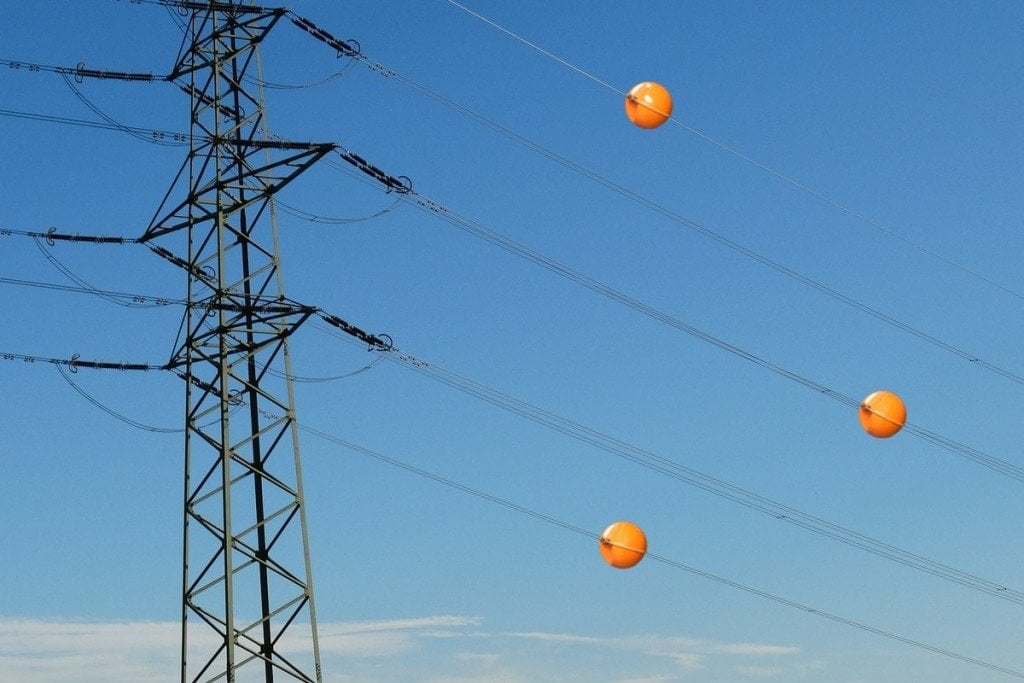
What Are The Orange Balls On Power Lines For

You know the ones. Those brightly colored, often orange, orbs clinging to power lines like giant, misplaced gumballs. For years, they've been hanging there, silently judging our commutes, sparking questions in the back of our minds: What in the actual heck are those things for? Are they secret bird feeders? Futuristic weather sensors? Maybe tiny, cozy homes for particularly adventurous squirrels? Let's unravel this delightfully quirky mystery, shall we?
The Great Orb Mystery: Solved!
If you're anything like me, you've probably concocted some wild theories. Perhaps they're a subtle nod to a secret society of power line enthusiasts. Or maybe, just maybe, they're part of a cosmic game of tic-tac-toe being played by celestial beings. My personal favorite? They're emergency snack dispensers for utility workers, filled with tiny, power-line-shaped candies. (A person can dream, right?)
But alas, dear reader, the truth is far less fantastical, but no less crucially important. These seemingly random spheres are actually called aerial marker balls, or sometimes just marker spheres. And their job is a lot like a fluorescent vest for a very thin, very high-up tightrope walker.
Must Read
Not for Birds, But for Big Metal Birds
Think about it. Those power lines are incredibly thin. Against a vast sky, or even a busy, cluttered landscape, they can virtually disappear. Now, imagine you're a pilot, soaring through the air in a helicopter or a small plane. Your job requires precision, especially when flying at lower altitudes – near airports, over valleys, or perhaps during agricultural spraying.
These pilots need to see everything, and hitting a power line would be, shall we say, a very bad day for everyone involved. Enter our humble orange balls!
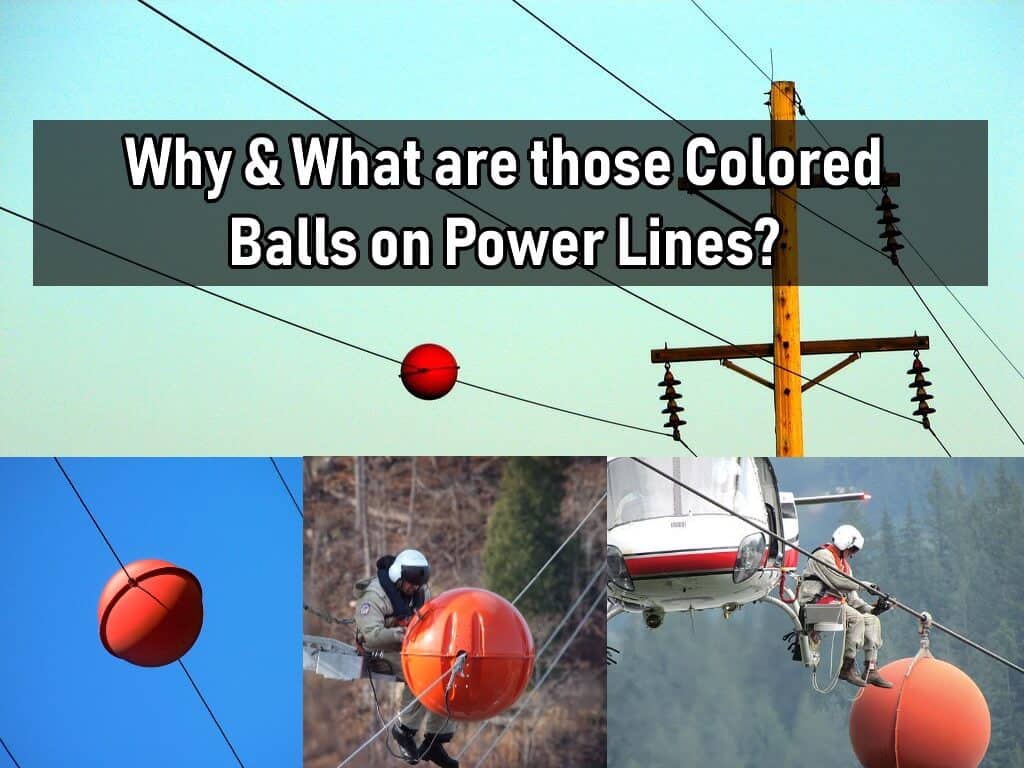
They are there to provide enhanced visibility for low-flying aircraft. Simple as that. No secret bird conferences, no alien signals, just a straightforward safety measure.
Where Do These Colorful Guardians Hang Out?
You'll often spot these vigilant spheres in specific locations. Ever driven past a small airport or a helipad? Bingo! You'll likely see them nearby. They're also commonly placed across deep valleys, over large bodies of water like rivers or lakes, or in mountain passes – basically, any area where power lines might present a hazard to aircraft, particularly those without the benefit of towering skyscrapers to draw the eye.
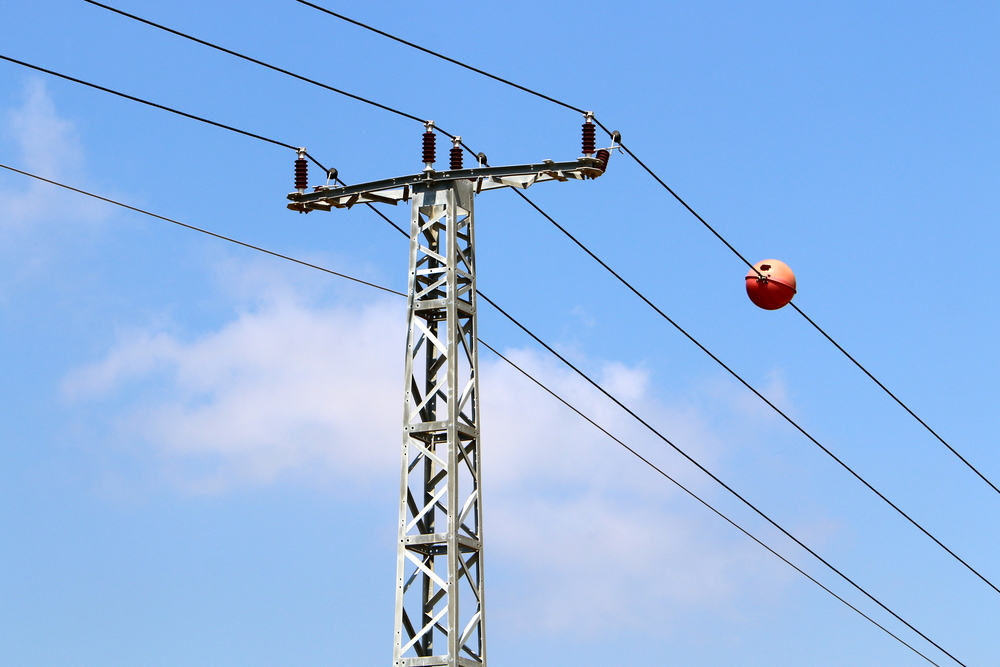
It's like Mother Nature decided to play a game of "Where's Waldo?" with power lines, and these balls are the big, obvious arrows pointing right at them.
The Science of Stand-Out
So, how do they work their magic? It's pretty basic physics and a dash of common sense. Power lines themselves are, by design, meant to be strong and efficient, not necessarily conspicuous. These spheres, usually made of lightweight fiberglass or plastic, are often painted in high-contrast colors like aviation orange, white, or yellow. Orange is particularly effective because it stands out against most natural backdrops, from blue skies to green trees.

They essentially increase the visual diameter of the wire. Instead of a virtually invisible thread, you now have a series of bright, unmissable dots making the entire span of the line obvious from a distance. It's like putting reflective tape on a bicycle – suddenly, it's there!
A Little Nugget of Everyday Awesome
The next time you're driving along, perhaps stuck in traffic, and your gaze drifts upwards, you can offer a silent nod of appreciation to these unsung heroes of aviation safety. No longer a bewildering mystery, they are now a simple, elegant solution to a serious problem. They represent a blend of practical engineering and a keen understanding of human (and aircraft) perception.
So, go forth! Impress your friends at your next BBQ. Regale your family on a road trip. Tell them the tale of the unassuming orange balls that aren't gumballs or squirrel condos, but rather vigilant guardians, keeping our skies just a little bit safer. It's one of those tiny, often-overlooked details that make our modern world tick, and now you're in on the secret!