What Are The Balls For On Power Lines
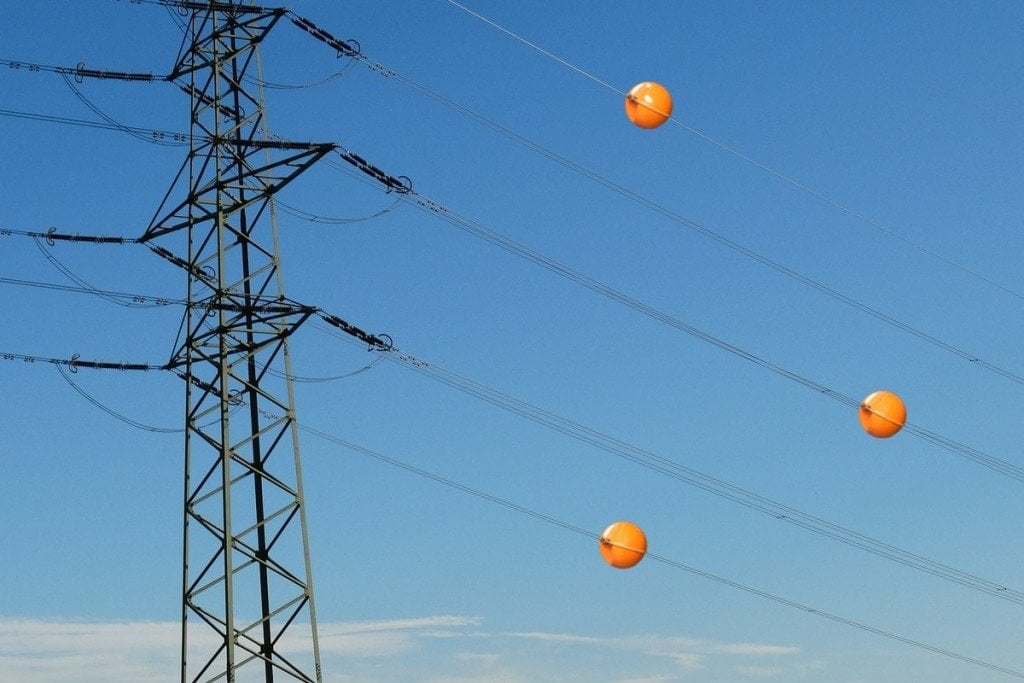
You’ve seen them, surely. Dangling gracefully, often vibrantly colored, those enigmatic spheres adorning power lines like an abstract art installation against the vast canvas of the sky. For many, they're just part of the everyday landscape, a curious detail noticed and then forgotten. But what if we told you these seemingly simple orbs hold a fascinating blend of practical ingenuity and unexpected artistic inspiration? Far from being mere decorations, understanding what are the balls for on power lines can unlock a new appreciation for design, visibility, and even playful problem-solving.
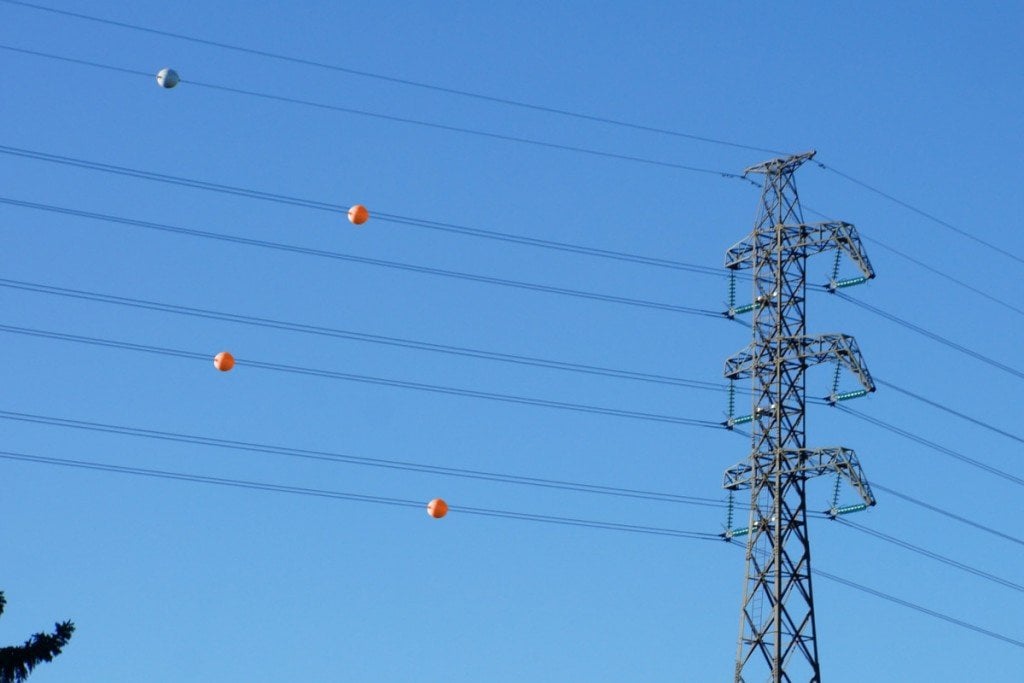
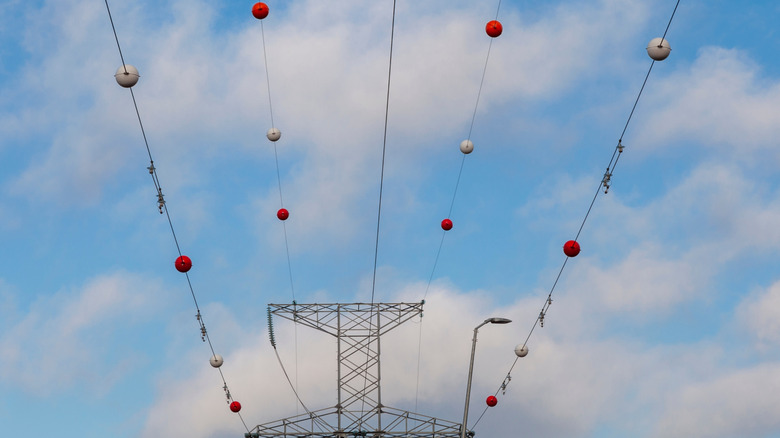
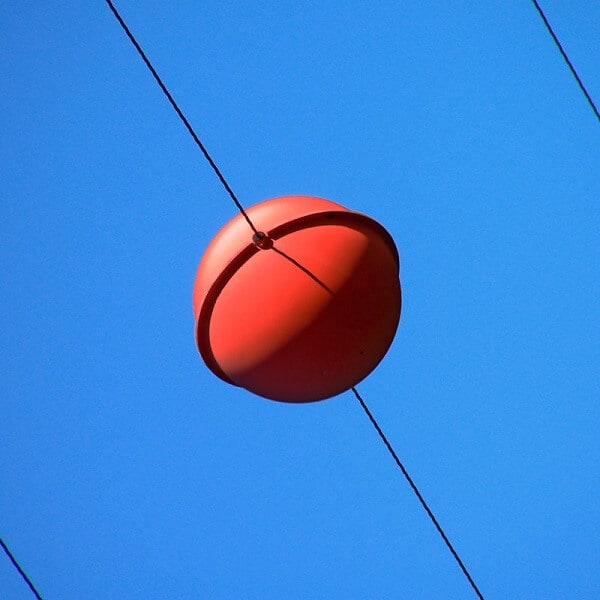
The humble power line marker ball is, at its heart, a brilliant feat of functional design. Its primary purpose is to enhance the visibility of overhead power lines, especially in areas where low-flying aircraft operate, like near airports or across valleys. Pilots need to see those lines well in advance, and a thin wire against a complex background can be incredibly difficult to spot. These balls act as visual beacons, transforming an almost invisible hazard into a clearly marked obstruction. For us, whether we're aspiring artists, weekend hobbyists, or just curious minds, this offers some wonderful takeaways.
Consider the benefits from a creative perspective: Firstly, it’s about making the unseen visible. How often in art or life do we struggle to highlight something subtle but important? These balls show us that a simple, bold intervention can achieve clarity. Secondly, they provide clear guidance. Just as they guide pilots safely, understanding their placement can inspire us to create clear pathways or instructions in our own projects, ensuring our audience never gets lost. Thirdly, there’s the elegant simplicity: a sphere, a bright color, strategically placed. It’s a masterclass in effective, minimalist design that solves a complex safety issue without overcomplication. This encourages us to seek out elegant solutions in our own creative endeavors.
Must Read
The variations themselves offer artistic examples. You'll notice different colors – often red, orange, white, or yellow – specifically chosen for optimal contrast against various backgrounds, from blue skies to snowy mountains. This teaches us about color theory in context. Their strategic spacing isn't random; it creates a visual rhythm, a pattern that guides the eye along the line, much like repetition in a musical piece or a visual motif in a painting. Some balls are larger than others, demonstrating the importance of scale and proportion to achieve maximum impact. Near major highway crossings or deep ravines, you might see them clustered, highlighting critical points – a lesson in focusing attention where it matters most.
![Purpose of Balls on Power Lines [Common Types & Locations]](https://www.electricrate.com/wp-content/uploads/2023/02/spheres-on-power-lines.jpg)
Ready to try your hand at this "power line ball" philosophy at home, safely, of course? Here are some playful tips:
- The Visibility Challenge: Identify a subtle object or pathway in your home or garden that's easily missed. Use colorful, lightweight spheres (like painted ping-pong balls, bright yarn pompoms, or small balloons) to mark it clearly. Perhaps a low shelf, a garden boundary, or even a child's toy chest.
- Guiding Lights: Create a fun scavenger hunt for friends or family, using a series of brightly colored markers to guide them from one clue to the next. The clearer your "power line balls," the smoother the adventure!
- Pattern Play: Experiment with repeating patterns of colored objects on a string or wire (indoors, naturally!). Observe how different spacing and color sequences create visual interest and rhythm.
- Problem-Solving Design: Pick a small, everyday problem that could be solved with better visibility. Maybe a tricky step, a hidden light switch, or a cupboard corner. Design a simple, creative marker for it, keeping the principles of the power line balls in mind.
Ultimately, appreciating "the balls on power lines" is about finding wonder and inspiration in the everyday. It's the sheer joy of realizing that even the most utilitarian objects can be beautiful, thoughtfully designed, and even a little bit playful. So next time you glance up, don't just see power lines; see an invitation to think about visibility, safety, and the delightful art of practical problem-solving. It’s an enjoyable reminder that great design, even the kind that saves lives, can often be found in the simplest, most elegant of spheres.