Veeam Reverse Incremental Vs Incremental

Let's face it, nobody loves thinking about data backups. It's like flossing – we know we should do it, but it's rarely at the top of our fun list. However, the peace of mind that comes with knowing your precious data is safe and recoverable is absolutely priceless. Imagine losing all your family photos, important documents, or even your painstakingly crafted gaming save files. Shudder! That's where backup solutions like Veeam come in, offering a lifeline when disaster strikes. And within Veeam, two popular methods reign supreme: Incremental backups and Reverse Incremental backups. But what are they, and which one is right for you?
The fundamental purpose of any backup strategy is simple: to protect your data. Think of it as an insurance policy for your digital life. Backups allow you to restore your system to a previous state if something goes wrong – a virus, a hardware failure, a user error, or even just a plain old accident. It's not just for businesses anymore; even home users need to consider data protection, especially with the increasing amount of digital information we accumulate. We rely on backups for everything from recovering accidentally deleted files to restoring entire servers after a catastrophic event. They're the silent guardians of our digital world.
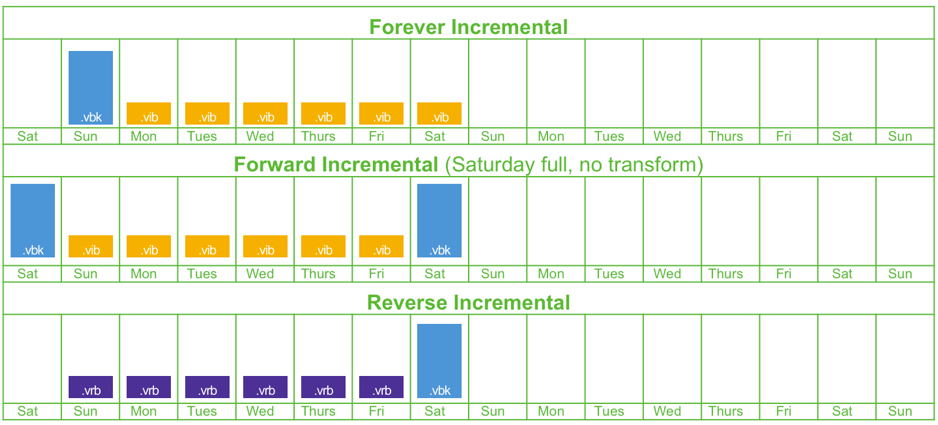
Now, let's dive into the specifics. An incremental backup is like building a tower, one block at a time. The first backup (the full backup) captures everything. Then, each subsequent backup only saves the changes made since the last backup. This makes incremental backups fast and storage-efficient, as they only copy the modified data. Think of it like this: you only note down what's different each day, rather than rewriting the entire journal. Common examples include backing up your computer's operating system, databases, or virtual machines.
Must Read
Reverse incremental backups take a slightly different approach. Initially, they also create a full backup. But instead of adding new incremental files, they inject the changed data directly into the full backup, creating a synthetic full backup that always represents the latest state. Each incremental backup effectively rolls forward the full backup. This has a major advantage: the most recent restore point is always a single, easily accessible file. Think of it like having a master document that's constantly updated with the latest changes.
So, how can you enjoy these backup strategies more effectively? First, understand your Recovery Time Objective (RTO) and Recovery Point Objective (RPO). RTO is how quickly you need to restore your data, and RPO is how much data you're willing to lose. Reverse incremental backups often offer faster RTOs because the latest backup is readily available. Second, consider your storage capacity. While incremental backups are initially smaller, they require more processing power and can become complex to manage over time, especially when restoring older versions. Third, regularly test your backups! A backup is useless if you can't restore from it. Schedule test restores to ensure your backups are working correctly and that you're familiar with the recovery process. Finally, automate the process. Set up a backup schedule and let Veeam handle the rest. This removes the human element and ensures that backups are performed consistently.
Ultimately, choosing between incremental and reverse incremental backups depends on your specific needs and priorities. By understanding the differences and following these tips, you can create a robust backup strategy that protects your data and gives you the peace of mind you deserve. Now go forth and backup your digital life – you'll thank yourself later!