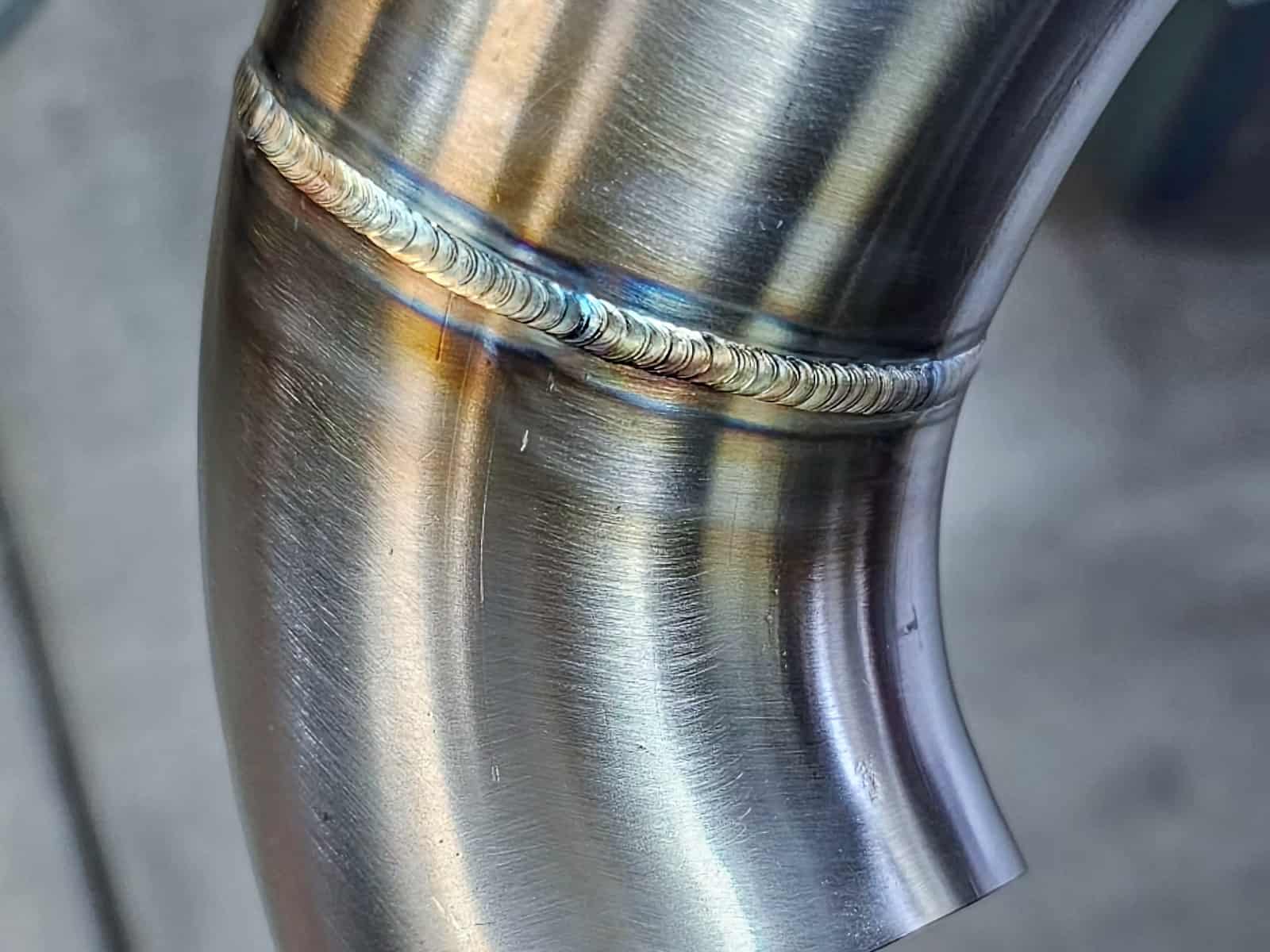
Tig Welding Stainless Steel

Okay, let's talk about TIG welding stainless steel. Now, before your eyes glaze over, hear me out. Welding, especially TIG welding stainless steel, isn’t just sparks and hot metal. It’s an art form, a dance with fire, and, let's be honest, sometimes a comedy of errors. Think Bob Ross, but instead of painting happy little trees, you're fusing metal together with a super-powered, plasma-y crayon.
The Stainless Steel Mystique
Stainless steel. It’s everywhere. From your kitchen sink to surgical instruments, this stuff is tough and shiny. But getting two pieces to stick together permanently? That's where the fun begins. You can't just slap any old welding process at it. Stainless steel has a bit of a diva reputation in the welding world. It demands attention, respect, and the right process, which often leads us to TIG (Tungsten Inert Gas) welding.
Imagine you're trying to convince two very stubborn cats to cuddle. That's kind of what welding stainless steel can feel like. You need finesse, patience, and sometimes, a little bit of luck.
Must Read
TIG Welding: The Artist's Choice
TIG welding is often called the "artisan's" welding process. Why? Because it gives you incredible control. Think of it as painting with molten metal. You have a foot pedal to control the heat, a hand holding the welding torch, and another hand feeding the filler metal. It's like playing a metal-bending piano concerto! And just like learning an instrument, expect to hit some sour notes along the way – maybe a few craters, some discoloration, or even accidentally welding your torch to the workpiece. We’ve all been there.
One of the funniest things about learning to TIG weld stainless steel is the inevitable "tungsten dip." The tungsten is the electrode that creates the arc. You're supposed to keep it pristine, pointy, and never, ever touch the molten puddle. But guess what? You will. And when you do, it's like dropping your microphone in the middle of a rock concert. Sparks fly, the arc sputters, and you feel a wave of shame wash over you. Don't worry; every TIG welder has a tungsten dipping story. It's a rite of passage.

The Zen of the Puddle
Once you get the hang of it, TIG welding stainless steel can be surprisingly meditative. You're focused completely on the tiny puddle of molten metal, coaxing it along the joint, watching it solidify into a perfect, shiny bead. It's almost like watching waves on a beach – calming, hypnotic, and utterly absorbing. Until, of course, you remember you're wearing a welding helmet and it's approximately 10,000 degrees inside.
The real magic of TIG welding isn’t just the pretty welds (though those are nice). It’s the ability to create strong, durable joints that are also aesthetically pleasing. Think about the sleek, modern designs you see in architecture, furniture, and even jewelry. A lot of that is thanks to the precision of TIG welding.
"Welding is not just about joining metals; it's about connecting ideas, creating possibilities, and building the future." - A Wise (and Probably Slightly Burned) Welder
More Than Just Metal
But beyond the technical aspects, there’s something inherently satisfying about creating something with your own hands. Taking raw materials and transforming them into something useful, something beautiful, something strong. That feeling of accomplishment is what keeps welders coming back to the shop, day after day, ready to face the sparks, the heat, and the occasional tungsten dip. It can be an incredibly rewarding experience. It can also turn into a hobby. People often start small, fixing a broken lawnmower and end up becoming stainless steel sculptors.
So, the next time you see a beautifully welded piece of stainless steel, take a moment to appreciate the skill, the patience, and maybe even the occasional comedic mishap that went into creating it. And who knows, maybe you'll be inspired to pick up a TIG torch yourself. Just remember to wear your safety glasses, and don't be afraid to laugh when you inevitably dip your tungsten. We all do.