
The Statement Of Changes In Stockholders Equity Presents
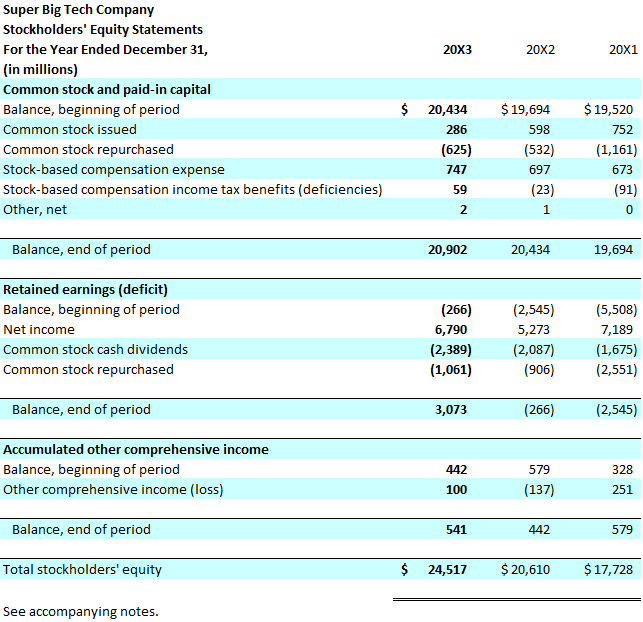
Okay, so you've probably heard of income statements and balance sheets, right? The big financial reports everyone talks about. But have you met the Statement of Changes in Stockholders' Equity? It's the cool, quirky cousin of the financial statement family!
What is it anyway? Think of it as a behind-the-scenes look at what's happening with the owners' slice of the company pie. It's all about stockholders' equity—aka the owner's stake. It's like looking at a live scoreboard for how the owners are doing!
Why Should I Even Care?
Good question! Maybe you’re thinking, “Equity? Sounds boring!” But trust me, this statement has some juicy secrets. Ever wondered how a company uses its profits? Or where money suddenly disappears to? This statement is your guide!
Must Read
Imagine you’re investing in a company. Wouldn’t you want to know if they’re handing out tons of dividends or buying back their own stock? This statement spills the tea!
Decoding the Mystery: What's Inside?
So, what exactly makes this statement tick? Let's break it down into easily digestible parts:
1. Beginning Balance: This is where the party starts. It's the stockholders' equity at the beginning of the year. Think of it as setting the stage for all the action that's about to unfold.

2. Net Income (or Loss): Ah, the lifeblood of any company! If the company makes money (net income), it increases the equity. If they lose money (net loss), well, the equity takes a hit. It's pretty straightforward, right?
3. Dividends: Cha-ching! This is when the company shares its profits with its owners. Dividends reduce the stockholders’ equity. It’s like everyone getting a paycheck, but in company ownership terms. Fun fact: some companies never pay dividends. They’re keeping all the cash for themselves!
4. Stock Issuances: Need more cash? Sell more stock! When a company issues new shares, it increases stockholders' equity. More owners = more equity!
5. Stock Repurchases: Sometimes, companies buy back their own stock. This decreases stockholders' equity and reduces the number of shares outstanding. Why do they do this? Maybe they think the stock is undervalued, or maybe they just want to give existing shareholders a bigger slice of the pie.
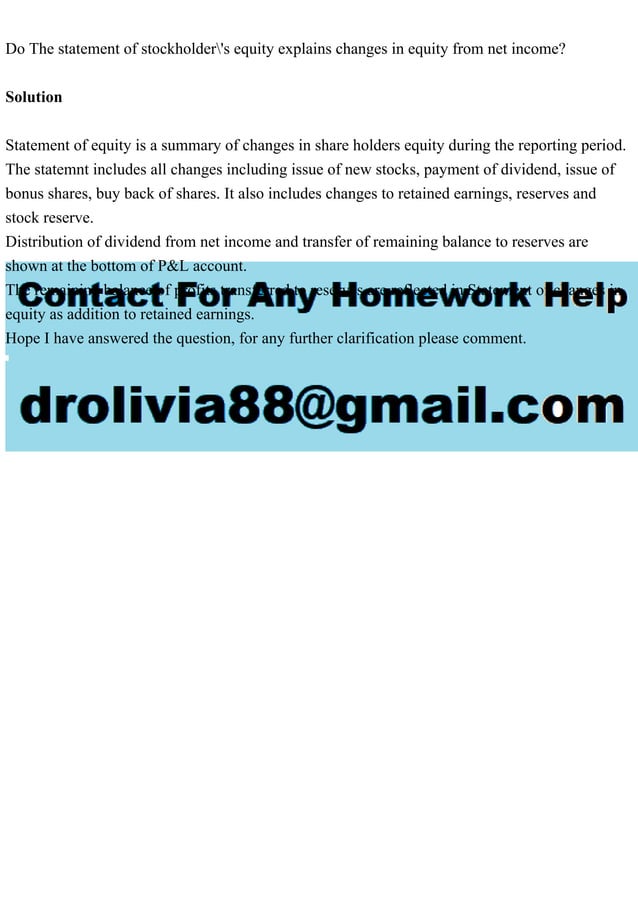
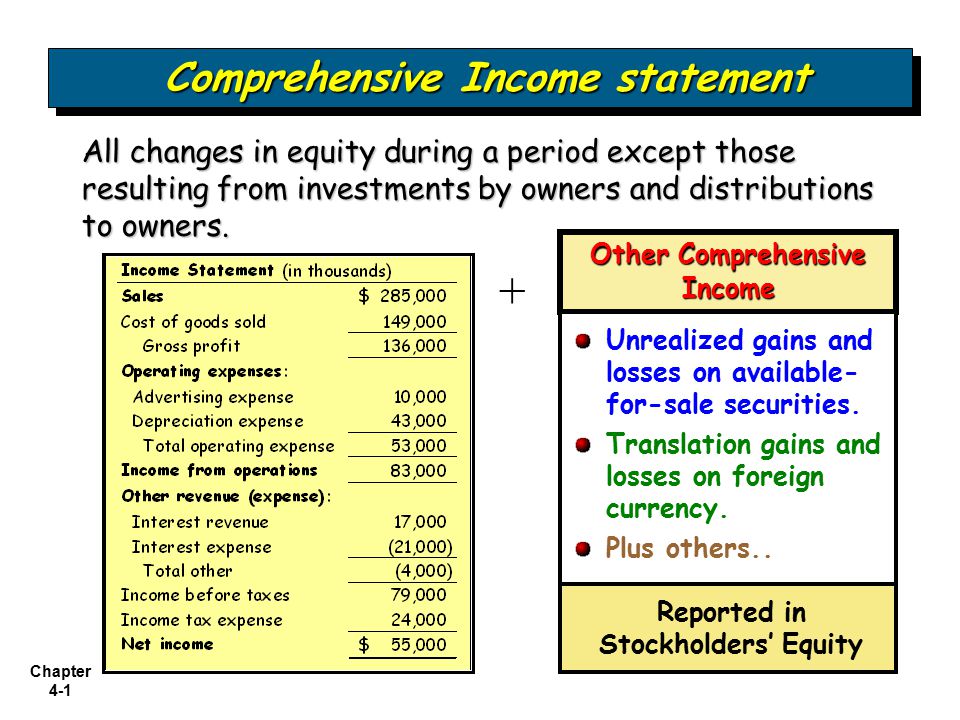
6. Other Comprehensive Income (OCI): Hold on, this sounds complicated! OCI includes items that affect equity but aren't reported on the income statement. Think of it as a grab bag of unusual gains and losses. It can include foreign currency translation adjustments, unrealized gains and losses on certain investments, and more. Just know it exists!
7. Ending Balance: The grand finale! After adding and subtracting all the items mentioned above, you get the stockholders' equity at the end of the year. This is the new benchmark, ready to kick off the next year.
Why is it so helpful?
Here are some reasons that this Statement of Changes in Stockholders' Equity is very helpful for you:
Spotting Trends: Notice a sudden drop in equity? Maybe the company had a bad year or paid out massive dividends. This statement helps you spot potential red flags!
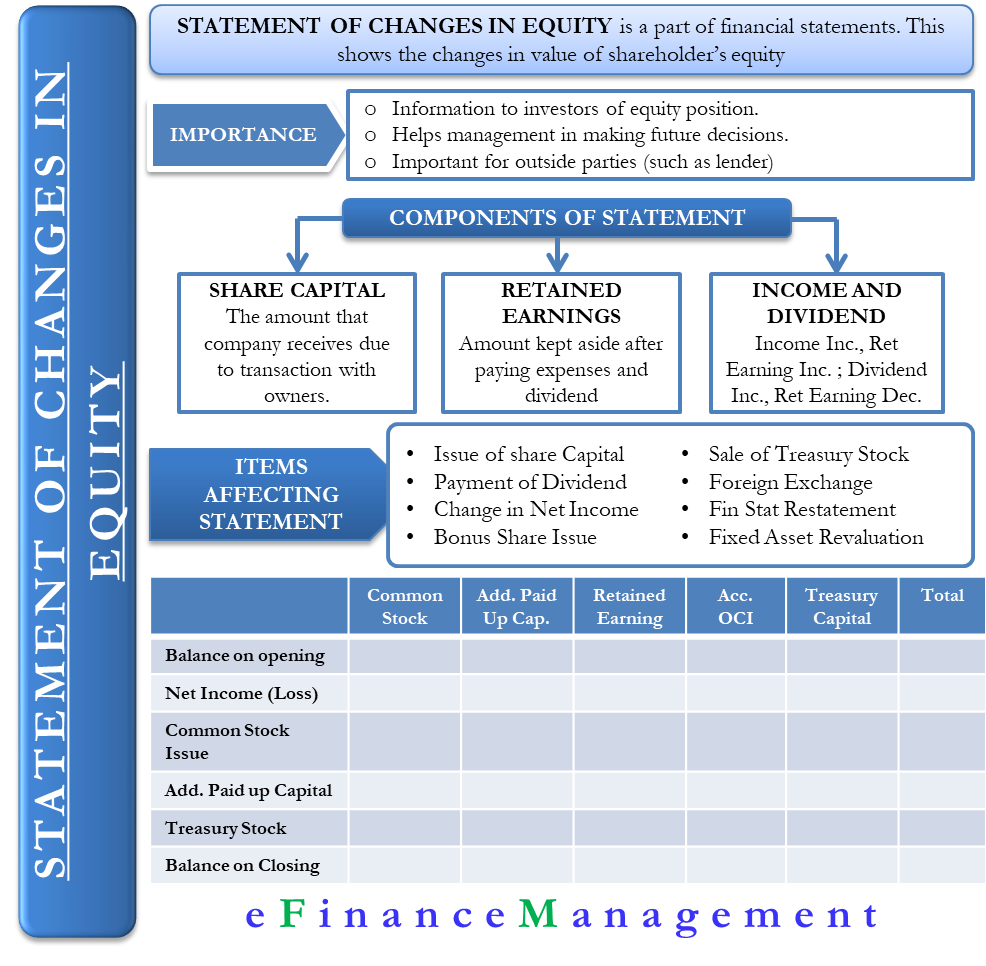
Understanding Management Decisions: Is the company issuing a ton of new stock or buying back shares? This statement reveals management’s capital allocation strategy. Are they focused on growth or returning cash to shareholders?
Comparing to Peers: How does a company’s dividend payout ratio compare to its competitors? This statement lets you benchmark against similar companies in the industry.
A Few Fun Facts (Because Why Not?)
Did you know that some companies have different classes of stock? Some have more voting rights than others. It's like a corporate power struggle!
Stock buybacks are sometimes called "share repurchases." They can be a signal that management thinks the company's stock is a steal. Or maybe they're just trying to boost earnings per share. Sneaky!
In Conclusion: It’s all about the Story
The Statement of Changes in Stockholders' Equity isn't just a bunch of numbers. It's a story. A story about growth, profits, losses, and how a company is managing its relationship with its owners. It's a piece of the puzzle that helps you understand the overall financial health of a business.
So next time you're digging into a company's financials, don't forget to give this statement a look. You might just uncover something interesting!
Go forth and explore the world of financial statements! Who knows what other financial fun facts you may uncover!
And just remember, accounting is a fun game of numbers!