
The Statement Of Cash Flows Presents

Okay, let's talk about the Statement of Cash Flows. Sounds boring, right? Like something only accountants care about. But trust me, it's actually super useful, even in your everyday life. Think of it like your bank account... but on steroids.
What Exactly Is This Thing?
Imagine you're running a lemonade stand. The Statement of Cash Flows basically tells you where all your cash came from (did your grandma slip you a twenty?), where it all went (sugar is expensive!), and how much you have left at the end of the day. It's that simple.
Officially, the Statement of Cash Flows (or SCF, for those in the know... just kidding, nobody calls it that) is a financial statement that summarizes the amount of cash and cash equivalents entering and leaving a company. It shows how well a company manages its cash position, and it's usually one of the first things analysts look at.
Must Read
So, instead of lemonade stands, we're talking about actual businesses. But the principle is the same. Did they rake in the dough? Or are they bleeding money faster than you can say "bankruptcy"?
The Three Musketeers (of Cash Flow)
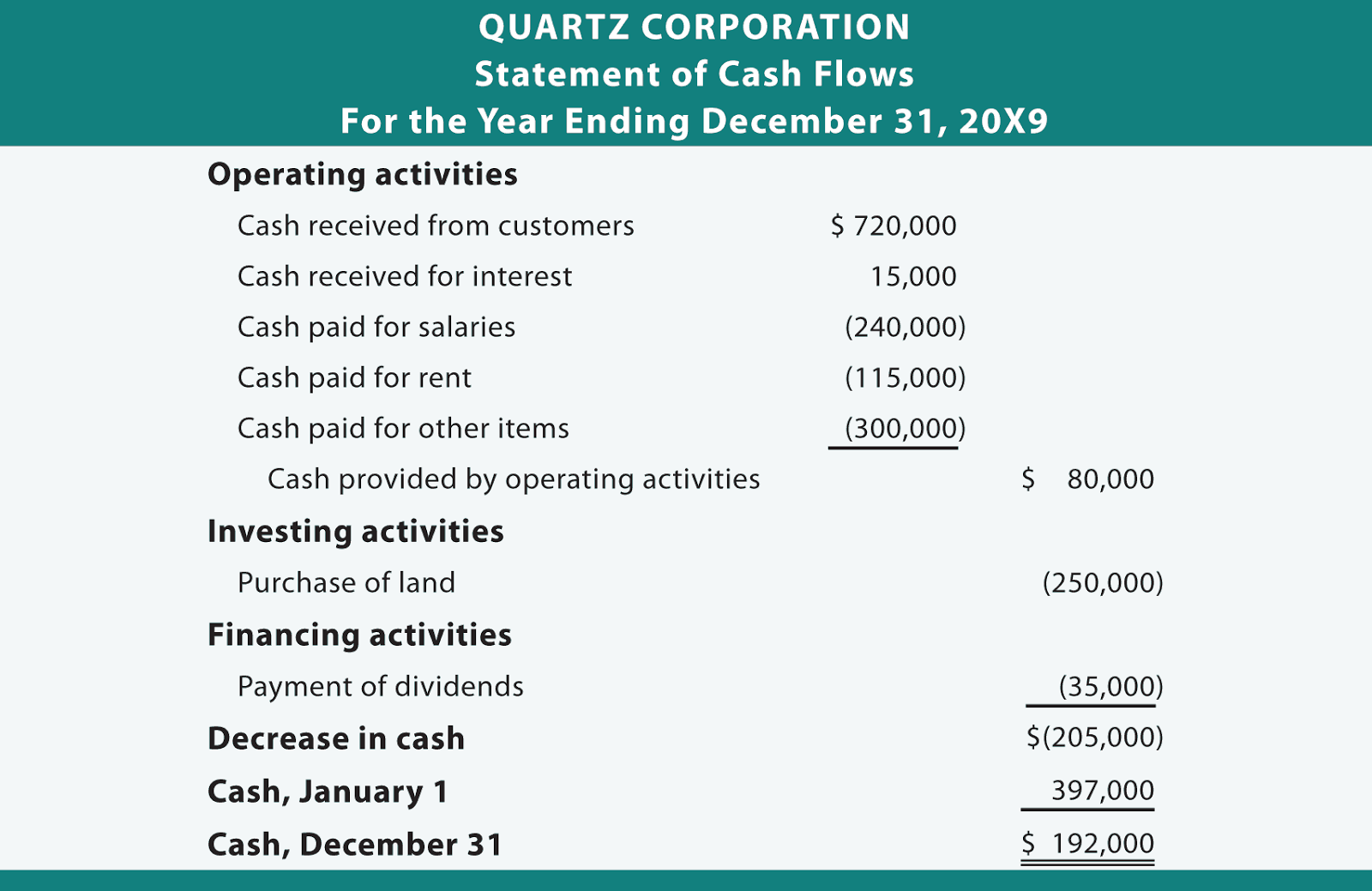
The Statement of Cash Flows is broken down into three main sections, like a superhero team. Each one tells a different part of the cash story:

- Operating Activities: This is the heart and soul of the business. It's all the cash flow from your day-to-day operations. Selling lemonade, paying for lemons, buying advertising... you get the picture. If this section is negative, Houston, we have a problem! It basically means you're losing money on what you actually do.
- Investing Activities: Think of this as the company investing in its future. Buying new equipment (a bigger lemonade pitcher!), selling old assets (finally getting rid of that rusty wagon), acquiring other businesses... it's all in here. This can be negative sometimes, especially if the company is expanding.
- Financing Activities: This is where the company gets its funding. Taking out a loan (borrowing money from your older brother), issuing stock (selling "shares" of your lemonade stand to your friends), paying dividends (giving your investors a cut of the profits)... it's all about how the company is financed.
Each activity, operating, investing, and financing, affects the company's cash flow in different ways, and investors and stakeholders keep a keen eye on those cash flow patterns to assess a company's financial health and long-term viability.
Why Should You Care?
Even if you're not an accountant, the Statement of Cash Flows can be surprisingly relevant to your life. Let's say you're thinking about investing in a company. You could check its SCF and see if the core business is generating cash, or if they're just propped up by loans and selling assets. It's like checking if your friend is actually good at their job, or if they're just really good at networking.
Or maybe you're just curious about where your favorite company is spending its money. Is Apple investing heavily in research and development? Is Tesla taking on a ton of debt? The Statement of Cash Flows can give you some clues.
Think of it as peeking behind the curtain. While the income statement and balance sheet tell you what happened, the Statement of Cash Flows tells you how it happened, in cold, hard cash. It can reveal hidden strengths and weaknesses that other financial statements might gloss over.
It's Not Rocket Science (Okay, Maybe a Little)
Look, I'm not going to pretend that the Statement of Cash Flows is a laugh riot. It can be a bit technical. But at its heart, it's just about tracking where the money goes. And understanding that is a valuable skill, whether you're running a lemonade stand or a multinational corporation.
Next time you see "Statement of Cash Flows," don't run screaming. Take a deep breath, remember your lemonade stand, and remember that it's all about the flow of cash. You got this!
And hey, if you ever need help deciphering one, just remember that there are plenty of resources out there. Or, you know, you could always ask an accountant. We're not all that scary... probably.
