
Stainless Steel 304 Thermal Expansion Coefficient

Okay, let’s talk about something wildly exciting: stainless steel 304. No, seriously! It is more thrilling than folding laundry, I promise (maybe). We're diving into its thermal expansion coefficient. Buckle up!
What in the World is Thermal Expansion?
Imagine your favorite metal spoon. When it gets hot, it gets a tiny bit bigger. That, my friends, is thermal expansion. It’s like the metal is doing a little stretch after a good nap.
Everything expands when heated. And contracts when cooled. Think about the roads in the summer. They get longer! Then shorter in the winter.
Must Read
Stainless Steel 304: The Star of Our Show
Stainless steel 304 is everywhere. Think your kitchen sink, your fancy pots, even some building materials. It’s the Beyoncé of the metal world.
It’s popular because it's strong. And resists rust. Plus, it’s relatively easy to work with.
The "Coefficient" Conundrum
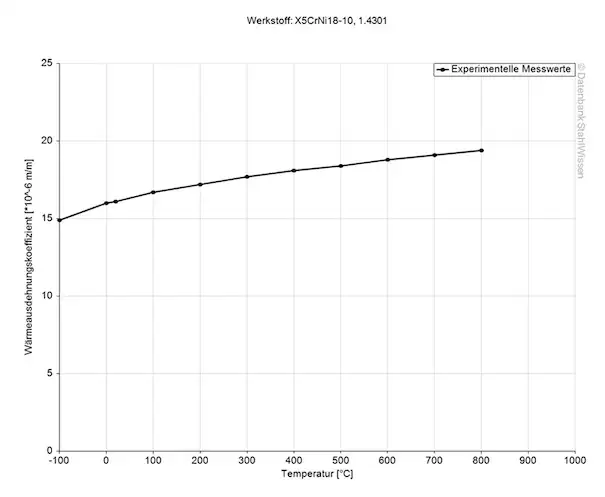
The thermal expansion coefficient is a fancy term. It’s basically a number. It tells us how much a material expands for each degree Celsius (or Fahrenheit) it heats up.
For stainless steel 304, it's around 17.3 x 10⁻⁶ per degree Celsius. That’s a mouthful! Don’t worry, we won’t have a pop quiz.
Think of it like this. For every degree Celsius warmer, a meter of 304 stainless steel grows by 0.0000173 meters. Tiny, right?
Why Should You Care? (The Unpopular Opinion)
Here's my controversial take: You probably don't need to memorize that number. Unless you're designing bridges or rocket ships. Or building a super complex robot.
Engineers use this stuff all the time. They need to account for expansion and contraction. Otherwise, things could break! Bad news!
But for everyday folks? Knowing the general concept is good enough. A little knowledge can prevent small problems, such as glass breaking when pouring hot liquids to it.
Real-World Thermal Fun
Let's put this into perspective. Imagine a stainless steel countertop. It gets warmer on a sunny day.
It will expand a tiny bit. Very, very tiny. Unless it’s like, a mile long. Then it would be more noticeable.
This expansion is why bridges have expansion joints. These gaps allow the bridge to grow and shrink without cracking.
Expansion Joints: The Unsung Heroes
Expansion joints are everywhere. Look closely next time you're on a bridge. Or a long sidewalk.
They're those little gaps filled with flexible material. They are designed to prevent structural problems. Otherwise, the concrete would crack due to thermal stress.
Think of them as tiny stress relievers for buildings and bridges. It’s like giving the structure a little room to breathe.
Stainless Steel 304: A Material of Many Talents
So, stainless steel 304 expands with heat. But not as much as some other metals. That’s a good thing!
This relatively low expansion is why it's used in so many applications. From kitchen appliances to architectural elements.
Its stability helps ensure things fit together nicely. And stay together, even with temperature changes.
The Kitchen Sink Saga
Your kitchen sink is a perfect example. It handles hot and cold water every day.
The stainless steel 304 doesn’t expand dramatically. It maintains its shape and integrity. Preventing leaks and other unpleasant surprises.
Imagine if your sink grew and shrunk with every dishwashing session. What a mess!
Temperature Extremes and Stainless Steel
Stainless steel 304 can handle quite a range of temperatures. From near freezing to pretty darn hot.
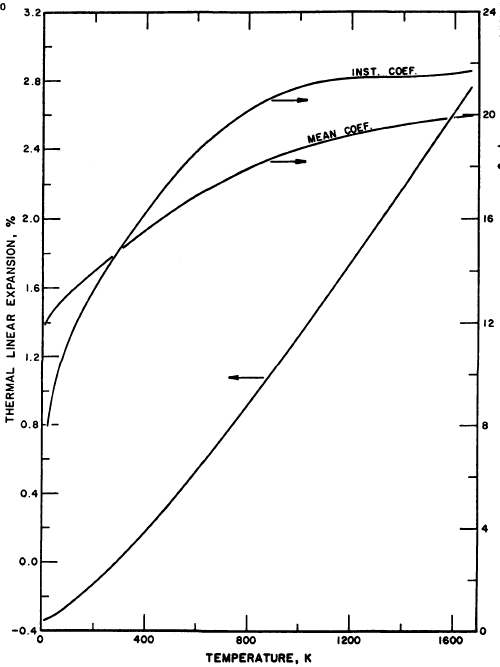
Its thermal expansion coefficient remains relatively consistent. Within that range, anyway. Very hot temperatures may cause deformation.
That's why it's used in some high-temperature applications. Though there are even more specialized alloys for extreme heat.
Beyond the Kitchen: Industrial Applications
Think of industrial settings. Stainless steel 304 is used in pipes, tanks, and various equipment.
These components often experience temperature fluctuations. The predictable thermal expansion helps engineers design reliable systems.
No one wants a pipe bursting due to excessive expansion. That’s a very bad day at the office.
Calculating the Expansion: A Math Moment (Optional)
If you're feeling ambitious, you can calculate the expansion. Use this simple formula: ΔL = αL₀ΔT.
Where ΔL is the change in length. α is the thermal expansion coefficient. L₀ is the original length. And ΔT is the change in temperature.

But honestly, there are calculators online. Just Google it! Who wants to do math unless they absolutely have to?
Leave the Math to the Pros
Seriously, engineers deal with this every day. They have spreadsheets and fancy software.
Let them handle the complex calculations. We can appreciate the results without getting bogged down in the formulas.
Unless you enjoy that kind of thing. Then, by all means, dive in!
The Takeaway: It's All About Stability
The key takeaway is that stainless steel 304 is stable. Its thermal expansion is predictable and relatively low.
This makes it a reliable material. Suitable for a wide range of applications.
From your kitchen sink to industrial pipelines, it's a workhorse.
Appreciate the Little Things
So next time you use something made of stainless steel 304. Take a moment to appreciate its thermal properties.
Think about the tiny expansion and contraction. Working silently to keep things functioning smoothly.

It might not be as exciting as a superhero movie. But it's pretty darn cool in its own way. This is my unpopular opinion, by the way.
Final Thoughts: Thermal Expansion for the Win!
Thermal expansion might seem like a minor detail. But it's crucial in engineering and design.
Understanding how materials behave with temperature changes is essential. For creating safe and reliable structures.
So, let's raise a glass (preferably not a glass filled to the brim with boiling water) to thermal expansion! It’s a physics phenomenon that makes the world go round (or, at least, keeps our bridges from collapsing).
Bonus Fun Fact
Did you know that different grades of stainless steel have slightly different thermal expansion coefficients? It's true!
304 is common, but there are others. Each with its own unique properties.
The world of metallurgy is a fascinating one. Full of surprises and interesting quirks.
In Conclusion
So, there you have it! A (hopefully) entertaining look at the thermal expansion coefficient of stainless steel 304.
Now you can impress your friends at parties with your newfound knowledge. Or maybe not. It depends on your friends.
But hey, at least you learned something new today. And hopefully, you had a little fun along the way.