
Solar Panel Payback Period Calculator
You know that feeling, right? The one where you open the electricity bill, and your eyes just glaze over as you scroll past the astronomical number? Yeah, I felt that last month. It was like the utility company decided to charge extra for the sheer audacity of existing. My internal monologue immediately jumped to, "There has to be a better way!" And, as if on cue, a little solar panel emoji popped up in my brain.
I started daydreaming about rooftop panels, silently soaking up the sun, laughing maniacally as my meter spun backward. Pure bliss! But then, the practical side of my brain kicked in (it’s usually the spoilsport, honestly). "How much does that even cost?" it whined. "And when would it actually start paying me back?"
That, my friends, is the million-dollar question – or rather, the multi-thousand-dollar question. And it’s exactly why we need to talk about something super cool, super practical, and surprisingly empowering: the Solar Panel Payback Period Calculator.
Must Read
So, What Exactly Is This Calculator Magic?
At its heart, it’s a tool that helps you figure out how long it’ll take for your solar panel system to essentially pay for itself through electricity bill savings and incentives. Think of it like this: you invest X amount of money upfront, and this calculator estimates how many years it’ll be before the money you save on electricity equals that initial investment. After that point? Pure gravy, baby!
It’s not just some random guess, either. A good calculator takes a bunch of juicy details into account to give you a pretty solid estimate. And trust me, getting a handle on this number is pretty much step one for anyone even vaguely considering solar.
The Ingredients for Your Payback Pie
To get a clear picture, these calculators need some specific data. Let's break down what goes into the solar sausage:
1. Your Upfront Cost: This is the biggie. It includes everything: the solar panels themselves, the inverter, mounting hardware, labor for installation, permitting fees, and any other associated costs. Don’t forget to factor in the total cost before any incentives.
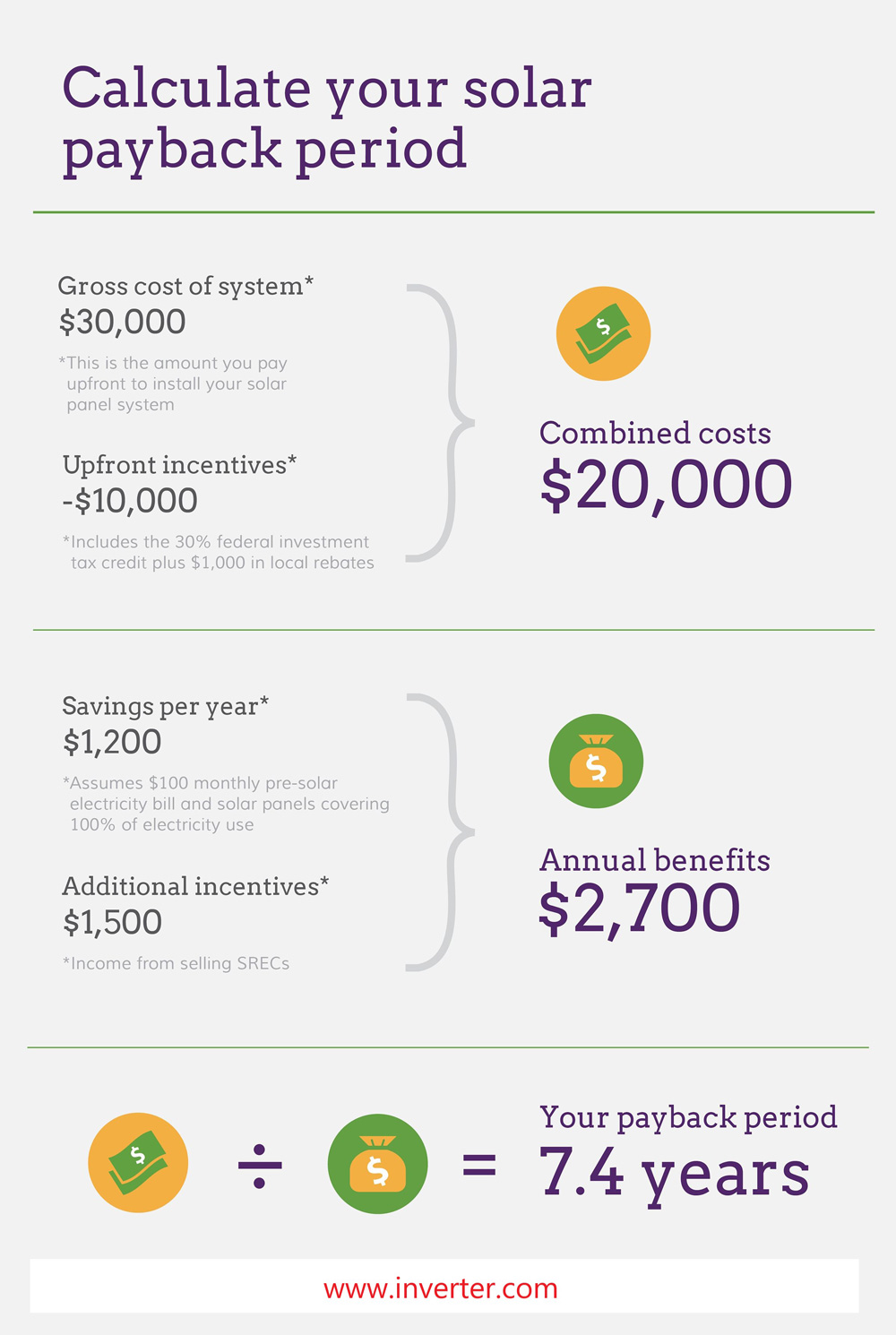
2. Those Sweet, Sweet Savings: This is where your current electricity bill comes in handy. The calculator will want to know your average monthly usage (in kilowatt-hours, kWh) and what you currently pay per kWh. The higher your current bill and the more expensive your electricity, the faster solar tends to pay off. Cha-ching!
3. Government Goodies & Local Love: Ah, incentives! These are crucial. We’re talking about things like the federal solar tax credit (which, psst, is still pretty sweet), state rebates, local utility programs, and even things like Solar Renewable Energy Credits (SRECs) in some areas. These reduce your out-of-pocket costs or add to your savings, dramatically shrinking that payback period.
4. Sun Power!: How much electricity will your system actually produce? This depends on a few factors: the size and efficiency of your chosen panels, how much direct sunlight your roof gets, and your geographical location. Someone in sunny Arizona will likely generate more power (and have a faster payback) than someone in perpetually cloudy Seattle, all else being equal.

5. The Sneaky Stuff: A good calculator might also consider the annual increase in electricity prices (because let’s be real, they rarely go down, do they?). It might also factor in minimal maintenance costs, though modern solar systems are pretty low-maintenance rockstars.
Why Bother with All These Numbers, Anyway?
You might be thinking, "Ugh, math. Can't I just ask a solar company?" And yes, you absolutely can! They'll often provide you with an estimate. But here's the thing: understanding how the payback period is calculated gives you power. It lets you:

- Make an informed decision: No more guessing games. You'll have a solid financial projection.
- Compare quotes effectively: When different companies give you different numbers, you'll know why and can ask the right questions.
- Budget with confidence: Knowing your break-even point helps you plan your finances around this significant home improvement.
- Brag to your neighbors: (Okay, maybe that’s just me, but who doesn’t love a good brag about smart financial choices?)
A Little Reality Check (with a Smile!)
Remember, these calculators provide an estimate. Life happens! Weather patterns can change, government incentives can evolve, and your own electricity usage might fluctuate. So, take the number with a grain of salt, but consider it an incredibly valuable starting point for your research.
The best approach? Use a few different online calculators, talk to several reputable solar installers (they often have their own sophisticated tools), and dive deep into your own electricity usage. The more accurate information you feed in, the clearer your picture will be.
So next time you open that electricity bill and feel a familiar pang of dread, remember the Solar Panel Payback Period Calculator. It's your secret weapon for turning those costly energy bills into a future of sunny, self-sufficient savings. Happy calculating!