
Simple Present Tense Example

The simple present tense. We all know it. We all (probably) use it. But let's be honest, it’s secretly judging us.
I drink coffee every morning. See? So simple. So…judgy.
My unpopular opinion? It's a grammar snob in disguise. It pretends to be chill.
Must Read
Simple Present: Not So Simple, Is It?
Let's look at some simple present tense examples.
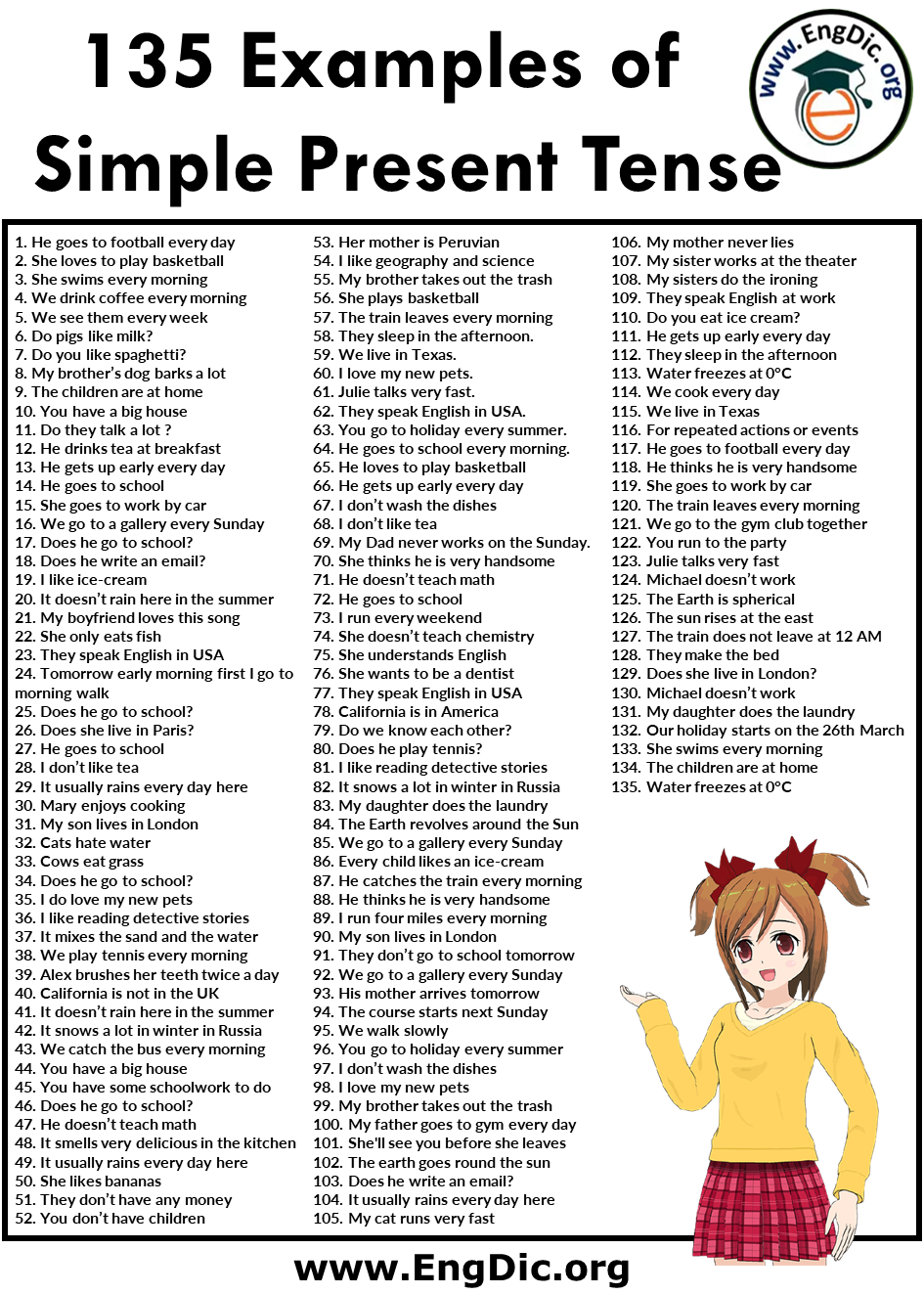
The sun rises in the east. Water boils at 100 degrees Celsius. My cat sleeps all day.
Yawn. We get it.
These are universal truths, habits, and facts. But still, I feel like it's subtly implying my life is boring.
"I Go To Work Every Day." Ouch.
Take the sentence, "I go to work every day." Sounds innocent enough, right?
Wrong. It’s screaming, "You're predictable! You lack adventure! Spice up your life, you cog in the machine!"
Okay, maybe it's just me.
But I think simple present needs to chill out a bit. Show some empathy. Not every sentence needs to highlight my mundane existence.
For instance, "He eats pizza with a fork." Now that's judgmental. Who does that?!
See? Simple present can be used for truly judging others, or judging yourself when you accidentally stay on the couch all weekend watching your favorite series.
When Simple Present Gets Real
But it's not all bad. The simple present does have its uses.
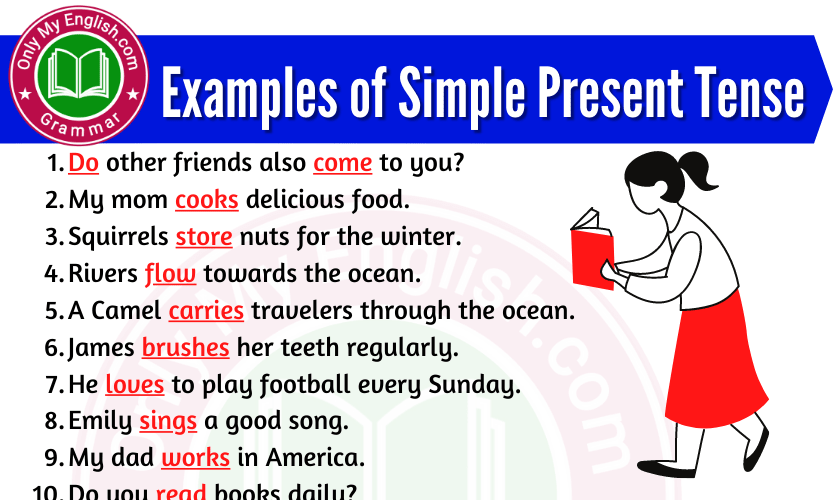
Describing schedules, for example: "The train leaves at 7:00 AM." That's helpful.
Giving instructions: "First, you add the flour. Then, you mix in the eggs." Practical, even.
Even stating abilities: "I speak three languages." Okay, show off. (Just kidding! That's awesome!).
It is also nice when we are describing habits: "I exercise regularly." (I wish that were true!)
The "Always" and "Never" Crew
Ah, but then there are the adverbs of frequency: always, never, often, sometimes, rarely.
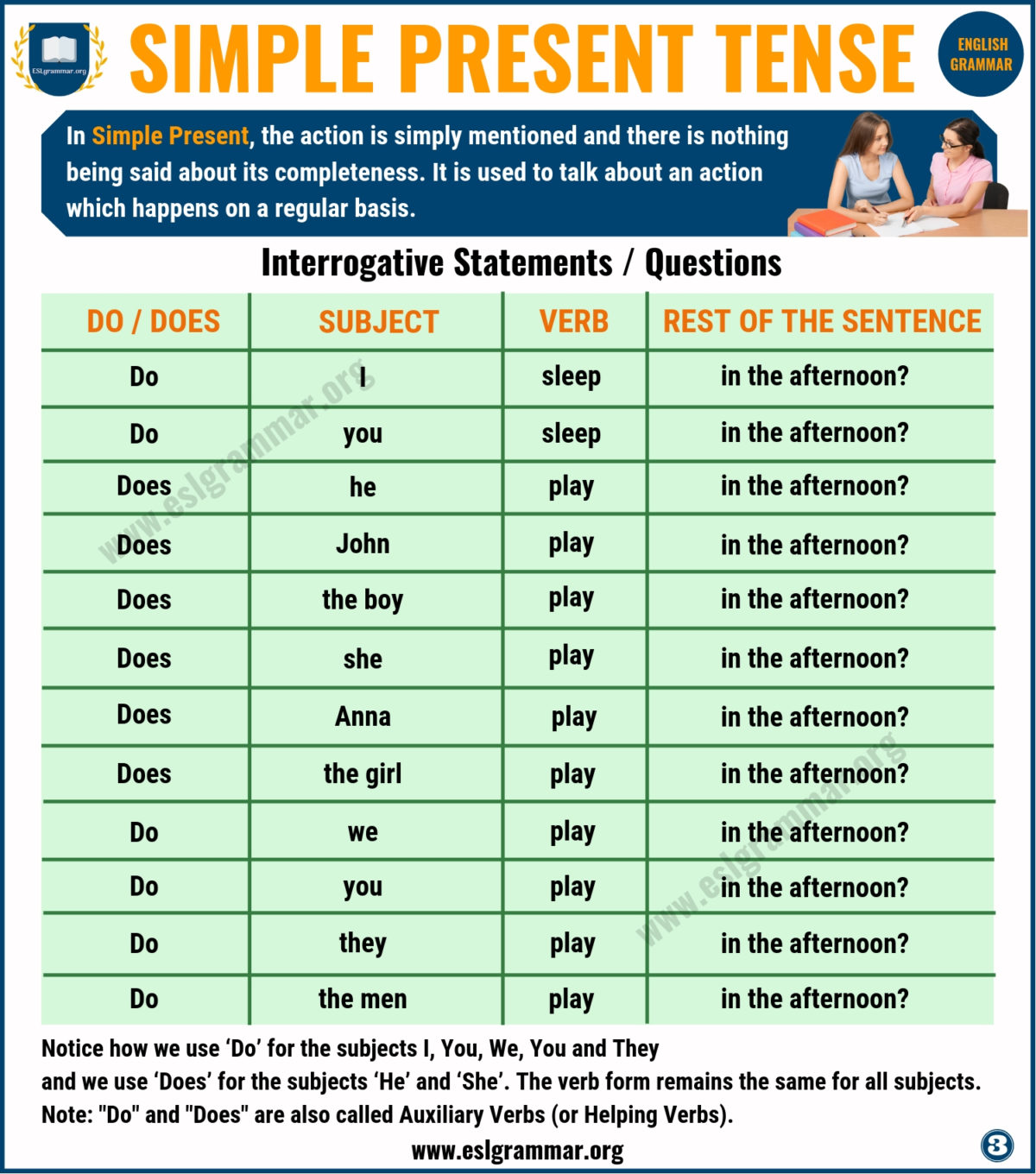
These little guys really crank up the judgment factor.
"He always complains." "She never listens." Ouch. Double ouch.
It's like the simple present is saying, "Your problems are permanent. Get used to it."
Maybe that’s why I prefer the simple past. At least then, the judgment is over. It's in the past!
Simple Present: Friend or Foe?
So, is the simple present tense a friend or foe? I'm still not entirely sure.
It's undeniably useful. But its potential for passive-aggressive grammar is undeniable.

Maybe the key is to use it responsibly. With a healthy dose of irony. And maybe a sprinkle of self-deprecation.
Because let's face it: "I am a master of the simple present." Is probably a lie.
After all, nobody's perfect.
And maybe, just maybe, that's what the simple present is trying to tell us. (In its own, judgy way.)
Or maybe I am just overthinking grammar rules.
I think I need more coffee.